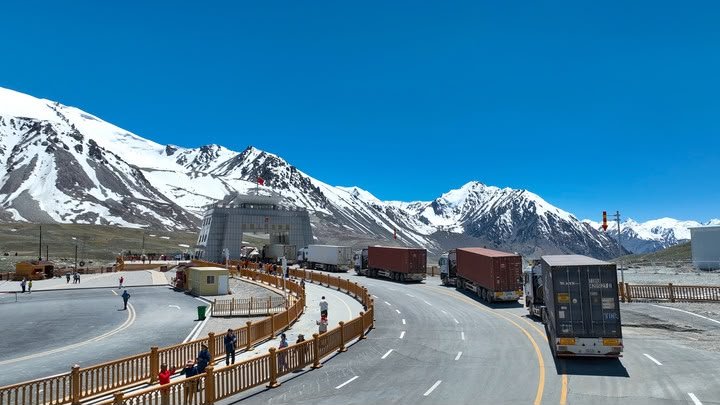
Stretching through some of the world’s most challenging mountain terrain, the historic highway is more than a transport route connecting the two countries—it has become a symbol of friendship, sacrifice, cooperation and people-to-people ties.
Construction began in 1966, with Chinese and Pakistani workers spending 13 years overcoming extreme conditions to build the highway. Working at altitudes of 4,000 to 5,000 metres amid freezing temperatures, snowstorms, landslides and limited equipment, workers removed millions of cubic metres of earth and rock to carve a route through the mountains. Eighty-eight Chinese workers who died during construction are buried at the Chinese Martyrs’ Cemetery in Gilgit.
The highway was fully opened to traffic in 1979, transforming travel and trade between Pakistan and China. Over the decades, several families have continued to serve and maintain the route, while Pakistani citizens have established businesses and livelihoods in China’s border areas.
The Karakoram Highway has also given a major boost to tourism and cross-border trade. Pakistani entrepreneurs have established restaurants, handicraft businesses and other ventures in Tashkurgan, while Chinese goods and Pakistani fruits and handicrafts are increasingly transported across the border.
According to Khunjerab Port figures, cargo handled during the first seven months of this year has already exceeded the total volume recorded in all of 2025. Annual cargo traffic is expected to cross 100,000 tonnes. During the same period, more than 34,000 cross-border passenger movements and over 7,300 vehicle movements were recorded, with travellers from 48 countries and regions passing through the port.
The highway is also emerging as an important land link between South and Central Asia. Four major projects, including the relocation, expansion and improvement of facilities at Khunjerab Port, are currently underway, with a combined investment of 450 million yuan.
Around 460 Pakistani citizens are now long-term residents of Tashkurgan County, where they are engaged in trade, restaurants and cross-border businesses. Tourism has also expanded rapidly, with the county now home to 107 hotels and 640 accommodation facilities offering more than 32,000 beds. Around 6,000 people are directly employed in the tourism sector.
As Pakistan and China celebrate the 75th anniversary of diplomatic relations, the Karakoram Highway stands as a lasting testament to their growing economic, commercial and people-to-people ties. Six decades after construction began, the road continues to do more than connect mountains and borders—it brings communities closer and carries the story of Pakistan-China friendship into a new generation.