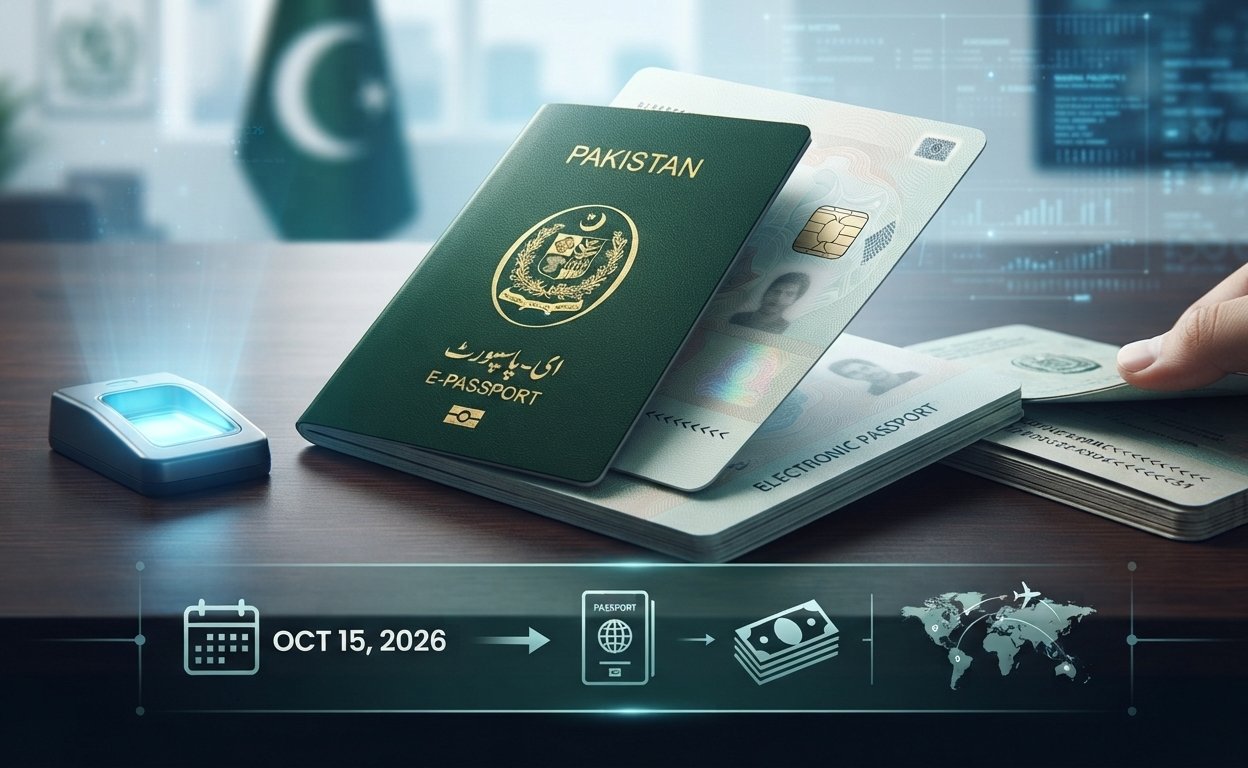
Under the revised system, the normal fee for a 36-page passport valid for five years will rise from Rs4,500 to Rs9,000. The urgent fee will increase from Rs7,500 to Rs15,000, while the fast-track fee will rise from Rs12,500 to Rs22,000. Fees for 72-page passports will also be charged under the revised pricing structure.
Passports issued under the previous machine-readable system will remain valid until their expiry dates, according to the report.
Passport authorities say e-passports incorporate advanced technology and involve higher production costs than conventional machine-readable documents. The transition is also part of a broader international shift towards technologically advanced travel documents.
According to figures cited in the report, Pakistan issued 5,572,130 passports in 2025, including 3,275,263 under the normal-fee category, 1,839,487 under the urgent category and 276,789 through the fast-track service. Approximately 180,000 e-passports were also issued during the year.
The report further stated that 6,596,520 passports were issued in 2024 and 6,717,938 in 2023, reflecting sustained demand for travel documents across the country.
To support the transition, the Directorate General of Immigration and Passports has introduced additional modern printing equipment, including 10 new printing machines and six laminators. The report also cited round-the-clock services at 232 offices and 93 window counters abroad as part of the department’s efforts to facilitate passport applicants.