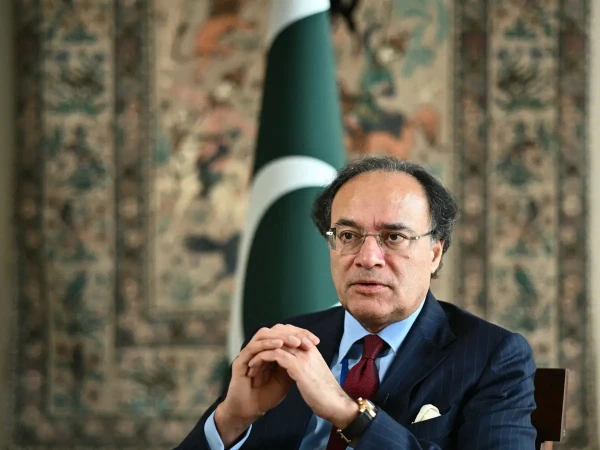
Addressing a conference and investment fair on “Investing in Pakistan’s Sustainable Future” at the United Nations, Aurangzeb said the government had a key role in promoting investment and was focusing on fiscal discipline and economic stability.
He said increasing exports alongside economic growth was a priority and Pakistan needed responsible and sustainable economic expansion while keeping global economic conditions in view.
Aurangzeb said economic policies were beginning to produce positive results in reducing inflation, while cooperation between the government and private sector was essential for investment and economic growth.
He said Pakistani business groups were increasingly forming consortia to undertake investments. Eleven initial public offerings were held during the previous fiscal year, the highest level in two decades, while five IPOs were launched on the Pakistan Stock Exchange during the past three months.
The finance minister highlighted public-private partnerships as an effective mechanism for promoting investment and said stronger cooperation between the two sectors was needed to develop viable projects.
He also discussed Pakistan’s efforts to address climate change, saying an ESG index was being developed to provide information about the performance of listed companies. He said the Pakistan Stock Exchange was working on the index while the State Bank had provided a framework for green taxonomy.
Aurangzeb said Pakistan was making progress in developing its policy framework but needed further capacity-building support. He stressed the importance of financing, institutional capacity and bankable projects, noting that the World Bank and IMF were also supporting Pakistan.
He warned that population growth and climate-related risks were major challenges for Pakistan’s long-term survival. He said the country’s population could reach 400 million by 2047, making sustainable planning increasingly important.
UNDP Deputy Resident Representative Van Nguyen said greater investment was essential to achieving the Sustainable Development Goals in Pakistan, adding that public resources alone could not meet the country’s development needs.
Nguyen identified energy, water, transport and waste management as sectors offering significant investment opportunities. He said private investment required viable business models, transparent policies and reasonable returns, while the government and private sector needed to work under a common agenda.
Senator Sherry Rehman said public-private partnerships could help combine the strengths and regulatory frameworks of both sectors. She stressed the need to develop financially viable and bankable projects despite the challenging development environment.
Rehman also highlighted rapid population growth and urbanisation as major challenges, saying millions of children remain out of school and cities face growing pressure on water supply, waste management and other basic services.
She called for stronger local institutions, better planning and adequate resources to ensure sustainable urban development.