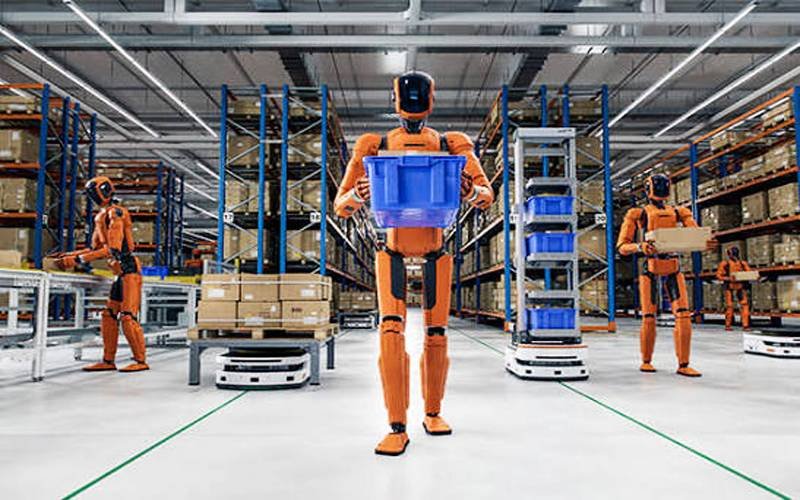
According to the International Federation of Robotics (IFR), the global number of active industrial robots increased by 9 percent year-on-year, while new installations rose 11 percent to more than 600,000 units.
China remained the world’s largest market for industrial robots, with 354,000 new units installed. The figure was 20 percent higher than the previous year and accounted for around 59 percent of global installations.
Chinese robot manufacturers also strengthened their position, capturing 55 percent of the country’s industrial robot market.
The United States ranked second with 38,500 new installations, an increase of 12 percent, while Japan ranked third with 36,219 units despite a 19 percent decline in installations.
South Korea installed 30,200 new industrial robots, Germany 24,800 and India 10,500. Robot installations in India increased by 15 percent, while Germany recorded an 8 percent decline.
Germany remained Europe’s largest industrial robot user, accounting for 41 percent of all industrial robots installed across the European Union, despite a decline in new installations.
Global demand for industrial robots is expected to continue growing. The number of new installations could reach 655,000 units this year and is projected to rise to 806,000 units by 2029.
Experts attribute the expected growth to persistent labour shortages in developed economies, the relocation of supply chains closer to domestic markets and advances in AI-powered technologies, which have also made robotics more accessible to small and medium-sized businesses.
In Türkiye, 3,194 new industrial robots were installed, a 9 percent decline from the previous year. However, the country’s active industrial robot fleet increased by 7 percent to a record 30,990 units, placing Türkiye 15th globally in terms of its total active robot fleet.
The metal industry was the largest buyer of robots in Türkiye, accounting for 990 new installations, while the automotive sector also expanded its use of industrial robots.
Globally, around 59 percent of newly installed industrial robots were used for handling operations and machine tending, while 16 percent were installed for welding and soldering.
The data indicates that AI, labour shortages and the need to improve production efficiency are continuing to drive demand for industrial automation and robotics worldwide.