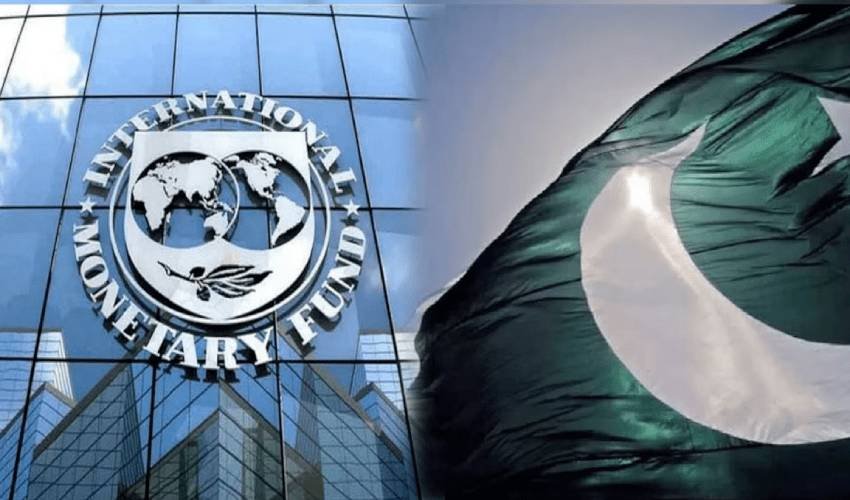
In its regional economic report on the Middle East and Central Asia, released on Thursday, the IMF urged Pakistan to maintain exchange-rate flexibility to protect foreign exchange reserves and remain prepared to tighten monetary policy further to contain inflation.
The IMF’s current account deficit projection is significantly higher than the government’s official estimate of approximately $2.5 billion.
According to the report, Pakistan’s gross external financing requirements are expected to remain between 22% and 25% of GDP, substantially higher than those of comparable economies and exposing the country to several financial risks.
The IMF also highlighted the close links between the government and commercial banks. Government-related debt accounts for an estimated 63% of banks’ total assets or investments, a level significantly above the typical range in emerging economies.
The Fund warned that concerns over rising government debt could push borrowing costs above baseline projections, potentially intensifying financial stability challenges in countries such as Pakistan and Egypt, where overall financing needs are already high.
Pakistan’s government has remained cautious about allowing further depreciation of the rupee, amid concerns that a weaker currency could fuel inflation while the benefits for export competitiveness remain uncertain.
On Thursday, the Pakistani rupee appreciated by one paisa against the US dollar in the interbank market, closing at Rs276.85.
The IMF said countries should be prepared to tighten monetary policy further, particularly where inflation remains above target and the existing policy stance appears relatively accommodative.
The report identified Pakistan and Kyrgyzstan as countries where policy interest rates remain below estimated neutral levels.
It also noted that countries had adopted different interest-rate responses following the onset of the conflict, depending on their exchange-rate arrangements. Among countries with flexible exchange rates, Pakistan was the only one to raise interest rates after the conflict began.
The IMF maintained its forecast for Pakistan’s economic growth at 3.5%, below the government’s official target of 4% and also lower than the World Bank’s estimate.
The report added that fiscal policy across several regional economies was expected to remain relatively accommodative during 2026, with fiscal consolidation and spending restraint likely to resume from 2027.