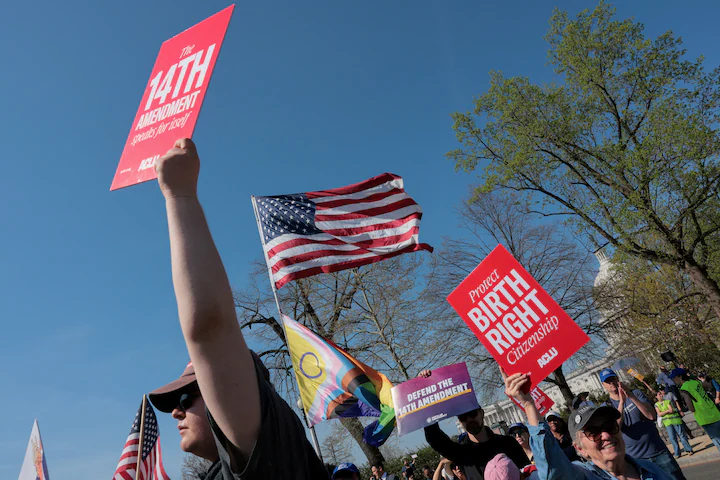
US District Judge Deborah Boardman in Maryland issued a preliminary injunction on Wednesday following a request by immigrant rights groups that had previously won a ruling blocking President Donald Trump’s initial 2025 order seeking to limit birthright citizenship.
The US Supreme Court on June 30 rejected Trump’s earlier effort to deny citizenship to children born in the United States to parents who are neither US citizens nor lawful permanent residents. The court held that the measure violated the citizenship guarantee contained in the 14th Amendment.
Following the Supreme Court ruling, Trump signed a new executive order on August 6 targeting so-called “birth tourism,” in which women travel to the United States to give birth so their children can obtain automatic citizenship.
The new order also sought to deny citizenship to certain children if one parent works for a foreign government in the United States, is involved in fraud or a commercial transaction to obtain citizenship, or is classified as an “alien enemy.”
Lawyers representing babies who could be affected by Trump’s 2025 order subsequently asked Judge Boardman to block enforcement of the new directive and ensure that the children’s citizenship rights continued to be recognized.
Boardman agreed, saying the latest order was “almost certainly unconstitutional” as applied to the certified class because the Supreme Court had already determined that the children covered by the case were citizens at birth.
“The Supreme Court has spoken,” Boardman wrote, concluding that children in the certified class are citizens at birth.
Her order prevents agencies including the State Department, Department of Homeland Security and Social Security Administration from interfering with, denying or failing to recognize the citizenship of children covered by the class action.
The Justice Department had argued that the lawsuit was premature because federal agencies had not yet issued detailed guidance explaining how the new executive order would be implemented.
Government lawyers also said the new order was narrower than Trump’s original directive and argued that any legal challenge should wait until the agencies issued implementation guidance, expected by Saturday.
Boardman rejected that argument, saying the order’s wording indicated that it applied to all children meeting its criteria regardless of when they were born.
She said the court therefore needed to block enforcement of the administration’s latest attempt to restrict the citizenship rights of the children covered by the case.
The judge, however, allowed federal agencies to continue preparing guidance on how the executive order would be implemented.
The case was brought by immigrant rights groups CASA and the Asylum Seeker Advocacy Project, which had previously succeeded in blocking Trump’s initial birthright citizenship order in lower courts.
The State Department has separately drafted proposed guidance that would require parents seeking US passports for their children to provide evidence of their own citizenship or immigration status.--Reuters