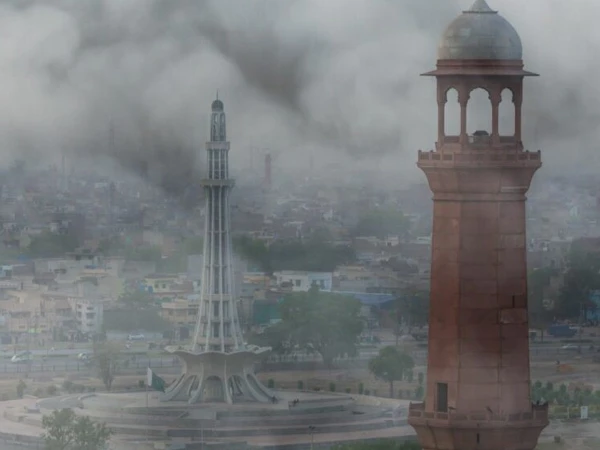
On the directions of Chief Minister Maryam Nawaz Sharif, an integrated system of field enforcement, monitoring and preventive measures has been activated across the province. Drone, night and Hawk Eye field squads have also been deployed to monitor pollution sources.
According to the government, 269 industrial units were inspected during the past 24 hours. Eleven units were sealed, a case was registered against one unit and fines totaling Rs1.2 million were imposed.
Authorities also inspected 431 brick kilns as part of the anti-smog drive. Five kilns were demolished, nine were sealed and nine cases were registered, while fines of Rs1.4 million were imposed.
During action against substandard plastic, officials inspected 309 locations, sealed 17 sites, confiscated 1,297 kilograms of plastic and imposed fines totaling Rs148,000.
Officials also checked 245 barbecue and commercial cooking points identified as major local sources of smoke. Suction hoods were installed at 55 locations, while 34 sites were sealed.
To control dust pollution, water was sprayed over 1,178 kilometres of roads. Authorities also ensured that open construction materials were covered at 44 locations and carried out nine measures to repair road shoulders.
As part of efforts to prevent the burning of crop residues, authorities contacted more than 215,000 farmers across Punjab and completed training for more than 431,000 farmers.
According to the provincial government, cultivation has begun on more than 638,000 acres of the total rice area of over 6.332 million acres. Crop residue management has been carried out on more than 280,000 acres using 1,259 “Kubota” machines and on around 89,000 acres through 187 balers.
Senior Punjab Minister Marriyum Aurangzeb said action, awareness campaigns and preventive measures against all local sources of smog would continue to ensure cleaner air, a safer environment and better public health.