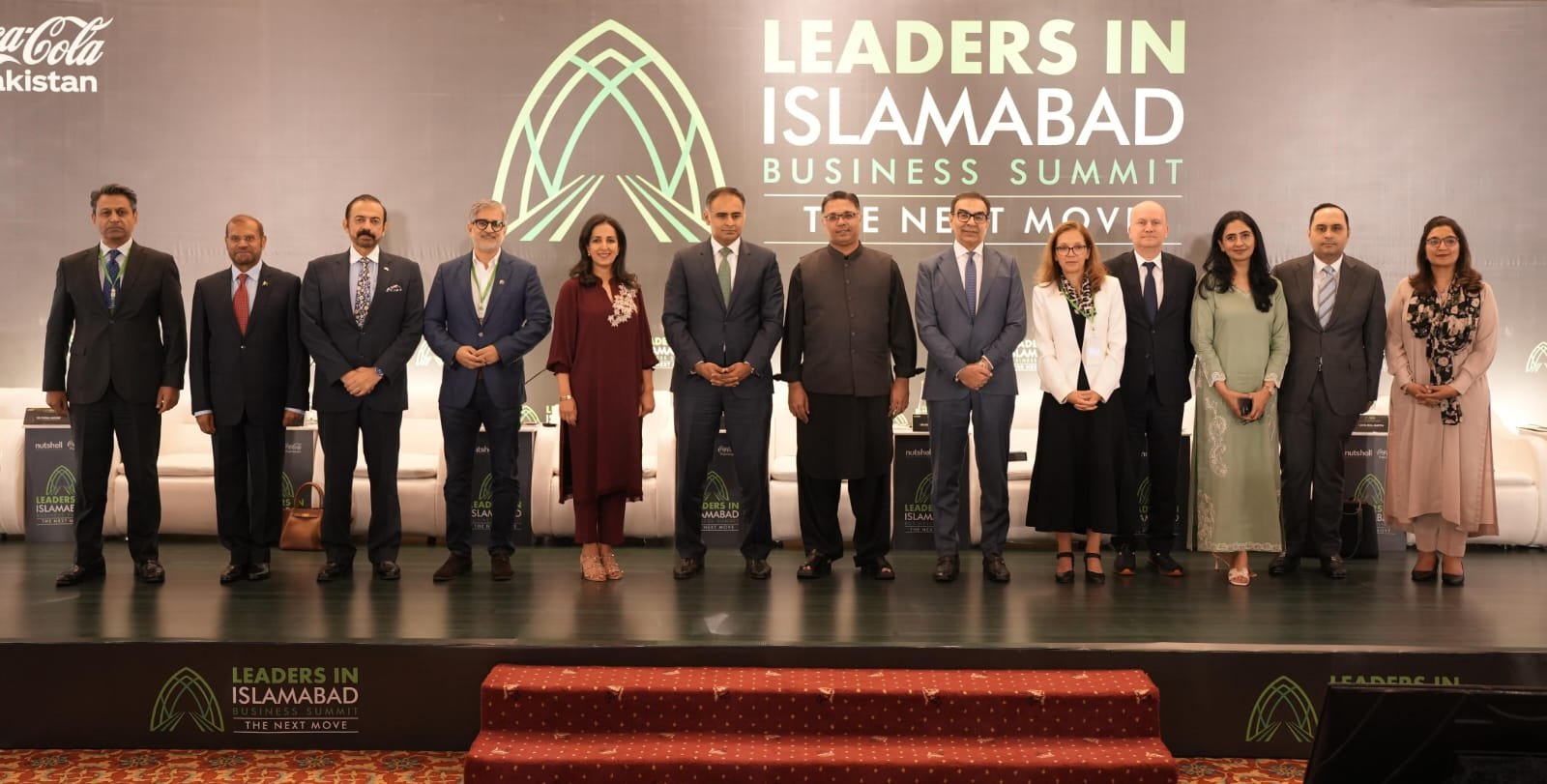
Held under the theme “The Next Move,” the summit focused on Pakistan’s future strategy across economic policy, technology and global positioning.
In his keynote address, Federal Minister for Finance and Revenue Senator Muhammad Aurangzeb said Pakistan recorded around 3.7 percent GDP growth in the last fiscal year and that momentum was continuing into the current fiscal year.
He said large-scale manufacturing had shown a turnaround, while strong remittances and IT exports were supporting the country’s external account. He stressed the need to move beyond a consumption-led growth model towards sustainable and productive growth.
Federal Minister and Adviser to the Prime Minister on Privatisation Muhammad Ali said Pakistan needed to move from being a consumer of technology to becoming a creator of technology.
He called for productive businesses capable of competing globally, stronger education, greater workforce participation and the development of talent in manufacturing, defence and emerging technologies.
Minister of State for Finance and Railways Bilal Azhar Kayani stressed the need for structural reforms, improved governance and stronger coordination between federal and provincial governments.
He said Pakistan needed to increase exports and improve coordination with the private sector in policymaking. He also highlighted efforts to improve financing for agriculture and small and medium-sized enterprises and reforms involving institutions such as SMEDA.
In the closing session, former caretaker prime minister Senator Anwar-ul-Haq Kakar said Pakistan’s security challenges needed to be addressed, but argued that deeper structural economic constraints also required attention.
Federal Minister for Climate Change and Environmental Coordination Senator Dr Musadik Malik stressed the importance of policy continuity, merit-based systems and a level playing field.
He called for reducing what he described as elite capture and enabling graduates and skilled professionals to contribute more effectively to the economy.
The summit featured six sessions covering geopolitics and geoeconomics, business and technology, artificial intelligence and digital transformation, capital and finance, and Pakistan’s future strategic choices.
The session on “Geopolitics, Geoeconomics & Pakistan” examined investment confidence and climate resilience, while “Business, Technology & The New Competitive Landscape” focused on business adaptation, resilience, new markets and sustainable growth.
Another session, “AI, Digital Transformation & Economic Value,” explored the impact of technology on productivity, customer experience, business models and competitive advantage.
The session on “Capital, Finance & The Confidence Economy” discussed ways to mobilise domestic and international capital, strengthen financial markets, create investment opportunities and support long-term economic growth.
The concluding session, titled “Pakistan’s Moment of Choice,” brought together political leadership, government representatives, business executives and strategic communication experts to discuss the country’s choices at a changing global juncture.