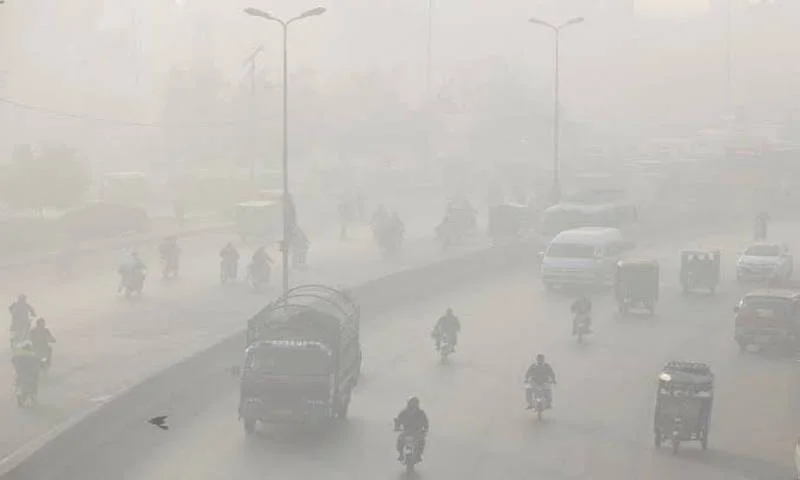
The city’s air quality deteriorated sharply following a temporary improvement caused by rainfall and strong winds.
According to official figures, Lahore’s AQI increased by 135 points compared to the previous day, pushing the provincial capital back to the top of the global pollution rankings.
RELATED: Lahore Again Tops World’s Most Polluted Cities List
Multan Road emerged as the most polluted area of Lahore, recording an alarming AQI of 500. Other areas also reported unhealthy air quality, with Safari Park recording 285, Kahna Nau 259, Burki Road 253 and DHA Phase 6 registering 251.
The AQI at Punjab University stood at 213, while Egerton Road recorded 212 and Shahdara reported 204.
The temporary improvement in air quality following rain and strong winds could not be sustained, while changing weather conditions have once again left the city under a thick blanket of pollution.
ALSO READ: What is the U.S. Air Quality Index (AQI)?
According to the Meteorological Department, no rainfall is expected in Lahore over the next few days. The minimum temperature was recorded at 17 degrees Celsius, while the maximum temperature reached 28 degrees Celsius.
Authorities have advised residents to take precautionary measures against the harmful effects of smog.
RELATED: The Rising Smog Crisis in Punjab
Medical experts have also urged people to wear face masks when going outdoors to reduce exposure to polluted air.
The renewed deterioration in air quality has once again raised concerns about the health risks posed by worsening smog in Lahore.