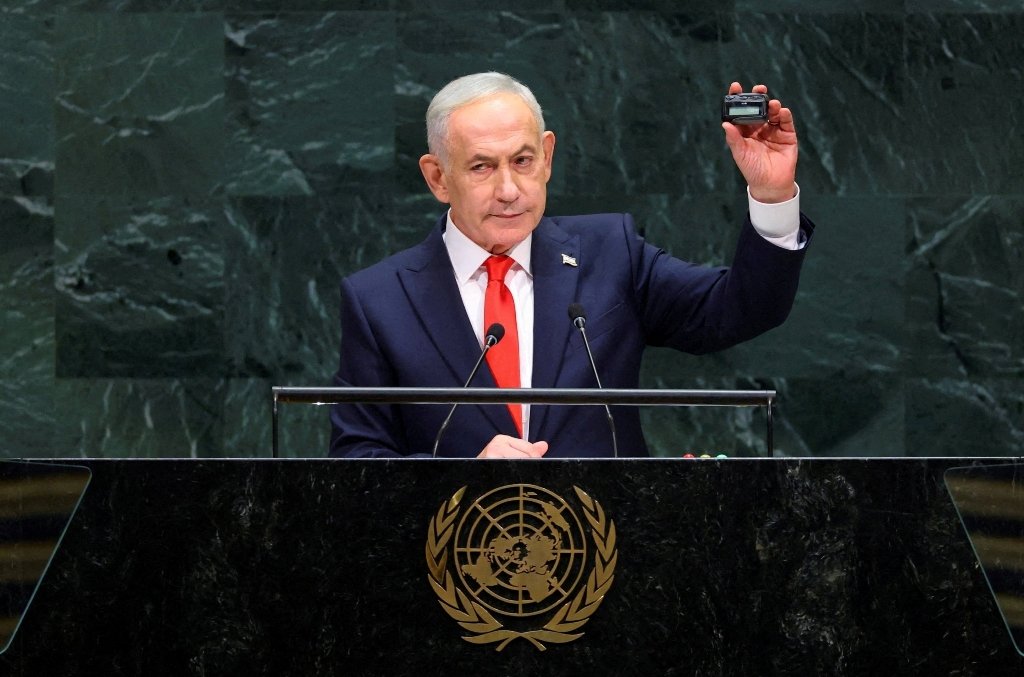
Netanyahu, Israel’s longest-serving leader with 19 years in office, is seeking to retain power amid a closely contested race between his Likud party and its right-wing allies and a rival alliance led by former military chief Gadi Eisenkot.
Polling stations opened at 7am local time and were scheduled to close at 10pm. Around 7.3 million Israelis were eligible to vote, including approximately 330,000 first-time voters, according to the Central Election Committee.
Netanyahu has campaigned on his wartime leadership and close relationship with US President Donald Trump, who has endorsed him. On Sunday, Netanyahu said Trump was prepared to act again to eliminate what he described as the Iranian threat, but only if he remained in office.
Eisenkot accused Netanyahu of relying on fear, misinformation and threats during the campaign. He said Trump would cooperate fully with any leader elected by the Israeli people.
Despite the close contest, neither side appeared to have a clear path to securing a parliamentary majority. Netanyahu could once again depend on far-right politicians Itamar Ben-Gvir and Bezalel Smotrich to form a government. Ben-Gvir’s Jewish Power party has gained support in opinion polls, while both politicians have faced sanctions from some Western countries over allegations of inciting violence against Palestinians.
If neither Netanyahu nor Eisenkot can assemble a governing coalition in the 120-member parliament, Netanyahu could remain as caretaker prime minister until another election is held next year.
October 7 attacks dominate campaign
The election follows one of the most turbulent periods in Israel’s history since its establishment in 1948. The October 7, 2023, attacks, Israel’s subsequent military offensive in Gaza and deep domestic divisions have dominated the political debate.
For many opponents of Netanyahu, the election is a referendum on his government’s responsibility for the security failures that preceded the October 7 attacks, when Hamas-led militants killed around 1,200 people and took 251 hostages, according to Israeli figures.
Mali Hajaj, an Education Ministry employee supporting Eisenkot, said establishing a national inquiry into the attacks was essential to the country’s recovery.
Another voter, Lisa Tortor, said she hoped Netanyahu would leave office so a new government could begin repairing the damage she believed his leadership had caused to Israel and its image among Jewish communities worldwide.
However, 18-year-old Likud supporter Nof Gabay rejected the argument that Netanyahu was responsible for the October 7 security failures, describing him as the right leader for Israel and praising his handling of the war.
Security and regional conflicts
Israel’s military campaign has devastated large parts of Gaza. Gaza health authorities say Israeli attacks have killed approximately 74,000 people.
Israel has also dealt significant blows to Iran-backed Hezbollah in Lebanon and exchanged strikes with Iran, including a 12-day aerial campaign against Iranian nuclear sites in 2025 and a joint US-Israeli war against Iran this year.
Eisenkot has said Israel’s next government must prevent Iran from acquiring a military nuclear capability, either through military action or a diplomatic arrangement backed by the United States.
Coalition arithmetic remains uncertain
Although Eisenkot has criticised violence by Israeli settlers against Palestinians in the occupied West Bank, which has increased since 2023, he opposes the two-state solution that has underpinned decades of peace negotiations. Like nearly all Jewish-led parties in Israel, his party rejects that framework, according to Reuters.
Eisenkot has also opposed Netanyahu’s far-right coalition partners, Ben-Gvir and Smotrich.
Some former Likud supporters have begun campaigning against Netanyahu, while his ongoing corruption trial, involving charges he denies, has further complicated his political position.
A high turnout among Israel’s Arab minority, whose citizens are Palestinian by heritage, could also influence the coalition negotiations. Although Eisenkot has ruled out partnering directly with Arab parties, analysts say they could support a minority government led by him to prevent Netanyahu from remaining in office.
Israeli political analyst Amotz Asa-El of the Shalom Hartman Institute said he expected the election to produce only a narrow majority for either side rather than a decisive victory.