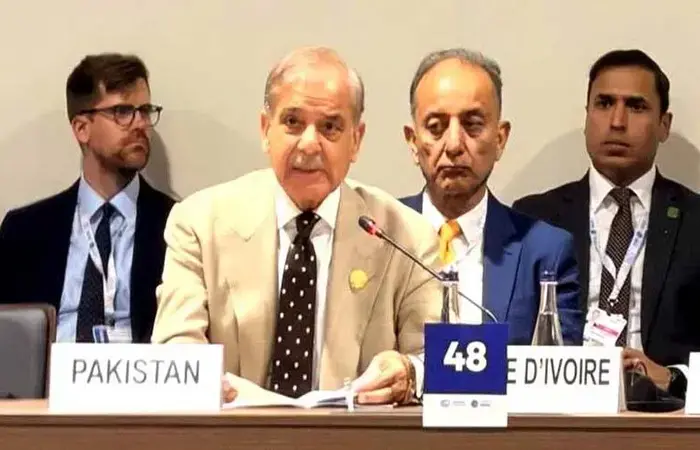
Addressing a high-level session titled “Transitioning to Green Energy by 2035: Powering the Future” on the sidelines of the 31st United Nations Climate Change Conference (COP31) in Antalya, Türkiye, the prime minister presented Pakistan's roadmap for transitioning towards cleaner energy sources.
According to the prime minister, clean energy sources now account for approximately 55 percent of Pakistan's overall energy mix.
He said Pakistan needs around $138 billion by 2035 to develop low-carbon electricity generation projects, while an additional $50 billion would be required to replace coal-based power generation with solar energy.
The prime minister emphasized that achieving these targets would require substantial investment in electricity transmission infrastructure, reliable energy storage systems and affordable modern technologies.
He maintained that Pakistan's debt-constrained economy could not independently bear the financial burden of such a large-scale energy transition and called on international partners to provide concessional financing and facilitate technology transfer.
Highlighting the government's initiatives, Shehbaz Sharif said that a recently introduced automobile policy aims to ensure that 30 percent of new vehicles are electric by 2030. Various incentives, including reduced tariffs, are being offered to support the transition.
He further announced that all buses and motorcycles purchased by the government in the future would be electric. According to him, more than one in every ten motorcycles sold in Pakistan this year is already electric.
The prime minister also referred to the inauguration of a key component of Pakistan's seventh nuclear power plant ahead of his departure for Türkiye, saying the project would contribute 1,200 megawatts of electricity to the national grid.
Shehbaz Sharif stressed that developing countries must receive the financial resources and technological support necessary to fulfil their climate commitments without compromising economic growth or meeting the energy needs of their populations.
He called for a balanced global development model that promotes economic progress while protecting the environment, adding that Pakistan's clean energy ambitions could only be achieved through collective international efforts, timely financial assistance and affordable technology transfer.
The prime minister reiterated that the country's green energy transition remained a priority and urged the international community to translate its climate commitments into practical action.
RELATED: New Five-Year Auto Policy to Boost Exports & Electric Vehicles