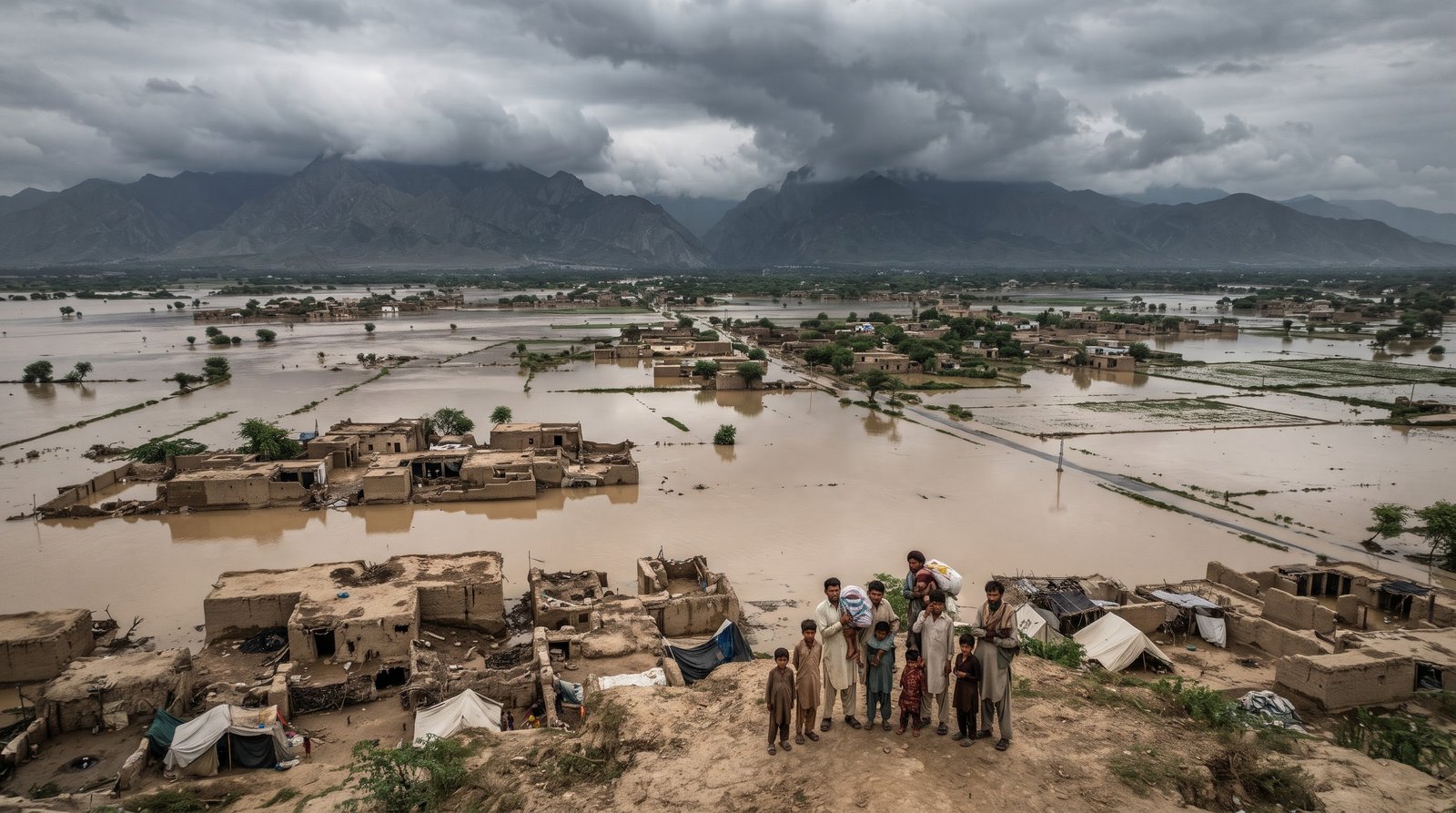
Yet Pakistan contributes less than 1% of global greenhouse gas emissions, according to the 2022 post-disaster assessment by the Asian Development Bank and World Bank Group. This disparity highlights a fundamental inequality: countries that contribute relatively little to global emissions often face some of the worst climate impacts.
Germanwatch’s 2025 climate risk assessment places Pakistan among the world’s most climate-vulnerable countries. From melting Himalayan glaciers in the north to intensifying heatwaves across the southern plains, Pakistan faces mounting environmental threats.
Consequently, the international response to Pakistan’s climate crisis will test whether global climate diplomacy can deliver meaningful accountability. Without stronger financial commitments, international promises risk remaining little more than diplomatic rhetoric.
Climate Disasters Deepen Pakistan’s Debt Crisis
The long-term economic damage from extreme weather often extends far beyond the immediate destruction. When floods destroy roads, schools, hospitals and power infrastructure, governments face falling revenues and soaring reconstruction costs simultaneously.
The World Bank Group’s 2022 Pakistan Country Climate and Development Report highlights the country’s vulnerability to climate-related economic shocks. Rebuilding essential infrastructure requires substantial public investment, often when governments have limited fiscal capacity.
Consequently, climate disasters can force vulnerable countries to seek additional external financing. Emergency borrowing increases debt burdens and future interest payments, leaving fewer resources for healthcare, education and long-term climate adaptation.
This creates a damaging cycle: climate disasters destroy infrastructure, reconstruction increases borrowing, and debt servicing constrains future development. Repeated disasters can therefore weaken economic resilience and undermine progress toward sustainable development.
In effect, climate-vulnerable countries risk paying interest on reconstruction costs associated with a crisis driven largely by historical emissions from industrialized economies. This raises fundamental questions about fairness in the international financial system.
Climate Finance Must Move Beyond Charity
International climate assistance often takes the form of discretionary aid or humanitarian support. However, the United Nations Framework Convention on Climate Change recognizes the principle of Common but Differentiated Responsibilities and Respective Capabilities.
This principle acknowledges that all countries must address climate change, while recognizing differences in historical responsibility and financial capacity. Developed countries therefore have a particular responsibility to support climate action in developing nations.
Scientific research also strengthens the case for greater accountability. Clarke and colleagues’ 2023 study found that human-induced climate change intensified extreme monsoon rainfall in Pakistan, increasing the risks faced by vulnerable communities.
Climate finance should therefore extend beyond emergency relief. Countries confronting severe climate losses need predictable funding that supports recovery, strengthens resilience and reduces future risks.
The establishment of the United Nations Loss and Damage Fund at COP27 marked an important diplomatic breakthrough. It recognized that adaptation alone cannot prevent all climate-related losses, particularly in highly vulnerable countries.
However, the fund’s effectiveness depends on adequate financing and accessible support. As research by Serdeczny and Lissner highlights, addressing climate-related losses requires effective institutional arrangements and sustained international commitment.
If contributions remain insufficient or financing relies heavily on loans, vulnerable countries may accumulate additional debt while recovering from climate disasters. Such an approach would undermine the fund’s central purpose.
Three Reforms to Make Climate Finance Fairer
Pakistan needs a climate financing system that supports recovery without worsening its existing economic vulnerabilities. Multilateral institutions, international creditors and donor governments should prioritize three reforms.
1. Provide Grants Instead of Additional Loans
Post-disaster financing should prioritize non-repayable grants, particularly when climate disasters overwhelm a country’s fiscal capacity. Grants would help governments rebuild essential infrastructure without adding to sovereign debt.
This approach would also protect spending on healthcare, education and social services. International partners should direct funding toward vulnerable communities and projects that deliver measurable resilience benefits.
2. Introduce Automatic Debt-Service Suspensions
International creditors should incorporate automatic debt-service suspension clauses into loan agreements. These provisions would temporarily pause repayments when qualifying climate disasters trigger substantial emergency spending.
Such arrangements would give governments immediate fiscal breathing room. Instead of directing scarce revenue toward debt repayments during a crisis, authorities could prioritize rescue operations, humanitarian relief and essential public services.
To ensure effectiveness, creditors should establish transparent activation criteria and clear procedures for extending repayment pauses when recovery takes longer than expected.
3. Expand Debt-for-Climate Swaps
Debt-for-climate swaps offer another potential mechanism for easing financial pressure while supporting environmental investment. Under these arrangements, creditors reduce or restructure debt in exchange for verifiable commitments to fund domestic climate initiatives.
Pakistan could direct such investments toward flood defenses, watershed management, glacier monitoring and renewable energy infrastructure. These projects could reduce future climate risks while supporting sustainable economic development.
However, governments must design these agreements carefully. Transparent monitoring, independent verification and clear spending commitments are essential to ensure that debt relief produces measurable public benefits.
Pakistan’s Crisis Is a Test of Global Climate Governance
Pakistan’s climate crisis represents a defining test for international cooperation. The country’s experience demonstrates how climate-related disasters can threaten lives, damage infrastructure and deepen economic instability.
The challenge extends beyond Pakistan. Other climate-vulnerable countries face similar pressures as extreme weather threatens development gains and increases demands on public finances.
International financial institutions and wealthy nations must now demonstrate whether their climate commitments can translate into meaningful action. Adequate grant financing, debt relief and accessible loss-and-damage support would help vulnerable countries recover without sacrificing their long-term development.
Ultimately, the credibility of global climate governance depends on more than diplomatic declarations. It requires a financial system that recognizes unequal exposure, historical responsibility and differences in countries’ ability to absorb climate losses.
For Pakistan, meaningful international support could help break the cycle of disaster, borrowing and economic vulnerability. For the wider international community, it would demonstrate whether climate justice can guide policy or remain an unfulfilled promise.
Author Biography
Umer Fazeel is a Bachelor of Politics and International Relations student at Albukhary International University, Malaysia. His research focuses on global governance, climate diplomacy, international organizations and international public policy.
A three-time Dean’s List recipient and Best Student Award winner, he founded PoliticsWithFazeel, a platform dedicated to evidence-based analysis of international affairs and humanitarian issues.
References
Asian Development Bank and World Bank Group. (2022). Pakistan floods 2022: Post-disaster needs assessment. https://www.adb.org/publications/pakistan-floods-2022-post-disaster-needs-assessment
Clarke, B., Otto, F. E. L., et al. (2023). Climate change increased extreme monsoon rainfall, flooding highly vulnerable communities in Pakistan. Environmental Research: Climate. https://doi.org/10.1088/2752-5295/acbfd5
Germanwatch. (2025). Global Climate Risk Index 2025. https://www.germanwatch.org/en/cri
Pflieger, G. (2023). COP27: One step on loss and damage… PLOS Climate. https://doi.org/10.1371/journal.pclm.0000136
Serdeczny, O., and Lissner, T. (2023). Research agenda for the loss and damage fund. Nature Climate Change. https://doi.org/10.1038/s41558-023-01648-x
World Bank Group. (2022). Pakistan Country Climate and Development Report. https://documents.worldbank.org/curated/en/099950011072234010