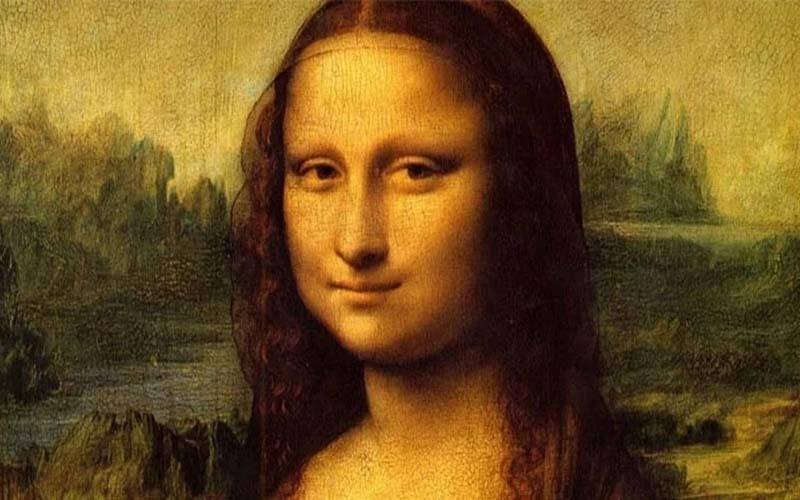
Italian dermatologist Dr Luigi Liano has argued in a research paper that Lisa Gherardini, widely believed to be the woman portrayed in the painting, may have had alopecia areata universalis, a condition that can cause extensive hair loss across the body.
The study, published in the journal Clinics in Dermatology, points to four features in the painting: the apparent absence of eyebrows and eyelashes, the hairline above the forehead and the smooth appearance of the skin.
According to Liano, the proposed diagnosis could explain these features. He also suggested that historical circumstances, including political instability and outbreaks of disease during Gherardini’s lifetime, may have contributed to stress associated with hair loss.
However, the theory remains unproven. The painting alone cannot establish a medical diagnosis, and no definitive historical or clinical evidence confirms that Gherardini suffered from the condition.
Lisa Gherardini was born in Florence, Italy, on June 15, 1479, into a prominent family. She married wealthy silk merchant Francesco del Giocondo at the age of 15. Many art historians believe she was the model for da Vinci’s portrait, which was painted sometime between 1503 and 1519.
The identification gained strong support in 2005, when a historical document dating to 1503 was discovered in the library of Heidelberg University.
The name Mona Lisa is derived from the Italian title Madonna Lisa, meaning “Madam Lisa”.
After her husband’s death, Gherardini reportedly moved to a convent, where she died on July 14, 1542, at the age of 63.