The Interior Ministry figures, reported by Europa Press, covered developments through 5 p.m. on Wednesday.
The National Police and Civil Guard accounted for 38 arrests. Catalonia’s Mossos d’Esquadra reported one additional arrest, while the Basque Country’s Ertzaintza reported 13.
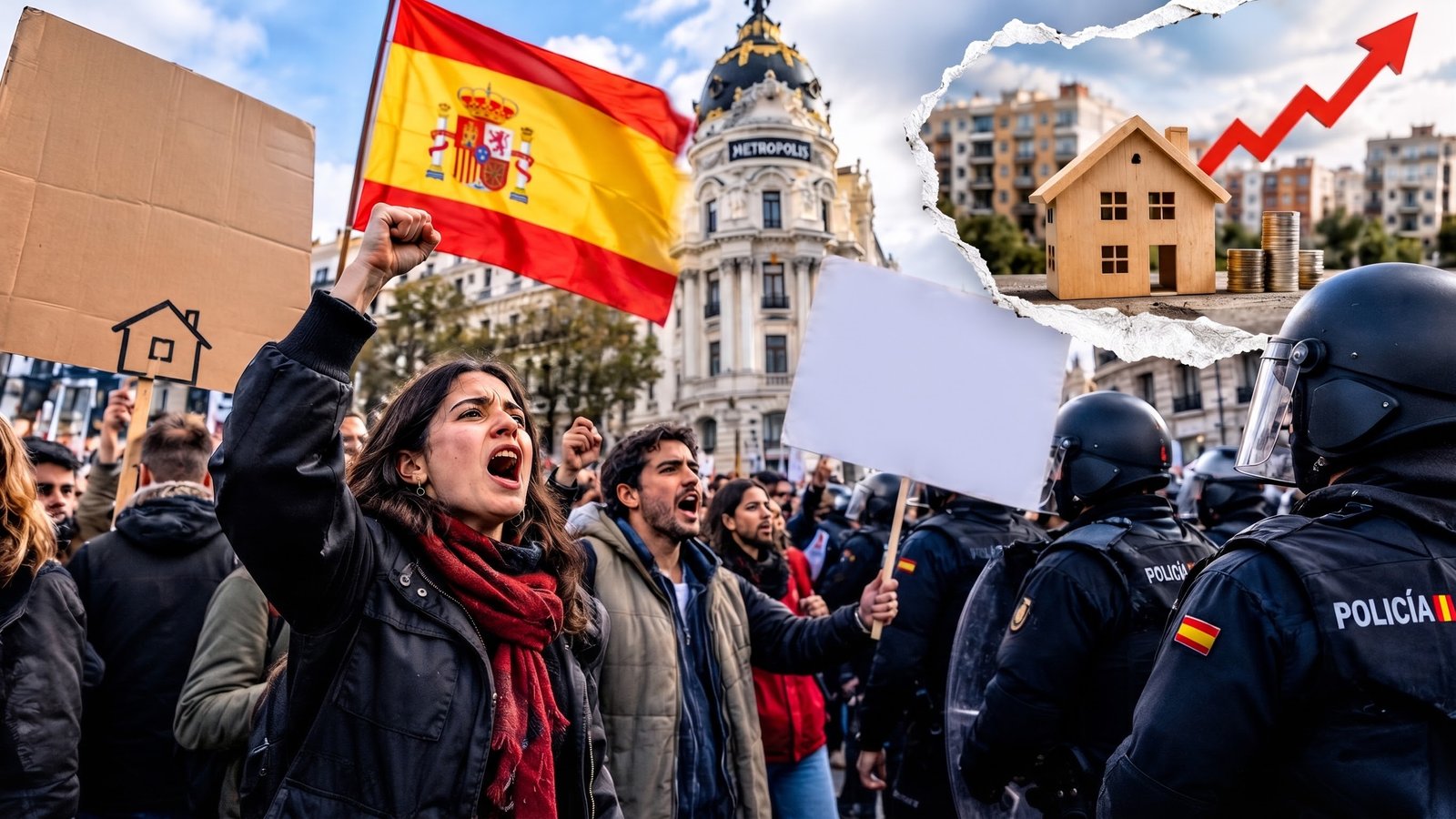
The strike also disrupted transport, affected businesses and triggered confrontations between protesters and police. Trade unions criticized police interventions, while authorities defended security measures designed to prevent violence and protect essential services.
Where were the 52 arrests made?
Madrid recorded 15 arrests by the National Police and Civil Guard, the highest number among the reported areas.
Andalusia accounted for 11 arrests, including four in Málaga, four in Almería and three in Granada.
The Valencian Community recorded six arrests. Four took place in Valencia city, while Castellón and Alicante each recorded one.
Authorities also reported two arrests in Zamora. Navarra, Valladolid, La Rioja and A Coruña recorded one each.
In Barcelona, the Mossos d’Esquadra arrested one person over the alleged burning of rubbish containers before the strike.
The Ertzaintza reported 13 arrests across the Basque Country. It also placed three people under investigation and identified more than 150 others.
These regional police figures explain the difference between the 38 arrests attributed to national police forces and the nationwide total of 52.
Police confrontations trigger criticism from unions
Police operations became another major point of controversy during the strike.
Trade unions reported the use of pepper spray against pickets at Mercamadrid and Granada Metro. They described the interventions as excessive and accused officers of using disproportionate force.
In Madrid, special police units deployed along Gran Vía as demonstrators blocked traffic. Some businesses closed amid concerns about possible disturbances.
Police sources reported arrests linked to alleged attacks on officers and other offences. In Málaga, four people were arrested over incidents involving burning rubbish containers and graffiti.
In the Basque Country, the Ertzaintza reported injuries to seven officers during separate confrontations.
Several left-wing political parties also criticized the police response. They alleged that some striking workers faced assaults, fines and unjustified arrests.
The unions said they intended to pursue legal action over police operations at Mercamadrid and Granada Metro.
However, the allegations of police misconduct remain claims by the unions and political groups. They should not be treated as established findings without independent investigation.
Spain’s first general strike since 2012
The November 11 action marks Spain’s first general strike in 14 years, according to Reuters.
The previous nationwide general strike took place in 2012, during the eurozone debt crisis, when workers protested austerity measures.
The latest mobilisation brings together labour unions and housing organisations around demands that extend beyond conventional workplace disputes.
The campaign focuses on affordable housing, improved wages, stronger tenant protections and the defence of public services.
The involvement of housing organisations reflects how access to affordable accommodation has become a central economic concern for Spanish workers.
Housing affordability emerges as the central issue
Housing costs have become one of the main drivers of the demonstrations.
According to Reuters, Spain faces an estimated housing shortage of approximately 750,000 homes. The deficit could exceed one million by 2028.
The agency also reported that average rents have nearly doubled over the past decade.
These pressures have intensified calls for stronger tenant protections and action against property speculation.
Demonstrators have demanded lower rents, more public housing and greater protection against evictions.
Housing organisations have also called for longer rental contracts and measures to prevent vulnerable tenants from losing their homes.
The death of 87-year-old Maricarmen Abascal after her eviction became a rallying point for housing activists, according to reporting by the Associated Press.
Her case helped connect housing campaigners with labour organisations and strengthened calls for nationwide mobilisation.
Transport disruption affects commuters and businesses
The strike also affected public transport, particularly in Madrid and Barcelona.
According to Renfe, 24% of scheduled high-speed and long-distance services were cancelled.
The rail operator also reported cancellations affecting 10.17% of scheduled public-service train operations, including commuter and medium-distance services.
Madrid’s commuter rail network and Barcelona’s Rodalies system experienced some of the largest disruptions.
Barcelona’s public transport authorities maintained minimum services during designated peak periods. Outside those periods, substantial restrictions affected metro and bus operations.
These disruptions created additional difficulties for commuters, passengers and businesses relying on public transport.
Passengers could check updated travel information through Renfe’s official website and the relevant regional transport authorities.
Unions and employers disagree over strike participation
The scale of participation remains contested.
The Confederation of Tenants’ Unions estimated that approximately four million workers participated, according to reporting by El Constitucional.
However, business organisations presented a substantially different assessment.
The Spanish Confederation of Business Organisations (CEOE) and Cepyme estimated participation at below 5%, based on information from their associated organisations and companies, according to the same report.
These figures reflect different assessments and should not be treated as directly comparable without examining their methodologies.
The dispute highlights a familiar challenge in measuring nationwide industrial action. Participation estimates can vary according to the sectors surveyed, the number of workplaces affected and the method used to calculate attendance.
The impact was particularly visible in industrial facilities, ports and transport operations.
Reuters reported significant stoppages in several industrial sectors, including automotive manufacturing.
Economic impact extends beyond the strike day
The strike’s economic consequences may extend beyond lost working hours.
Industrial stoppages can affect manufacturing schedules, deliveries, logistics and business operations.
Transport interruptions can also create additional costs for commuters, employers and companies dependent on supply chains.
However, the overall economic impact remains difficult to establish.
Reuters cited BBVA Research economist Miguel Cardoso, who estimated that the strike could reduce Spain’s annual gross domestic product by approximately 0.1% to 0.2%.
The estimate reflects the potential short-term economic effect rather than a confirmed final calculation.
The growing role of service-sector employment and remote working may also limit the economic impact compared with previous general strikes.
November 29 election adds political significance
The general strike comes less than three weeks before Spain’s November 29 snap election.
Housing affordability has become a major political issue, placing pressure on parties to present credible solutions.
Reuters reported that Prime Minister Pedro Sánchez’s government faces political challenges linked to corruption allegations involving members of his political circle and public anger following a deadly train crash.
The housing protests have provided opposition parties and the governing coalition with another major issue to address.
For the government, the challenge is to demonstrate progress on housing affordability and workers’ purchasing power.
For opposition parties, the protests provide an opportunity to question existing housing and economic policies.
However, the strike’s political impact will depend on whether public dissatisfaction translates into electoral support.
What happens after the general strike?
The immediate focus will shift towards the economic and political response to the protesters’ demands.
Housing organisations want stronger tenant protections, lower rents and a larger supply of public housing.
Labour organisations are seeking improved wages and better working conditions.
The police response may also face further scrutiny following union complaints and announced legal action.
Meanwhile, the November 29 election will provide an important test of how voters assess the government’s response to housing affordability and economic pressures.
The 919 reported incidents and 52 arrests provide a measure of the security challenges surrounding the strike. But the wider issue is the growing connection between housing insecurity, workers’ incomes and public confidence in Spain’s economic policies.