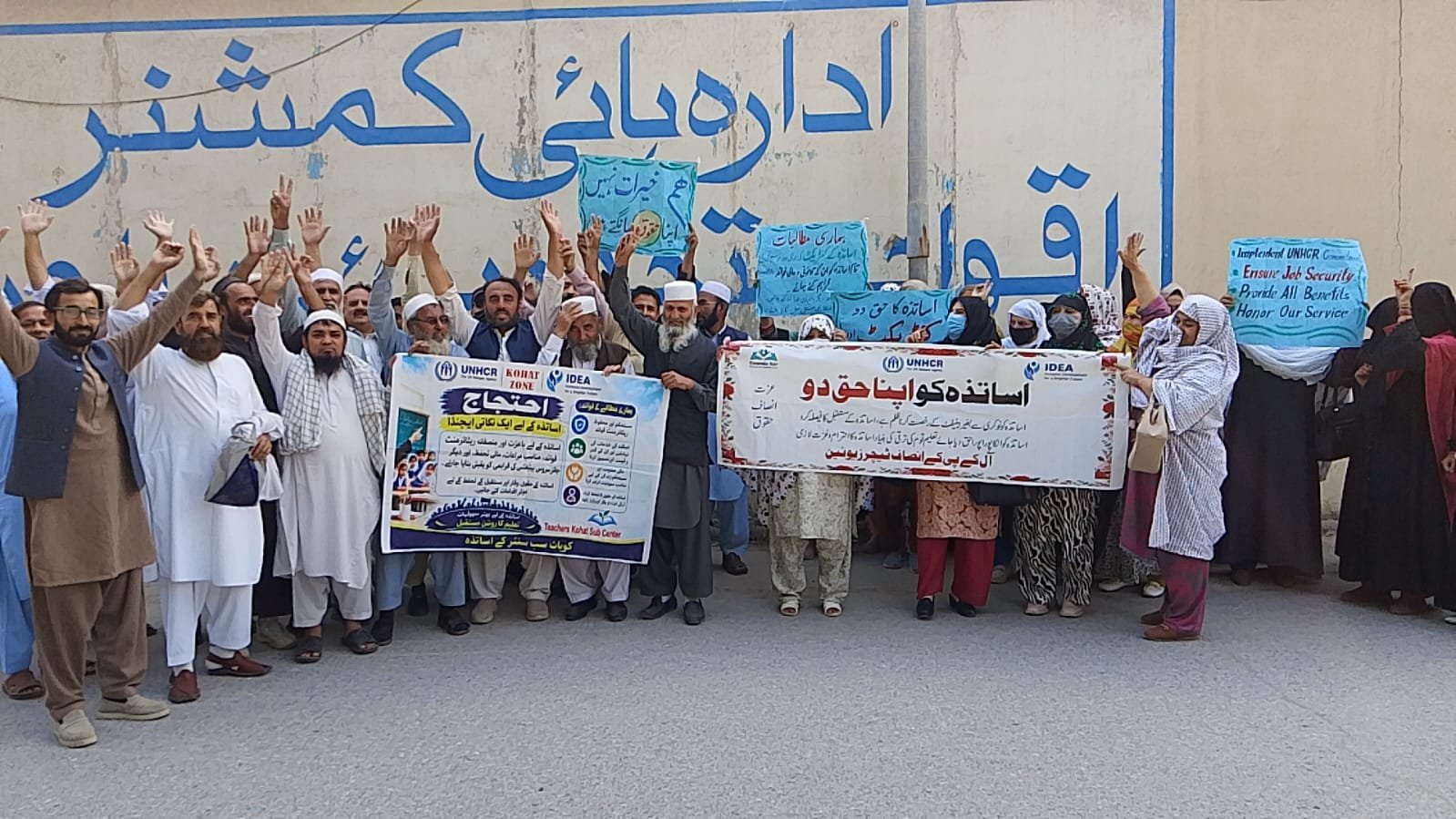
The affected teachers staged a sit-in outside the United Nations High Commissioner for Refugees (UNHCR) office at Spin Jamaat on Tuesday, demanding financial compensation and recognition of their long years of service.
The protest was led by Tufail Ahmad and Farhana Durrani, who represented the female teachers.
Speaking to the protesters, Mr Ahmad said the teachers had devoted nearly four decades to educating Afghan refugee children under the UNHCR-supported programme but were suddenly dismissed on October 31 without prior notice or financial assistance.
Ms Durrani said she had spent 35 years teaching Afghan children and was deeply disappointed that her services had been terminated through a telephone call, without any compensation or financial support.
The protesting teachers said they had served in refugee camp schools for decades but remained deprived of several employment benefits, including medical allowances, financial incentives and gratuity.
They said the sudden termination had plunged 291 families into financial uncertainty, leaving many employees, particularly women and elderly teachers, without a source of income.
The protesters complained that despite repeated visits to the UNHCR office, their grievances had not been addressed and no responsible official had come forward to hold talks with them.
They also alleged that the office had been closed to them and police personnel deployed outside, while they were warned of possible baton charges.
The dismissed teachers said they would continue their peaceful protest until their demands were addressed and appropriate financial relief provided.
The affected employees belong to various districts of Khyber Pakhtunkhwa, including Peshawar, Nowshera, Mardan, Swabi, Haripur, Timergara, Kohat, Chakdara, Dera Ismail Khan, Bannu, Lakki Marwat, Hangu, Thall, Jalala and Shergarh.
They appealed to Governor Faisal Karim Kundi to take notice of the matter and intervene to secure financial assistance for the affected families.
The protesters said the issue extended beyond Peshawar, as teachers, including elderly women, had travelled from remote parts of the province to demand their rights.
A large number of male and female teachers participated in the sit-in and vowed to continue their protest until their grievances were addressed.