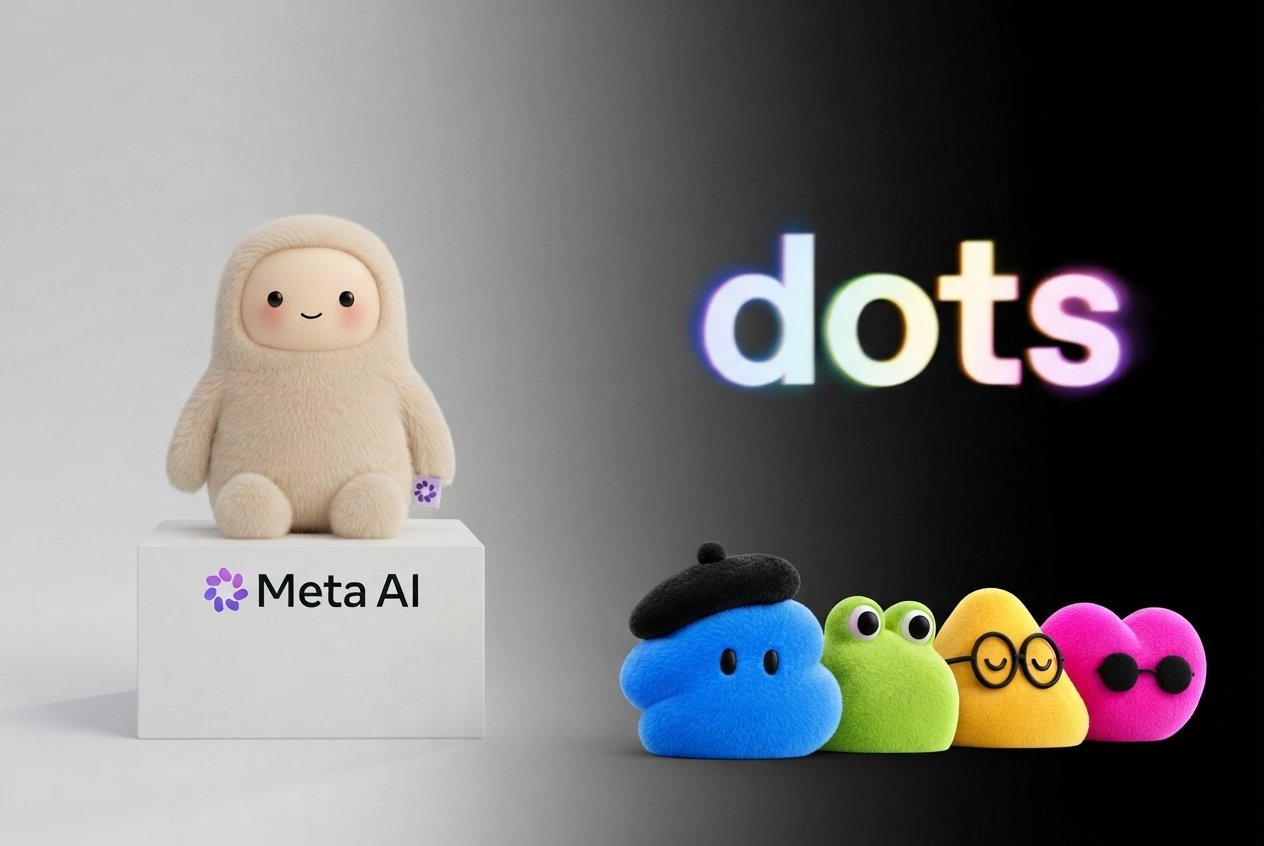
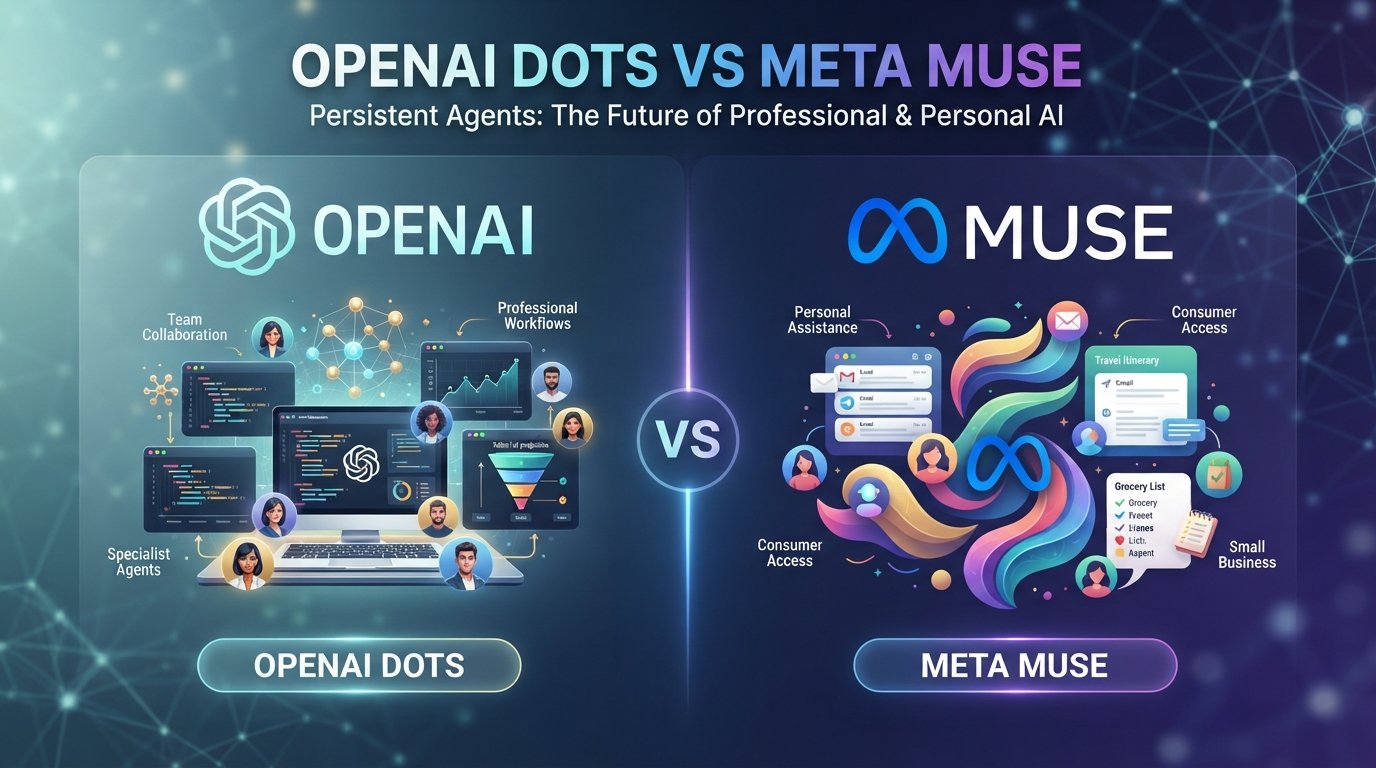
While both systems use dedicated cloud environments to manage multi-step tasks independently, they target slightly different use cases-OpenAI leans toward professional and team workflows, whereas Meta focuses heavily on personal assistance and consumer accessibility.
What Are OpenAI Dots?
Introduced at DevDay 2026, Dots are always-on AI agents built to function as digital coworkers. Rather than requiring continuous human prompts, a Dot can be assigned a goal to pursue independently in the background.
- Cloud Computing Environment: Each Dot operates on its own dedicated cloud computer and browser, allowing it to interact with software and websites securely without taking over a user's physical machine.
- Ecosystem Integrations: Dots connect with over 4,000 applications and integrate directly into collaboration hubs like Slack, Microsoft Teams, and ChatGPT.
- Contextual Memory: Dots learn user preferences over time and retain context from previous interactions, preventing users from restarting projects from scratch.
OpenAI Dots vs. Meta Muse: Core Feature Comparison
|
Feature |
OpenAI Dots |
Meta Muse |
|
Core Focus |
Personal and professional AI agents |
Personal AI agent and small-business workflows |
|
Background Operation |
Yes |
Yes |
|
Dedicated Computing |
Cloud computer and browser |
Muse Secure VM |
|
Application Access |
4,000+ applications |
Expanding consumer & business integrations |
|
Team Collaboration |
ChatGPT Space |
Business capabilities expanding |
|
Initial Access |
Pro, Business Premium, and Enterprise |
Broad consumer rollout |
|
Free Access |
No general free Dots tier announced |
Free access available |
|
Paid Pricing |
Included in existing plans; expanded capacity planned |
$20 and $100 monthly tiers |
Accessibility and Pricing Strategy
Pricing and availability represent one of the sharpest contrasts between the two platforms.
- Meta Muse: Offers a broad consumer rollout that includes free access alongside optional paid tiers at $20 and $100 per month. Meta has also integrated Muse into WhatsApp and small-business tools.
- OpenAI Dots: Currently targeted toward high-end and enterprise adoption rather than a wide free consumer rollout. Eligible ChatGPT Pro and Business Premium subscribers receive one Dot under their current plan, with additional capacity expected.
Security, Autonomy, and Guardrails
Because persistent agents can execute actions-such as modifying files, managing emails, or drafting invoices-security and authorization controls are vital.
- OpenAI Safeguards: OpenAI incorporates Custom Rules, permissions, an Activity View, and automated review systems to pause tasks or require human approval before consequential actions occur.
- Meta Safeguards: Meta relies on its Muse Secure VM architecture, encrypted credential storage, and audit controls to give users full oversight of agent behavior.
Both companies emphasize that users should maintain final approval checkpoints for sensitive tasks, as autonomous execution still carries inherent risks.
Frequently Asked Questions
What are OpenAI Dots?
Dots are always-on, autonomous AI agents powered by OpenAI's model architecture that execute multi-step tasks across thousands of applications without constant user supervision.
How do OpenAI Dots compare to Meta Muse?
While both provide dedicated cloud environments for background task execution, OpenAI Dots target professional software workflows and team collaboration, whereas Meta Muse emphasizes consumer accessibility and personal organization.
Is Meta Muse free to use?
Yes, Meta provides free access to Muse alongside advanced paid tiers priced at $20 and $100 per month.
Additional input from Reuters