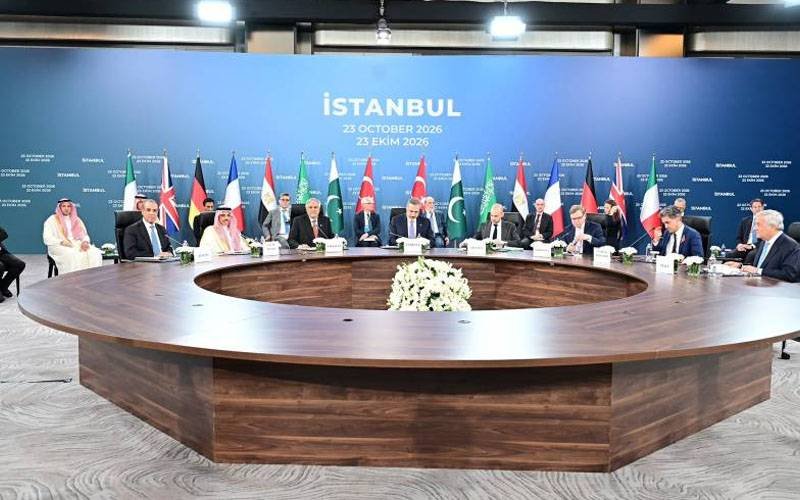
The agreement was reached during a meeting of the four countries’ foreign ministers in Istanbul, where they discussed regional developments and reaffirmed their commitment to resolving conflicts through dialogue and diplomacy.
In a joint statement, the ministers stressed that the dispute involving the United States, Israel and Iran could only be resolved through negotiations. They urged all parties to avoid targeting civilians, civilian infrastructure and vessels.
The four countries emphasised that freedom of navigation through the Strait of Hormuz was essential, warning that disruptions to maritime routes could affect global supply chains and the transportation of energy, fertilisers and food.
They rejected actions that obstruct lawful maritime traffic and called for safe and uninterrupted passage through the strategic waterway to be fully restored without delay. The statement also expressed support for a memorandum of understanding reached in Pakistan.
Condemnation of Houthi Attacks
The joint statement condemned Houthi attacks on Saudi Arabia, particularly those targeting civilians and civilian infrastructure, as well as attacks on commercial vessels in the Red Sea and the Bab al-Mandab Strait.
The ministers called on the Houthis to immediately halt military operations and attacks, while expressing full solidarity with Yemen’s government and Saudi Arabia.
They also warned that Houthi activities were worsening Yemen’s humanitarian crisis.
Palestinian Statehood
The four countries reiterated their support for an early implementation of the two-state solution to the Palestinian issue, reaffirming the Palestinian people’s right to self-determination and the establishment of an independent, sovereign Palestinian state.
They supported East Jerusalem as the capital of a future Palestinian state and called for an end to attempts to alter the city’s legal and historical status.
The statement further described the Israeli occupation as a fundamental source of instability in the region and beyond.
The ministers agreed to maintain close consultation and coordination on regional issues, underscoring the importance of sustained diplomatic engagement to address ongoing conflicts and restore regional stability.