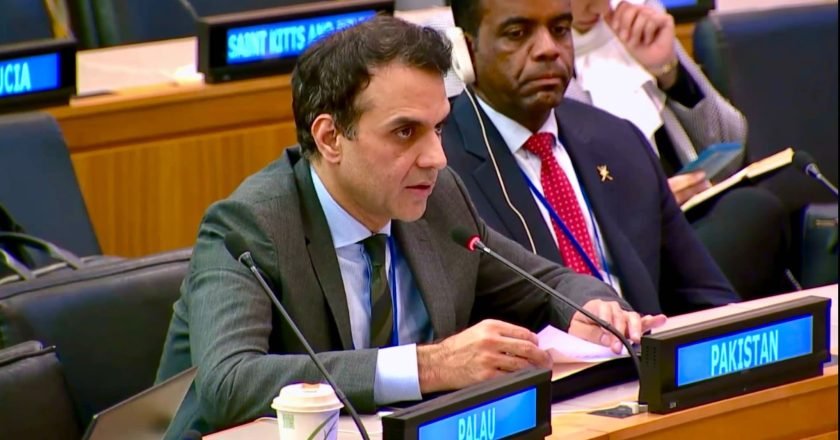
Speaking after a briefing on the activities of the United Nations Interim Administration Mission in Kosovo (UNMIK), Pakistan’s Acting Permanent Representative to the UN Ambassador Usman Jadoon condemned actions targeting people on the basis of religion, belief or ethnicity and called on the relevant authorities to take decisive action.
Ambassador Jadoon also expressed concern over statements regarding the diversion of shared water resources, stressing that transboundary waters should not be used for political point-scoring or narrow geopolitical objectives.
He said sustained participation in the European Union-facilitated dialogue between Belgrade and Pristina, along with the sincere implementation of agreements reached, remained the only viable way to address outstanding challenges and secure lasting peace and stability.
The Pakistani envoy underscored the importance of confidence-building measures and backed UNMIK’s efforts to promote harmony, coexistence and tolerance among Kosovo’s communities.
He said Pakistan maintained friendly relations with both Serbia and Kosovo and remained committed to a peaceful, stable and prosperous Balkans. He urged both sides to uphold mutual respect, recognise each other’s sensitivities and protect the social and economic rights of all people in the region.
Briefing the Security Council, Peter Due, the UN Secretary-General’s Special Representative and head of UNMIK, said tensions had increased in Kosovo and the wider region over the preceding six months. He noted that peaceful elections in June had been followed by political uncertainty and heightened rhetoric.
Due said property disputes, stalled reintegration of Kosovo Serb judicial personnel and allegations of police ill-treatment had weakened trust and deepened perceptions of unequal treatment.
He also referred to convictions involving former Kosovo president Hashim Thaci and three other former Kosovo Liberation Army leaders for war crimes, expressing concern over legislative amendments that could limit the powers of the Specialist Chambers. He stressed that judicial independence must be respected.
Welcoming the formation of Kosovo’s institutions, Due called for effective governance serving all communities and renewed engagement in the EU-facilitated dialogue between Belgrade and Pristina.
Kosovo declared independence from Serbia in February 2008, but Belgrade has not recognised it. The European Union has since facilitated dialogue between the two sides to address outstanding disputes and improve relations.