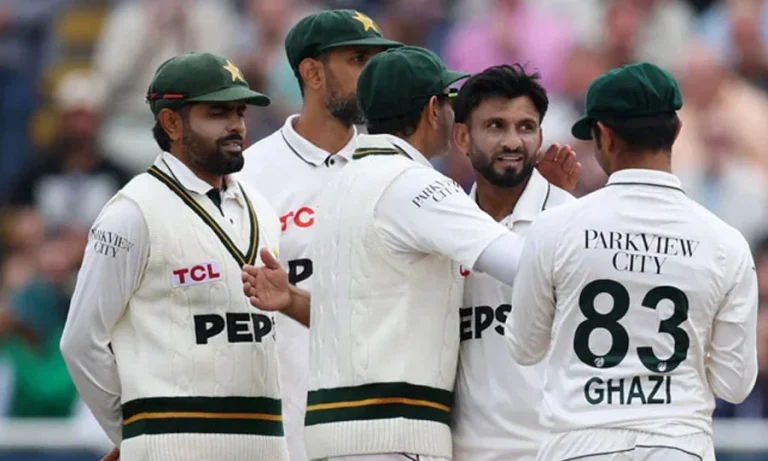
The series loss itself was not unexpected, but the manner in which Pakistan performed has drawn unusually strong criticism. English media and former cricketers reportedly described the team as one of Pakistan’s worst in decades, while the PCB and players showed little public reaction to the criticism.
Instead of addressing the underlying problems, changes to the playing squad were again seen as the preferred solution, leaving the responsibility largely on individual players.
Selection and management concerns
A major criticism has centred on the influence of the selection committee and PCB officials over team composition. When the squad for England was announced, Aqib Javed had described it as the best available group of players, despite concerns over the inclusion of several players whose recent performances had been questioned.
The sudden move of Sarfaraz Ahmed from coaching the junior side to the national team setup also raised questions. His previous relationship with several players reportedly affected the dressing-room environment, while disagreements within the coaching setup added to the uncertainty.
Changing the coach during the tour was another controversial decision, followed by the replacement of seven players, further highlighting what critics described as a lack of consistency in team management.
Questions over Saim Ayub’s selection
The decision to bring Saim Ayub back from the Caribbean to join the Test squad also came under heavy criticism. The move followed Imam-ul-Haq’s withdrawal during the Lord’s Test, while Ayub had been struggling for form in the Caribbean Premier League.
Critics questioned why a player with limited first-class cricket experience was immediately brought into a Test series against England.
Ayub has played only four first-class matches in four years, according to the analysis, while spending much of his time in franchise cricket. The decision to select him ahead of established opening options such as Shan Masood and Abdullah Shafique has therefore become a major talking point.
Batting collapse
Pakistan’s batting was one of the biggest disappointments of the series. The top order struggled throughout, while experienced players including Babar Azam and Saud Shakeel were criticised for playing poor shots despite having significant Test experience.
Abdullah Shafique, who had received praise from sections of the English media, also failed to produce consistent performances. Shan Masood managed some useful innings but could not change the overall outcome.
The selection of wicketkeeper Ghazi Ghori was also questioned, with critics arguing that players such as Rohail Nazir and Saad Baig had stronger credentials.
Similarly, the decision to hand a Test debut to Imran Randhawa attracted criticism, with questions raised over whether he was ready for international cricket.
Bowling struggles
Pakistan’s bowling attack also struggled for consistency, with Mohammad Abbas standing out as the most reliable performer during the series.
Mohammad Ali and Khurram Shahzad failed to make the most of favourable conditions, while Abbas repeatedly troubled England’s batters with disciplined bowling and late movement.
One of the few bright spots was debutant Razaullah, who impressed with his pace in the final Test.
Controversies overshadow tour
The tour was also surrounded by disciplinary controversies. Mohammad Rizwan and Imam-ul-Haq were sent back on disciplinary grounds, while reports emerged about disagreements involving Rizwan and newly appointed coach Mike Hesson.
Some reports linked Rizwan’s removal to his religious activities, although those claims remained unsubstantiated and Hesson denied them.
The circumstances surrounding the players’ return and the reported confiscation of their mobile phones also fuelled speculation about possible match-fixing allegations. However, investigations are still underway and no conclusion has been established.
Imam’s withdrawal during the Lord’s Test also attracted criticism, with commentators questioning the nature of his reported injury.