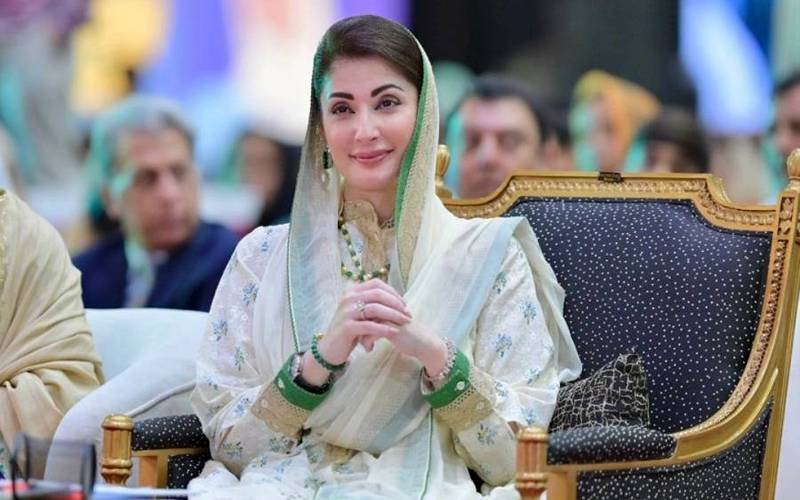
The decision was taken during a special meeting on educational reforms chaired by the chief minister, where the School Education Department’s subsidiary institution, PECTA, gave a detailed briefing on the proposed curriculum.
The meeting reviewed the curriculum for English, Mathematics, Social Studies, Urdu and Early Childhood Education. According to the briefing, the revised curriculum aims to discourage rote learning and strengthen students’ educational foundations.
Under the new curriculum, every textbook will include QR codes that students can scan to access video lessons related to the relevant topics, providing additional digital learning support.
Maryam Nawaz directed the preparation of an artificial intelligence curriculum for students from Grade 1 to Grade 12 and called for the establishment of AI laboratories in schools. She also ordered that the printing of the new textbooks be completed before March.
The meeting also decided to introduce mental health training for teachers for the first time in Punjab. A proposal to appoint visiting faculty psychologists in every district was also considered, while the chief minister directed authorities to provide online counselling facilities for students.
The meeting agreed on legislation to eliminate corporal punishment in schools. The establishment of discipline corners in classrooms as an alternative to physical punishment was also discussed.
It was further agreed that one day each week would be dedicated to teachers’ training across Punjab. Authors of the new textbooks will also conduct training sessions for teachers to help them effectively implement the revised curriculum.
The chief minister said she wanted to see an effective educational model in Punjab’s government schools, with special attention given to primary education to strengthen children’s academic foundations.
She said resources were available but their wastage had to be prevented, adding that the provincial government was focusing on increasing digital literacy in schools.