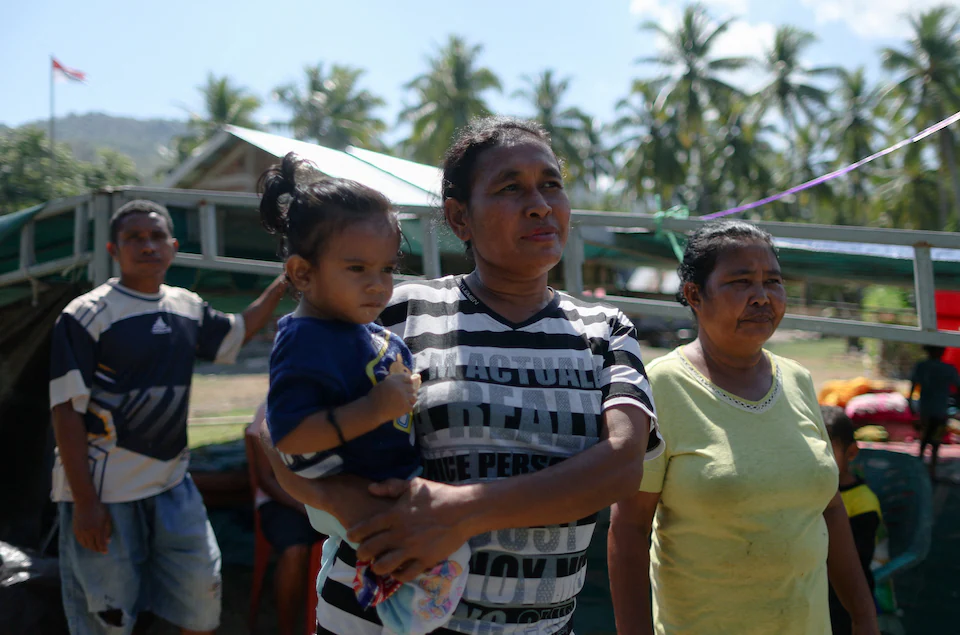
Saturday's disaster in the province of East Nusa Tenggara was the country's deadliest since a 2022 quake killed hundreds in West Java. The official death toll was at 53 as of late Sunday.
The quake also caused landslides and blocked roads across Indonesia's southernmost province, including the regions of Sikka and Manggarai.
Thousands were evacuated, with many sheltering in tents outdoors and afraid to return to their homes due to fears of aftershocks.
There were nearly 1,600 aftershocks in the province as of Monday, local media reported the geophysics agency chief as saying. The agency reported a 5.6 quake in Nagekeo region, near the initial epicentre, on Monday morning.
In the parking lot of a damaged health centre littered with tents and hospital beds in a village close to the quake-affected Ende region, Firmus Woge, a 64-year-old farmer, was being treated for his asthma, aggravated by the panic setting in as the buildings around him continued to rattle.
He said he had difficulty breathing overnight. Though better on Monday morning, the fresh aftershocks again took his breath away.
SEARCH TO CONTINUE
The search will continue on Monday, authorities said.
Fathur Rahman, chief at the rescue office in Maumere, Sikka's capital, told Reuters on Monday the search will focus on aerial monitoring for anyone missing.
Rescuers will use an extrication device and a helicopter, Fathur said, adding there were no reports of people missing and no challenges hampering the search.
Authorities readied planes to deliver aid such as food and tents, the chief of the country's disaster mitigation agency Suharyanto said late on Sunday. The quake damaged around 500 homes, he said.
Indonesia will also build an emergency field hospital in several areas, said Benjamin Paulus Octavianus, the country's deputy health minister.
Neurosurgeons and orthopaedic surgeons are needed to treat head trauma and broken bones, Benjamin said.--Reuters