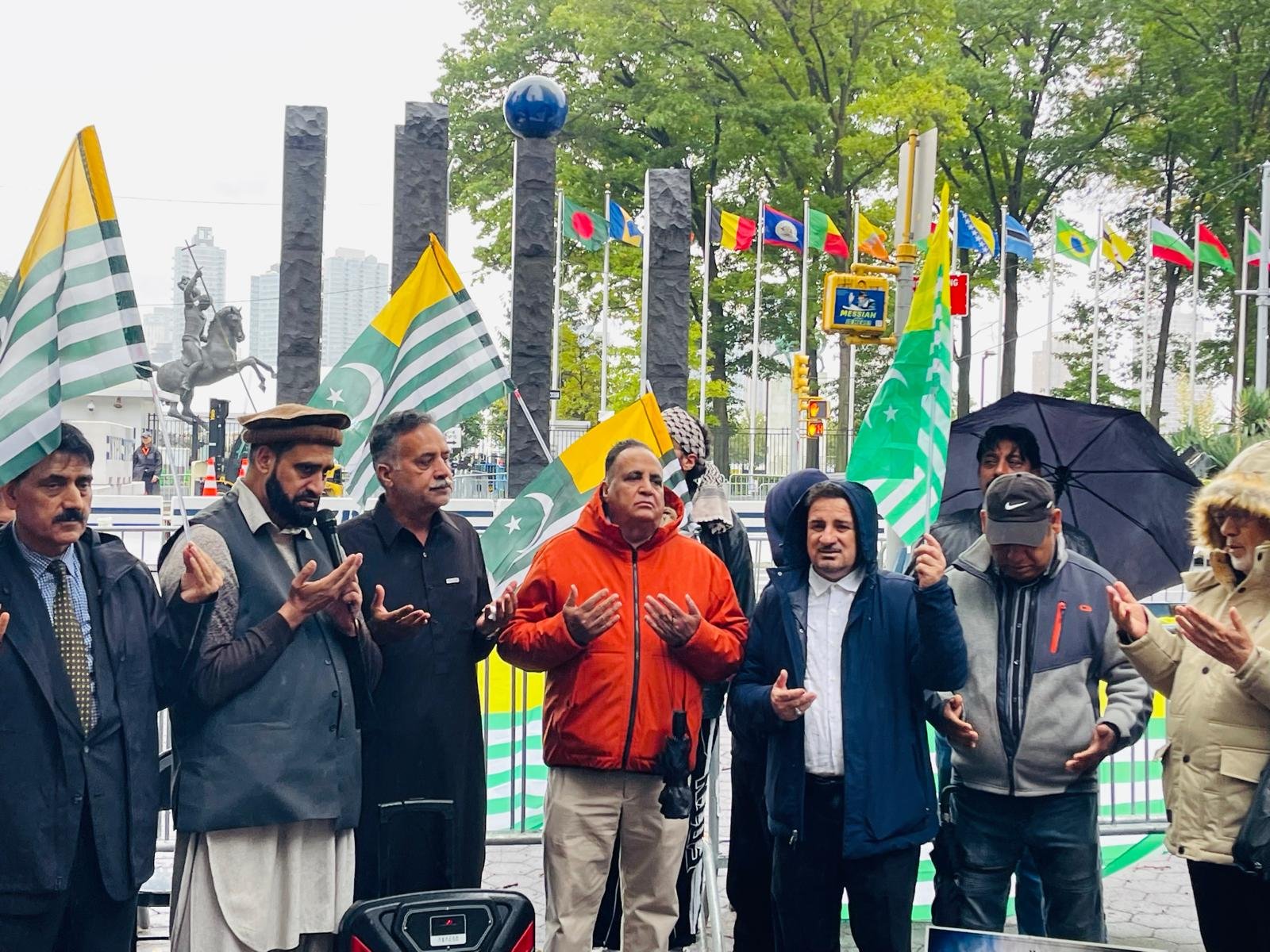
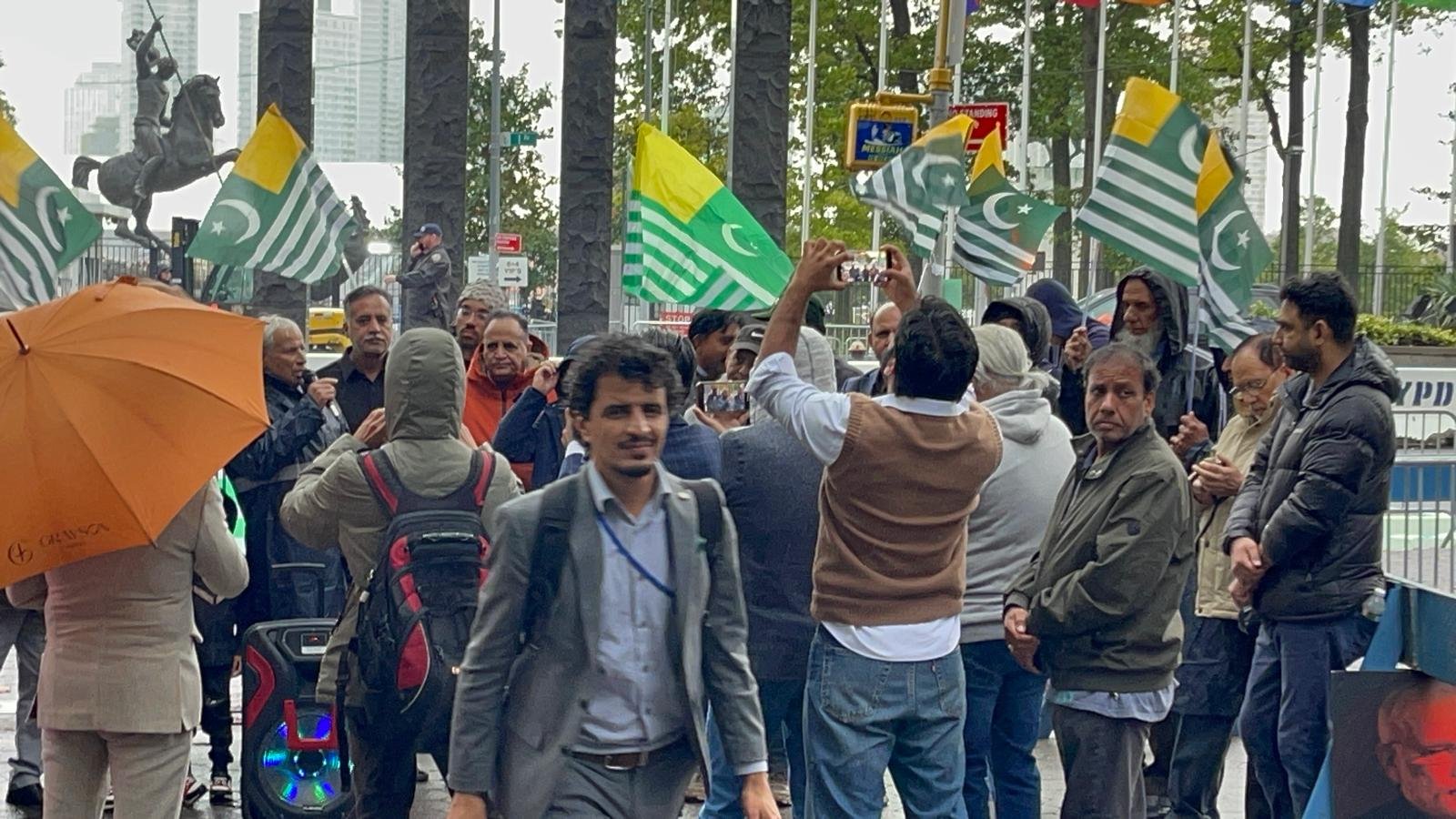
Despite strong winds and heavy rain, demonstrators remained outside UN headquarters. Women, children and other participants carried banners and chanted slogans supporting peace, justice and Kashmiri self-determination.
The World Kashmir Awareness Forum sponsored the demonstration. Organizers said Raja Mukhtar and Sardar Taj Khan played key roles in coordinating the gathering.
RELATED: PM Calls for Diplomacy, Regional Peace in UNGA Address
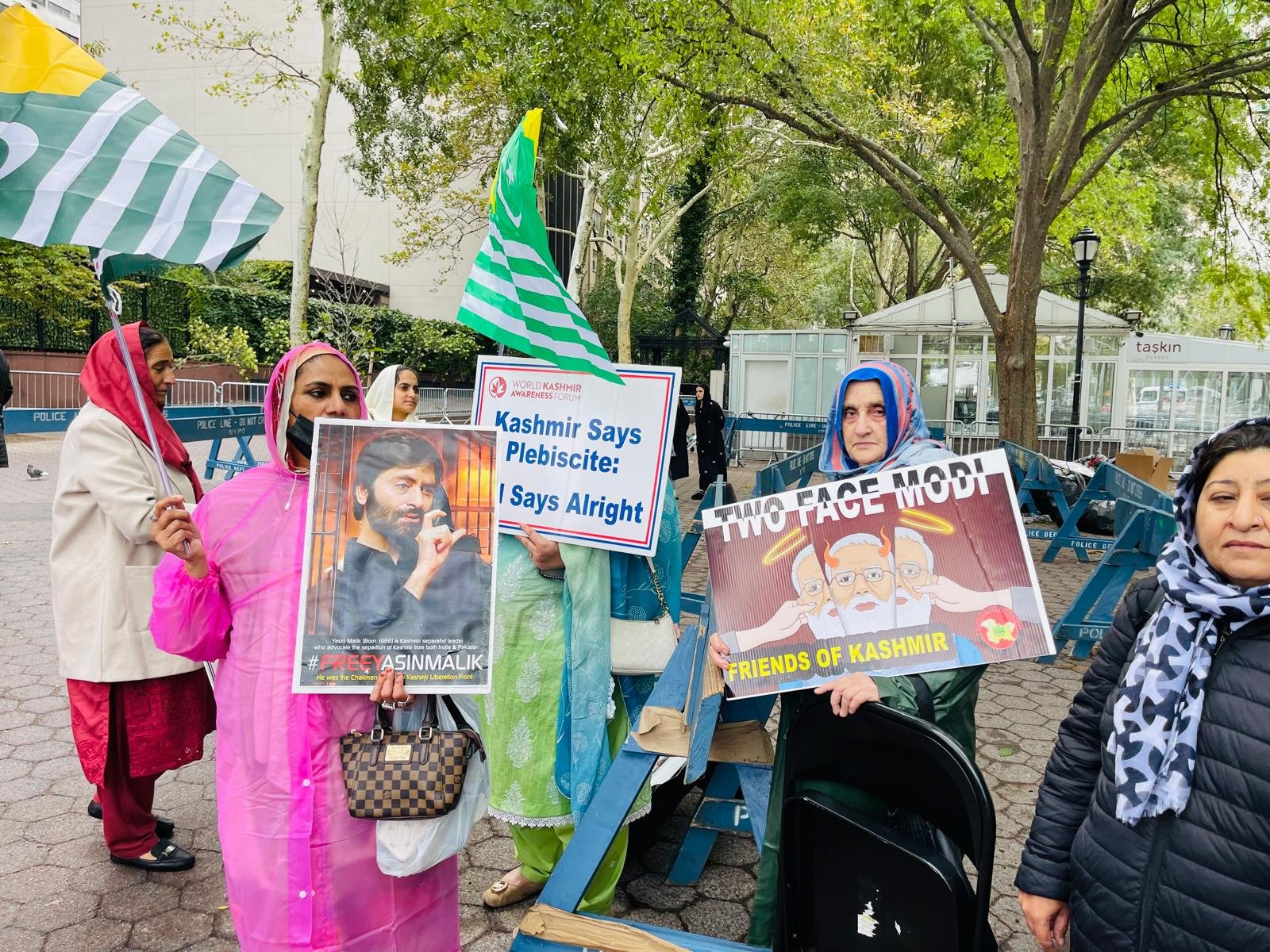
Placards displayed messages challenging India’s policies in Kashmir. Other signs called for a UN-backed settlement and the release of Kashmiri detainees.
Protesters Invoke Gandhi’s Words
The protesters also challenged Jaishankar’s reference to Mahatma Gandhi during his UNGA speech.
Jaishankar quoted Gandhi’s words: “There is no way to peace. Peace is the way.” He said Gandhi’s message should inspire the international community.
The demonstrators asked whether that principle should also apply to Kashmir. They cited Gandhi’s July 29, 1947 remarks about the people of Kashmir.
Gandhi said the people should decide whether Kashmir joined India or Pakistan. He also said, “The ruler is nothing. The people are everything.”
The protesters argued that Gandhi’s words raise questions about political participation and Kashmir’s future.
Appeals to the United Nations
The demonstrators urged the United Nations to revisit its longstanding involvement in the Kashmir dispute. They called for a peaceful settlement consistent with UN principles and relevant resolutions.
They also questioned India’s position on Kashmir and its approach to dialogue with Pakistan. The protesters called for the involvement of Kashmiri representatives in efforts to resolve the dispute.
The demonstrators further criticized what they described as a gap between India’s diplomatic language and its Kashmir policies. Those claims reflect the organizers’ political position and remain contested by India.
Calls for Release of Detainees
The rally also highlighted the cases of several Kashmiri political figures and activists. Organizers called for the release of Muhammad Yasin Malik, Shabir Ahmad Shah and Masarat Alam Butt.
They also named Aasiya Andrabi, Sofi Fehmeeda and Nahida Nasreen among those whose cases they highlighted.
The protesters questioned the broader circumstances surrounding Yasin Malik’s imprisonment. They also cited his past political engagement during the government of former Indian Prime Minister Manmohan Singh.
Human Rights Watch previously reported Malik’s 2006 meeting with Singh and his proposal for dialogue involving Kashmiri militant leaders.
The protesters called for due process, transparency and independent scrutiny of cases involving Kashmiri detainees.
Organizers Stress Peaceful Message
The organizers said the demonstration showed cooperation among different Kashmiri groups. They described peace, justice and Kashmiri political rights as their common objectives.
Speakers included Sardar Sawar Khan, Sardar Imtiaz Garalvi and Sardar Sajid Sawar. Other speakers included Raja Razak Khan, Khalid Awan and Syed Raza Hussain.
Amna Taj, Asad Pervez, Mohammad Sabir, Sardar Habib Khan and Riaz Chohan also spoke. Jamshied Gujjar, Maqbool Gujjar, Choudhary Ishaq and Farah Sawar were also listed.
Netallia Taj, Zienum and others also participated in the gathering, according to organizers.
Dr. Ghulam Nabi Fai could not attend the demonstration. He was participating in a global conference in Kuala Lumpur, organizers said.
Fai said the women and children who remained outside during the rain delivered a message to the world. “Kashmir needs the attention of the world, and its people cannot be forgotten,” he said.
The demonstration ended with an appeal to India, Pakistan and the United Nations. Organizers urged all sides to pursue a peaceful and durable settlement of the Jammu and Kashmir dispute.