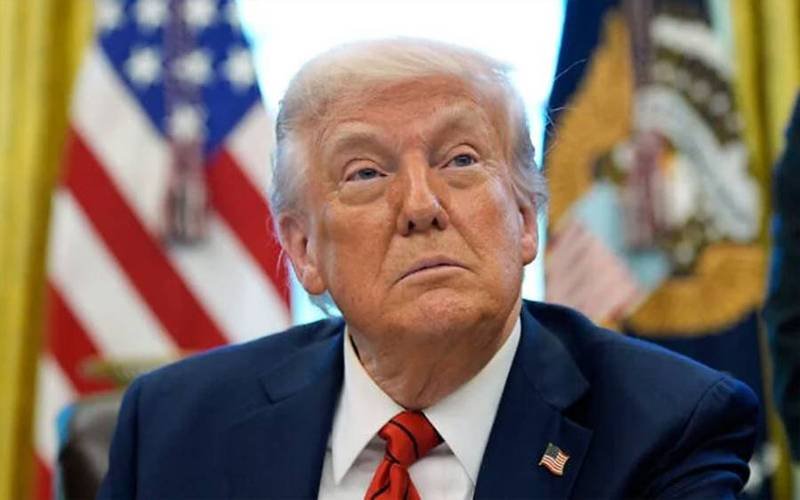
There are multiple reasons behind Trump’s decisive defeat. These include the US-Iran war, which never received broad public approval, and skyrocketing inflation that hit Americans hard. His draconian economic measures, including sweeping tariffs on different countries, also turned international sentiment against his economic policies. However, political analysts believe the crushing inflation faced by Americans appears to be at the heart of his defeat.
Trump’s Midterm Defeat Follows a Historic Pattern
Historically, Trump’s defeat in the midterm elections does not break with established US political traditions. Similar outcomes have occurred before. Since World War II, only two US presidents have managed to win their midterm elections.
American political history shows that presidents have continued exercising their constitutional powers despite losing midterm elections. Trump, therefore, is no exception. He is likely to retain full executive powers and continue pursuing his current policies.
Although the midterm results represent an emphatic defeat, Democrats have convincingly turned the tables on Trump. Yet, he is unlikely to abandon the strategic goals he has set for himself. Despite losing his majority in both chambers, he will continue exercising executive powers.
Trump Faces a Tougher Road Ahead
Trump will remain in office for the rest of his term. However, the proverbial Sword of Damocles will hang over his presidency throughout this period.
Democrats are unlikely to give him a carte blanche to exercise executive powers arbitrarily. His ability to pursue sweeping policies will face significant constraints. After losing the majority in both the Congress and the Senate, Trump has arguably been reduced to a lame duck.
Uncertainty Over Trump’s Iran War Strategy
As for the war with Iran, Trump’s volatile political disposition makes his future strategy difficult to predict. He could decide to escalate the conflict significantly. Alternatively, he could pursue reconciliation and soften his stance toward Iran.
Such a shift could allow the United States to extricate itself from a war that has brought severe economic hardships to Americans and the wider world.
From Man of Peace to Man of War
What an irony! Trump projected himself as a man of peace during his presidential campaign. He promised to end the US war in Afghanistan and establish peace.
Yet, he eventually became a man of war when he plunged the United States into another war of attrition with Iran. He did so despite repeated advice from friends who warned against becoming entangled with Iran.
Such a conflict, they argued, could become another Vietnam or Afghanistan for the United States.
Who can forget Trump’s criticism of his predecessor during the presidential campaign for waging war in Afghanistan? He promised to withdraw American forces after taking office, and he eventually did so.
However, he failed to maintain that image as a man of peace after plunging the United States into another war with Iran.
Trump Faces a Painful Political Reckoning
Following his crushing defeat at the hands of the Democrats, Trump must be confronting a painful realization about the policies to which he remained committed.
He repeatedly ignored advice from close associates and appeared unwilling to confront changing realities on the ground.
He has also acknowledged his mistake in entering the war with Iran, recently citing the conflict as a major reason for his defeat.
Trump must now come to grips with the political reality confronting his administration. He needs to reconsider his political, economic and diplomatic policies, above all his approach to war.
After losing the political battle in the midterm elections, Trump is walking a political tightrope. The challenge now will be whether he can adjust his strategy before his remaining term becomes even more difficult to manage.