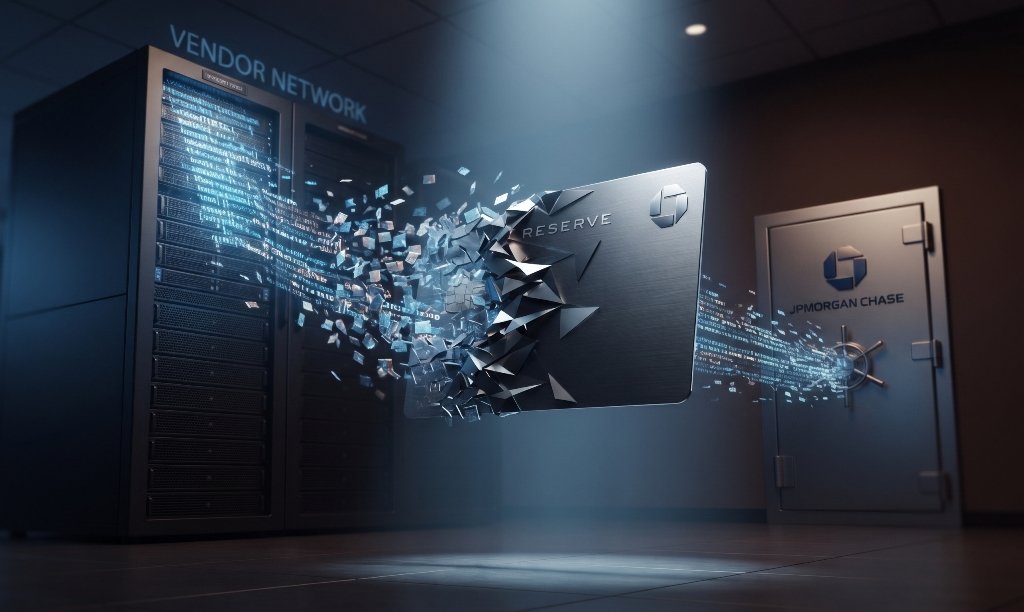
The leaked Chase records appear to be tied to the bank's invitation-only Reserve card program, which serves some of its wealthiest clients. Reuters reviewed the files and counted more than 16,000 customer email addresses. No card numbers or passwords have been reported in the leak.
Chase says its own systems were not breached. But the incident shows how one marketing or benefits vendor can expose customers of several financial firms at once. It also hands scammers the raw material for convincing phishing messages.
Was Chase hacked? What the bank has confirmed
Short answer: Chase says the attack hit third-party vendors, not the bank's own systems.
In a statement posted on X, JPMorgan said: "We have learned that third parties who provide services to the firm were the target of a cyber attack." The bank said it believes the attackers "accessed certain marketing data held by those vendors," which "may include some customer names and email addresses."
Chase added that "there is no disruption to our services." It said it will contact affected customers where appropriate and offer complimentary credit monitoring.
Visa and Mastercard confirmed similar vendor incidents the same day:
- Visa traced the claims to a service provider in the Asia-Pacific region. "Visa's systems were not involved and were not impacted," the company said. "No payments data such as card numbers were affected."
- Mastercard said a third-party provider exposed a limited set of email addresses belonging to a small group of cardholders in one benefits program. It said the exposure was contained and that "there is no impact to the Mastercard payment network or the ability for people to use their cards."
None of the three companies has named the vendors. It is not yet clear whether a single provider served all three.
What data was exposed in the Chase data breach
The data has not been independently verified, and reported figures differ slightly. Here is what has been reported about the Chase files:
- Customer emails: More than 16,000, according to Reuters. Hackread counted 16,541 unique addresses. American Banker reported about 16,700 Reserve member records.
- Other fields: Some phone numbers and postal codes (Reuters), plus member or account IDs and activity timestamps (Cybernews, Hackread).
- Employee data: About 124 apparent bank employee email addresses (Reuters).
- Not reported: Card numbers, passwords or payment data.
There is one notable discrepancy. JPMorgan says the vendor data "may include" names. American Banker reported that the files it reviewed contained no names and no card numbers. The difference may reflect what was published versus what the vendor held, but neither has been confirmed.
Also Read: Jensen Huang Affair Puts Nvidia Under FBI Probe, China Scrutiny
Visa's files reportedly cover more than 6,000 premium customers in Asia-Pacific markets, including Hong Kong, Japan, South Korea, Singapore and Australia. Cybernews said those records include names, phone numbers, messaging-app details and booking information.
Mastercard's files reportedly cover marketing records in North America, the Middle East and Africa. Across all three datasets, Hackread counted about 27,500 unique email addresses, though it cautioned that this does not equal the number of people affected.
Which "Reserve" card is involved?
This is likely not the Chase Sapphire Reserve that millions of people carry. Reports link the leaked records to the J.P. Morgan Reserve card, an invitation-only Visa card for clients of J.P. Morgan Private Bank. It was formerly known as the Palladium card. JPMorgan has not publicly confirmed which product the records involve.
The bank does not publish eligibility rules. Card-industry sites commonly report a threshold of around $10 million in managed assets, but that figure is unofficial.
That client profile is why researchers are concerned. "This association alone makes the leak a lot more sensitive," said Aras Nazarovas, a senior security researcher at Cybernews. A list of wealthy clients' emails and phone numbers is valuable for targeted fraud, even without card numbers.
Is this related to the Chase bank outage?
No, according to Chase. The bank said there is "no connection to service disruption some customers experienced earlier this week."
On Monday, Nov. 16, Chase customers reported trouble with online banking, transfers and some Zelle payments. Downdetector reports peaked near 5,000. Chase blamed a software bug in its on-premises hardware and said the problem was not cyber-related. Services were restored the same week.
The timing caused confusion because n0n's claims surfaced around the same days. But the two events have different causes, according to the bank.
Who is n0n, the group behind the leak?
n0n is an extortion group that describes itself as ransomware. It first appeared in September 2026. It posts stolen data on a leak site when victims don't meet its deadlines.
Security firm Sophos has reported that the group gets in using stolen credentials rather than sophisticated exploits. Its methods include credential stuffing against FortiGate SSL VPN portals, compromised remote-desktop logins and remote-access tools. Researchers also found an exposed server showing the group used AI to build scanning scripts.
Recorded Future, as cited by the Wall Street Journal, says it recruits other hackers to gain access to company networks.
Researchers urge caution about its claims. "This group is having a real impact, but some of its claims around major brands need to be treated with caution," said Rafe Pilling, senior director of threat research at Sophos. He said much of its stolen data "appears to have come from third-party providers running marketing, loyalty or concierge programmes," not from the brands' own networks.
Why vendors are the weak point
Premium credit cards come with perks such as travel booking, dining reservations and concierge services. Outside firms often run those programs, and they hold customer contact details to do it.
That creates a back door. A single benefits provider can expose customers of several banks without anyone breaching the banks themselves. How the vendor or vendors in this case were compromised has not been disclosed.
What Chase customers should do now
If you hold a regular Chase card or account, there is no indication you are affected. Chase says it will contact affected customers directly. Still, scammers often exploit breach headlines, so these steps apply to everyone:
- Verify before you respond. Check any breach-related message through the Chase app or the phone number on the back of your card. Don't use links or numbers in the message.
- Never share one-time codes or passwords with someone who contacts you. Only enter codes for actions you started yourself.
- Refuse any request to move money to a "safe account." That is a scam.
- Confirm the credit monitoring offer is real before enrolling. Fraudsters may imitate it.
- Consider a credit freeze. It is free at Equifax, Experian and TransUnion.
Because card numbers were not reported in the leak, there is currently no indication that cards need replacing.
Timeline of the JPMorgan Chase cyber attack
- September 2026: n0n begins operating and posting victims on its leak site.
- Around Nov. 16: n0n posts claims naming JPMorgan Chase, Visa and Mastercard, with a deadline to publish data.
- Monday, Nov. 16: A separate Chase outage disrupts some online banking and transactions. Chase blames a software bug.
- Thursday, Nov. 19: n0n publishes the data. Chase, Visa and Mastercard each confirm incidents at third-party vendors.
- Friday, Nov. 20: Sophos and SOCRadar confirm n0n made claims against all three firms but say they have not independently verified the attacks.
What we still don't know
- The names of the vendors, and whether one company served all three firms
- How the vendor systems were breached
- The total number of customers affected
- Whether n0n holds more data than it published
- Whether regulators will act. No public regulator statement on the vendor breach had been found as of Nov. 20.
What happens next
Affected Chase customers should expect direct contact from the bank and an offer of free credit monitoring. Many state breach-notification laws focus on sensitive data like Social Security or account numbers, so formal notice requirements may depend on exactly what the vendor held.
The bigger question is vendor oversight. Banks are expected to manage risks posed by their service providers. Pressure is likely to grow for JPMorgan, Visa and Mastercard to name the vendor and explain how the breach happened.
10. FAQs
Was JPMorgan Chase hacked?
Chase says no. The bank says attackers targeted third-party vendors that provide services to it and accessed marketing data those vendors held. Chase says its own services were not disrupted.
Were Chase credit card numbers stolen?
No card numbers or passwords have been reported in the leaked data. Chase, Visa and Mastercard all said payment data was not affected.
What information was leaked in the Chase data breach?
Reported data includes more than 16,000 customer email addresses, some phone numbers and postal codes, member or account IDs, and about 124 employee emails. JPMorgan says names may be included; American Banker reported the files it saw had none.
Which Chase customers were affected?
The records appear tied to the invitation-only J.P. Morgan Reserve card program for Private Bank clients, not the widely held Chase Sapphire Reserve. JPMorgan has not publicly confirmed the product and says it will contact affected customers.
Was the Chase outage on Nov. 16 a cyber attack?
No, according to Chase. The bank blamed a software bug in its on-premises hardware and said the outage had no connection to the vendor incident.
Who is behind the JPMorgan Chase cyber attack?
An extortion group called n0n claimed responsibility. It emerged in September 2026 and typically breaks in using stolen login credentials. Researchers say some of its claims should be treated with caution.
What should I do if I'm a Chase customer?
Watch for phishing messages that mention the breach. Contact Chase only through its app or the number on your card. Never share one-time codes, and consider a free credit freeze.
Sources
- Reuters — JPMorgan, Visa, Mastercard say third-party vendors targeted in cyberattack (via secondary citations)
- American Banker — Vendor attack exposes JPMorgan Reserve cardholder emails
- Wall Street Journal — Visa, Mastercard and JPMorgan customer data leaked by hackers (via secondary citations)
- Malwarebytes
- Cybersecurity Dive
- Hackread
- The Next Web
- CNET — Chase outage Nov. 16
- Reuters — JPMorgan says software bug slows its transactions
- J.P. Morgan Reserve Card — Wikipedia