Earlier this month, I was invited by one of my close friends to visit Pennsylvania. He is originally from Rawalakot. Soon after my return, four other close friends contacted me separately and expressed their desire to visit me at my home. Three were from Virginia and one from Maryland. Interestingly, none of them knew that the others were also planning to meet me. What followed were four separate meetings, each lasting two to three hours.
Since we have known one another for many years, and our families have maintained close relationships, the conversations were cordial, respectful and friendly. There was no shouting, no exchange of insults and certainly no personal animosity. Yet, despite meeting me separately, all four friends raised essentially the same concern.
From Pennsylvania to Maryland to Virginia, one message resonated throughout our conversations.
"Dr. Fai Sahib, you have always maintained that the demands of the Joint Awami Action Committee (JAAC) are reasonable. We agree that their concerns deserve serious consideration. But what has been achieved through confrontation? Why not pursue dialogue with the Government of Pakistan?"
They reminded me that much of the Azad Kashmir diaspora, from the United Kingdom to the United States, had chosen to organize peaceful demonstrations outside Pakistani embassies and diplomatic missions to draw attention to the demands of JAAC. I, however, had pursued a somewhat different approach.
A Different Approach to the Kashmir Crisis
I organized a delegation comprising respected community leaders from Virginia, Maryland, New Jersey and New York. We met with Pakistan's Ambassador to the United States, Ambassador Rizwan Sheikh, and also engaged with Pakistan's diplomatic representatives at the United Nations. We had the opportunity to meet a Pakistani federal minister in New York as well. These were not merely courtesy calls. We held substantive discussions, explained the concerns of the people of Azad Kashmir and presented a memorandum to the relevant Pakistani authorities.
Our intention was straightforward: to persuade the Government of Pakistan to listen to the people, understand their grievances and take meaningful steps toward addressing the demands of JAAC.
My friends who came to see me at my home, however, posed a difficult question: "What tangible results have you achieved by meeting some of the most important representatives of the Government of Pakistan?"
I could not claim that we had secured any immediate, concrete results. Nevertheless, I defended our approach. I told them that dialogue, even when it does not produce immediate breakthroughs, remains an essential instrument for resolving political disputes. A door that remains open offers hope; a door slammed shut leaves little room for reconciliation.
I continued to consult colleagues and friends to explore whether any initiative could help break the deadlock—one that would address the legitimate demands of JAAC while also allowing the Government to demonstrate that its constitutional and administrative responsibilities were being fulfilled. Then came an important development.
Islamabad Conference Seeks a Way Out of the Deadlock
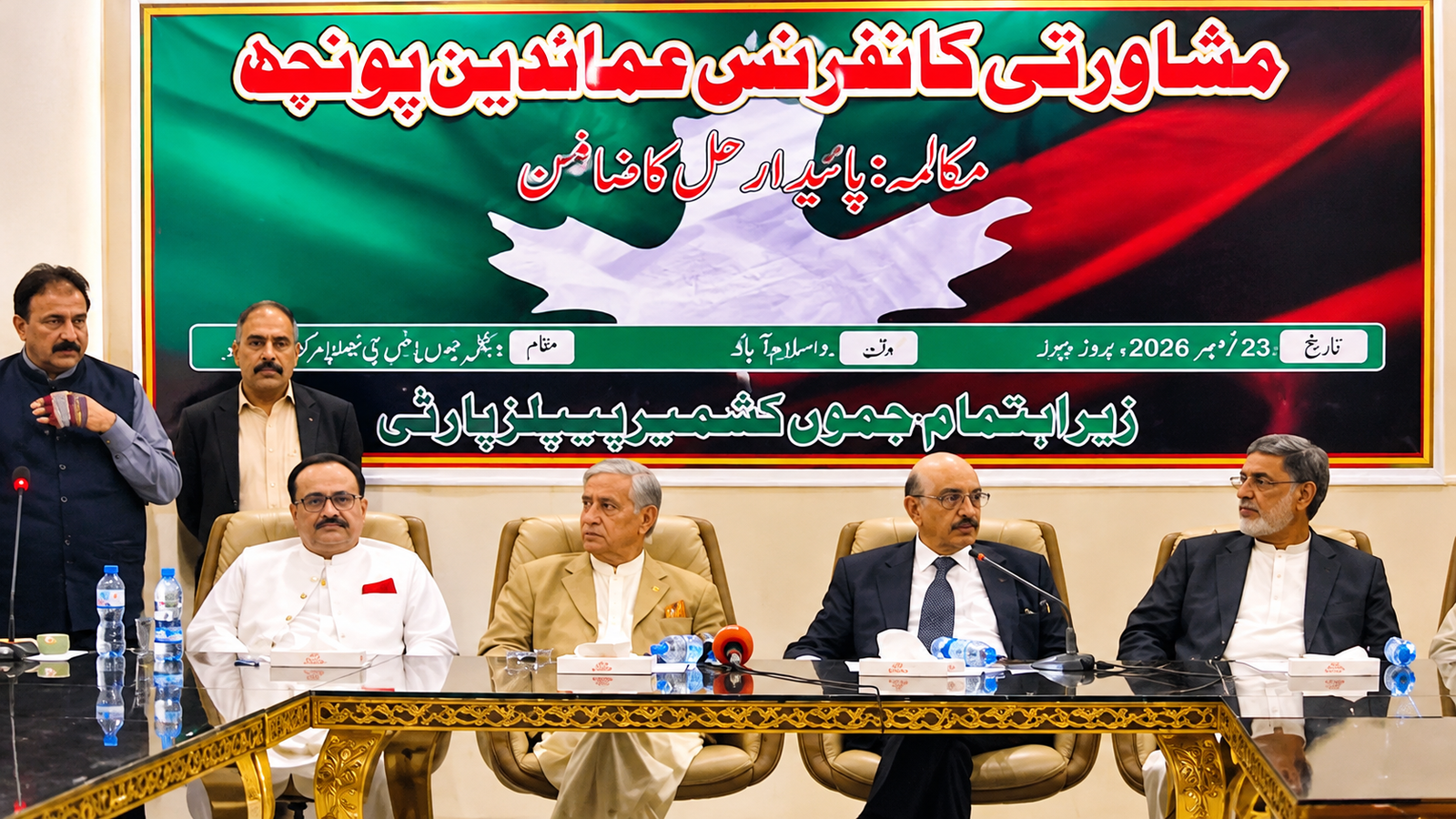
Last week, some of the most prominent political figures and respected leaders of Azad Jammu and Kashmir gathered in Islamabad to explore a way out of the prevailing crisis.
The conference was chaired by Sardar Masood Khan, former President of Azad Jammu and Kashmir, who hails from Rawalakot. His distinguished diplomatic career includes serving as Pakistan's Ambassador to China, the United States and the United Nations in Geneva and New York. His experience in international diplomacy and negotiations makes his participation particularly relevant at a time when trust among the stakeholders is seriously strained.
The conference also included several distinguished political figures, including: Sardar Mohammad Yaqub Khan, former President and Prime Minister of Azad Jammu and Kashmir; Sardar Tanvir Ilyas, former Prime Minister of Azad Jammu and Kashmir; Sardar Hasan Ibrahim, President of the Jammu Kashmir Peoples Party; Dr. Khalid Mahmood, former President of Jamaat-e-Islami, Azad Kashmir; and Brigadier (Retd.) Muhammad Khan.
Proposals to Reduce Tensions and Restart Dialogue
The participants put forward a number of proposals intended to de-escalate tensions and create conditions conducive to negotiations. These included:
-
No punitive action should be taken against JAAC by either the Government of Pakistan or the Government of Azad Jammu and Kashmir.
-
JAAC should consider moving its protest activities outside the city limits of Rawalakot.
-
The December 3 protest call should be withdrawn in the interest of public safety.
-
Both JAAC and the Azad Kashmir Government should take steps to ensure that roads in the Rawalakot area are reopened.
-
A white paper should be issued addressing the 38 demands presented by JAAC.
-
The families of those who lost their lives should receive appropriate financial assistance.
-
The doors of dialogue should remain open.
These proposals deserve serious consideration by all concerned. They offer a possible framework for reducing tensions, restoring normalcy and creating an atmosphere in which the underlying grievances can be addressed through negotiations.
Kashmiri Diaspora Welcomes Dialogue Initiative
Importantly, the initiative received an encouraging response from prominent members of the Kashmiri diaspora. Members of the global Kashmiri diaspora from the Valley overwhelmingly welcomed the initiation of dialogue process. Likewise, prominent leaders of the global Kashmiri diaspora from Azad Kashmir also expressed support for the dialogue.
Professor Zafar Khan of the United Kingdom welcomed the conference, observing: "Under the current circumstances this timely initiative (conference) will be a constructive way forward to break the deadlock, and to ensure a much-needed equitable resolution is achieved."
Other prominent voices, including Sardar Haleem Khan, Spokesperson of the Jammu Kashmir Liberation Front in North America; Ershad Mehmood, a distinguished writer and author from Canada; and Sardar Zarif Khan, President of the Kashmir American Welfare Association (KAWA), Sardar Zubair Khan, candidate for the Legislative Assembly from Rawlakot, Fahim Kiyani, President, Tehreek-e-Kashmir, U.K., Sardar Sawar Khan, former Advisor to the Prime Minister of Azad kashmir, Mohammad Ghalib, President, Tehreek-e-Kashmir Europe, Sardar Shoaib Irshad, General Secretary KAWA, Raja Liaqat Kayani, President, Kashmir House, Washington and many others also welcomed the initiative. These expressions of support demonstrate that there is considerable interest within the Kashmiri diaspora in finding a peaceful and negotiated resolution.
JAAC Signals Support for a Negotiated Resolution
Perhaps even more significant was the response from the leadership of JAAC itself. In a statement issued on November 28, 2026, Sardar Umar Nazir, a leader of the Jammu Kashmir Joint Awami Action Committee, welcomed proposals aimed at achieving a political and negotiated resolution to the current crisis, including a framework of simultaneous de-escalation by all parties.
The statement further emphasized: "The Committee maintains that meaningful dialogue, mutual confidence-building, and reciprocal, simultaneous steps by all stakeholders represent the most viable foundation for a peaceful, sustainable, and long-term resolution of the current crisis." This is an important statement. It suggests that the value of dialogue, mutual confidence-building and reciprocal measures is increasingly being recognized.
Likewise, the Azad Jammu and Kashmir Legislative Assembly unanimously adopted a resolution on November 26, 2026, expressing its willingness to resume negotiations with JAAC. The resolution was adopted under the chairmanship of Speaker Chaudhry Tariq Farooq. These developments, taken together, provide an opportunity that must not be wasted.
Why Dialogue Is Necessary Despite Deep Mistrust
Let me make one point absolutely clear. I fully understand that all three principal stakeholders-the Government of Pakistan, the Government of Azad Jammu and Kashmir, and JAAC-have serious reservations and mistrust about one another. That is precisely why dialogue is necessary.
When trust is absent, communication becomes even more important. When positions appear irreconcilable, an impartial interlocutor can help bridge differences. And when each side believes that the other is unwilling to listen, a credible mediation process can create the space for understanding.
In this regard, I believe that Sardar Masood Khan and his team could play a constructive role in facilitating such a process, provided all stakeholders agree to his involvement and the terms of engagement. His experience as a diplomat and his familiarity with the political and social dynamics of Kashmir could help facilitate meaningful discussions. However, the success of any such initiative will depend on the willingness of all parties to approach the negotiating table with an open mind.
What JAAC and the Governments Must Do
JAAC must be given a genuine opportunity to explain its demands, concerns and grievances. At the same time, it should also make a sincere effort to understand the Government of Pakistan's perspective, including its constitutional, administrative and institutional responsibilities.
Likewise, the Government of Pakistan must recognize that the grievances expressed by JAAC cannot simply be dismissed. It must engage with those demands in good faith, distinguish between legitimate public concerns and areas of disagreement, and demonstrate a willingness to address issues through practical measures.
The Government of Azad Jammu and Kashmir, too, has an important responsibility. It must act as a bridge between the people and the federal government rather than allow the differences to deepen.
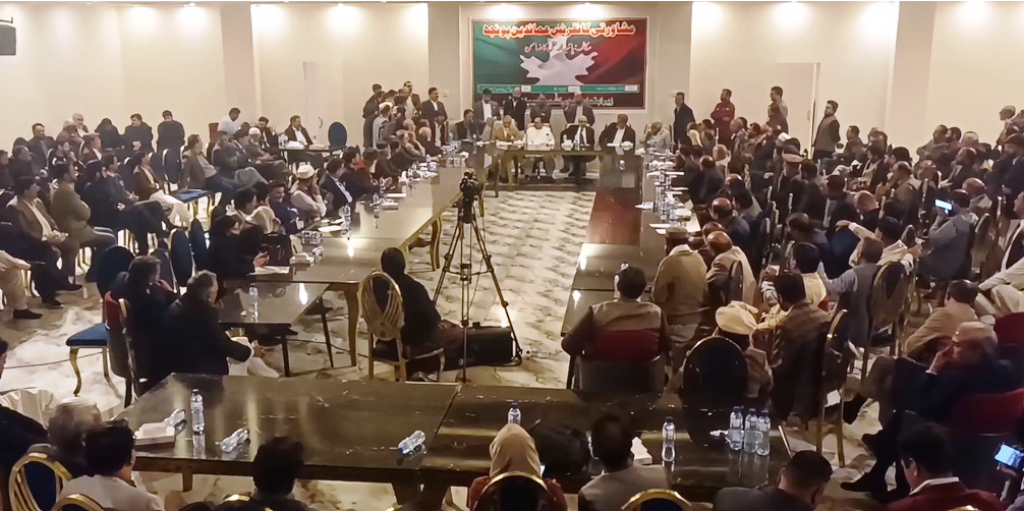
The task of an impartial interlocutor would be to bring these different perspectives together, identify common ground, narrow areas of disagreement and develop a mutually acceptable framework.
The objective should not be to declare one side victorious and another defeated. It should be to create a situation in which every stakeholder can return to its constituency with dignity, believing that its concerns have been heard and its interests respected. In other words, we need a genuine win-win arrangement.
A Call From Srinagar: “Initiate Dialogue”
There is one more incident I would like to share because it has remained deeply embedded in my mind. On November 25, 2026, I received a telephone call from downtown Srinagar. The caller was someone I had never personally met, but his father had been a dear friend of mine. I had known his father since the early 1970s. His words were brief but deeply moving. He spoke in Kashmiri language:
“Fai Sahib, Marahaz gai. Rawlakot saith wout sitah nuqsan. Thou agar akh lach Shudah-e-Kashmiran hind wwasta diyyu hukamat-e Paksitanas the Action Committee hindain leadran. Yeh maslah kartu hal. Shoruh kariye dialogue. Waraiyah Nuqsan wooth, Kahsmir masals.”
"Fai Sahib, we are lost. The situation in Rawalakot has damaged the Kashmir cause. Please tell the Government of Pakistan and the leadership of JAAC to pay attention to the sacrifices made by more than 100,000 Kashmiris. Please resolve this crisis. The Kashmir cause has been damaged immensely. Initiate dialogue."
I have thought about that conversation repeatedly.
Keeping the Kashmir Cause Above Political Differences
Regardless of our political differences, we cannot afford to lose sight of the larger cause that has united generations of Kashmiris. For decades, the people of Jammu and Kashmir have endured enormous hardships and made extraordinary sacrifices. Their aspirations, their dignity and their future must remain at the center of every political decision.
The Kashmir cause is sacred to the people of Jammu and Kashmir. It is also a matter of profound concern for Pakistan and for those who have supported the Kashmiri people's aspirations over the years. No temporary political disagreement, however serious, should be allowed to overshadow that larger cause.
I want to make a sincere appeal to the leadership of JAAC, the Government of Azad Jammu and Kashmir and the Government of Pakistan. Please listen to one another.
Do not allow mistrust to become permanent. Do not allow differences of opinion to turn into irreconcilable divisions. Do not allow the suffering of ordinary people to continue when a peaceful political process remains possible.
To JAAC, I say: Your demands deserve to be heard, examined and addressed through a meaningful process. Your commitment to peaceful struggle and the welfare of the people should remain the guiding principle.
To the Government of Azad Jammu and Kashmir, I say: Take the initiative to rebuild public confidence. The people must feel that their elected representatives are listening to them and taking their concerns seriously.
To the Government of Pakistan, I say: Engage with JAAC with patience, sincerity and an open mind. Recognize that listening to public grievances and addressing legitimate demands is not a sign of weakness. It is an essential expression of responsible governance.
And to the Kashmiri diaspora, I say: Let us continue to play a constructive role. We may organize peaceful demonstrations, submit memoranda, approach diplomatic representatives and engage with policymakers. But above all, let us use our collective influence to encourage reconciliation rather than deepen divisions.
Let the Government of Pakistan, the Government of Azad Jammu and Kashmir and JAAC sit together, listen to one another and find a way forward.
For the sake of Rawalakot, for the sake of the people of Azad Kashmir, for the sake of the people of Indian occupied Kashmir, and above all, for the sanctity of the Kashmir cause, let dialogue prevail.
Dr. Ghulam Nabi Fai can be reached at:
WhatsApp: 1-202-607-6435
gnfai2003@yahoo.com