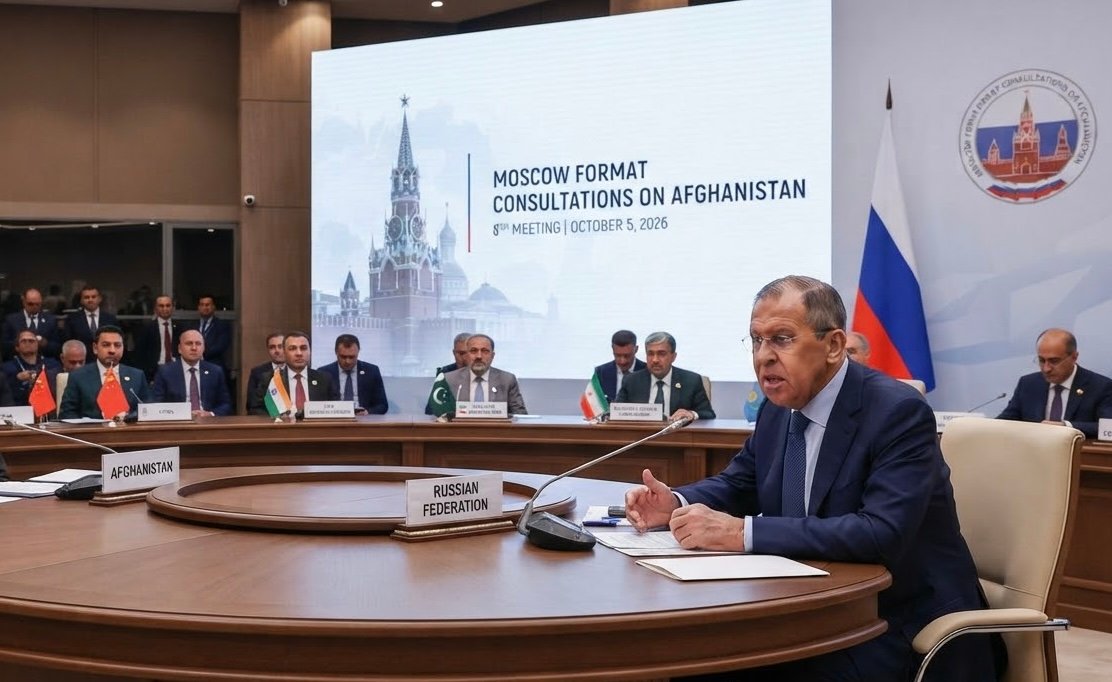
Bringing together high-level delegations from regional powers and international entities, the high-stakes summit sought to forge a unified roadmap for security, economic integration, and diplomatic engagement.
However, deep-seated friction between Taliban representatives and Pakistani officials ultimately derailed the adoption of a final joint communique, highlighting the fragile nature of regional consensus on Afghanistan.
The Moscow Format Meeting: What It Is and Why Regional Powers Are Gathering
As a premier diplomatic platform dedicated to regional convergence, the Moscow Format has established itself as an indispensable forum for discussing Afghanistan's transitional landscape. The 8th iteration of these consultations convened special representatives and senior officials from key neighboring and regional states, underlining the collective recognition that Afghanistan's stability directly impacts the broader security architecture of Central and South Asia.
The gathering brought together delegations from Afghanistan headed by Acting Foreign Minister Mawlawi Amir Khan Muttaqi alongside representatives from Russia, China, India, Iran, Kazakhstan, Kyrgyzstan, Pakistan, Tajikistan, and Uzbekistan. Additionally, Belarus and Egypt participated as special guests, emphasizing the expanding international interest in regional stabilization frameworks.
At its core, the platform serves as a bridge for multilateral dialogue, allowing regional capitals to coordinate policies on security, humanitarian assistance, and economic engagement independent of Western mediation.
Geopolitical Strategy: How Russia and Central Asian States Shape Afghanistan's Future
Geopolitical positioning took center stage in Moscow, with host nation Russia and Central Asian republics articulating clear strategic imperatives for the region. Russian Foreign Minister Sergey Lavrov delivered the opening remarks, steering the diplomatic discourse toward regional ownership and autonomy.
Lavrov emphasized that the security and future of Afghanistan must be steered primarily by its neighbors and regional stakeholders rather than external actors with conflicting agendas.
For Central Asian nations such as Kazakhstan, Kyrgyzstan, Tajikistan, and Uzbekistan the primary strategic calculus involves mitigating security spillovers while fostering viable economic corridors.
These states view engagement through the Moscow Format as a vital conduit to ensure predictable state-to-state relations with Kabul, curb illicit trafficking, and encourage developmental integration that can stem migration pressures and humanitarian crises.
Counter-Terrorism and Border Security: Key Priorities at the Latest Moscow Dialogue
Despite broad agreement on the necessity of combating transnational terrorism, security definitions and cross-border obligations proved to be the ultimate stumbling block of the 8th summit.
The meeting concluded without adopting a final joint statement due to explicit disagreements between Taliban representatives and Pakistani delegates regarding wording concerning counterterrorism efforts and cross-border security responsibilities.
Pakistan has repeatedly expressed deep security concerns regarding militant groups utilizing Afghan soil to launch attacks across the border. Conversely, the Taliban delegation resisted language they perceived as infringing upon national sovereignty or overstating internal security threats. This impasse paralyzed the final drafting process, underscoring how acute bilateral friction can stall multilateral security commitments even within structured dialogue frameworks.
Economic Integration and Humanitarian Aid: Can Regional Trade Revive Afghanistan?
Away from diplomatic deadlocks, economic cooperation and humanitarian support remained a central focus of the consultations. Years of international isolation and asset freezes have left Afghanistan's economy heavily reliant on humanitarian aid and regional trade lifelines. Delegations explored pragmatic avenues to bolster cross-border commerce, energy transit projects, and agricultural trade.
Iranian special envoys and other regional participants emphasized that economic stabilization is the single most effective countermeasure against mass migration and radicalization.
Representatives discussed joint infrastructure initiatives, transport connectivity, and market access designed to integrate Afghanistan into regional supply chains, though sustainable growth remains heavily constrained by a lack of formal international recognition and financial system access.
The Taliban Delegation's Push for International Recognition in Moscow
Heading the Afghan delegation, Acting Foreign Minister Mawlawi Amir Khan Muttaqi utilized the Moscow platform as a critical pulpit to advocate for diplomatic legitimacy and constructive international engagement.
While no government has formally extended full de jure recognition to the interim administration, participation in high-level multilateral formats like Moscow allows the Taliban to project state authority and press for the unfreezing of national assets.
The delegation's strategy centered on reassuring regional neighbors that Afghan territory will not be permitted to threaten others, while simultaneously demanding normal diplomatic representation, consular services, and economic partnerships.
The presence of heavyweight neighbors like China, India, and Iran in the room provided the interim administration with valuable diplomatic breathing room, even as regional friction points persisted behind closed doors.
Shifting Alliances: Balancing Western Influence and Regional Diplomacy in Central Asia
The Moscow Format meeting also served as a barometer for shifting global power dynamics. In his address, Russian Foreign Minister Sergey Lavrov forcefully rejected any military presence by NATO or neighboring countries in Afghanistan, warning that the re-establishment of Western military infrastructure would inevitably trigger renewed regional conflict and instability.
Lavrov's remarks highlighted a core strategic objective shared by Moscow and Beijing: containing Western geopolitical re-entry into Central and South Asia. By consolidating a regional security matrix centered on Eurasian powers, the Moscow Format institutionalizes an alternative diplomatic architecture that bypasses Western sanctions and geopolitical pressures, positioning regional capitals as the primary arbiters of Afghan affairs.
Regional Friction: Addressing Tensions Between Neighboring States and Kabul
Beneath the veneer of multilateral cooperation, the 8th Moscow Format laid bare severe regional frictions that continue to test bilateral relations. The breakdown in consensus over counter-terrorism text was symptomatic of broader grievances between Kabul and its immediate neighbors, particularly Islamabad.
Border management disputes, security fencing disagreements, and accusations regarding militant sanctuaries continue to plague relations. While forums like the Moscow Format provide a structured venue to air these grievances, they also expose the limits of regional diplomacy when fundamental security anxieties are left unaddressed.
Neighboring states find themselves walking a tightrope: balancing the imperative of pragmatic engagement with Kabul to maintain stability against the domestic political costs of unchecked security threats.
What the Latest Moscow Format Talks Mean for Global Security and Stabilization
As the 8th Moscow Format Meeting concluded in the Russian capital, the absence of a joint statement offered a sobering reality check on the limits of regional consensus.
While the summit succeeded in maintaining an active, high-level diplomatic channel among Afghanistan's most critical neighbors, it underscored that deep-seated disagreements on counterterrorism and sovereignty remain unresolved.
Ultimately, the meeting proved that while regional actors are universally invested in preventing Afghanistan from descending back into major conflict or economic collapse, bridging divergent national security interests will require persistent, incremental diplomacy.
For global security analysts, the Moscow Format remains an essential, if volatile, bellwether for the future stability of Central Asia and South Asia alike.