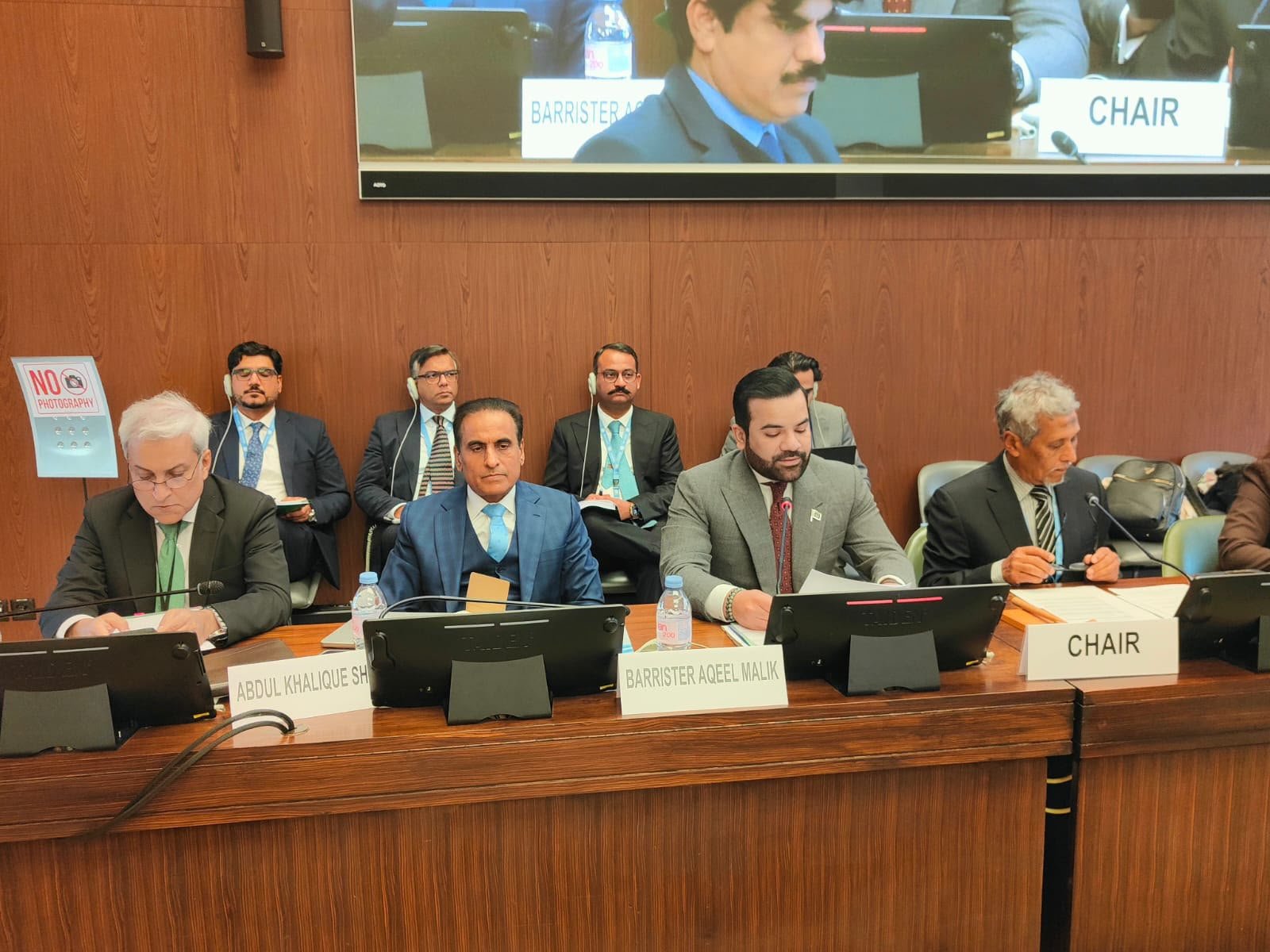
The Pakistani delegation was led by Barrister Aqeel Malik, Minister of State for Law and Justice, and included Mr. Abdul Khaliq Sheikh, Federal Secretary for Human Rights, Dr. Muhammad Arif, Director (International Cooperation), Ms. Nayab Ali, Transgender Rights Expert, and other representatives of the Ministry of Human Rights and the Permanent Mission of Pakistan in Geneva.
During the review, Pakistan presented its progress in implementing the International Covenant on Economic, Social and Cultural Rights (ICESCR), highlighting key legislative, policy and institutional developments since its previous review in 2017. The delegation reaffirmed Pakistan's commitment to the progressive realization of economic, social and cultural rights in accordance with its constitutional framework and international obligations.
The delegation highlighted important developments in social protection, education, healthcare, labour rights, women's empowerment, child protection and climate resilience.
Particular emphasis was placed on measures to improve access to essential services, strengthen labour protections, promote social inclusion and safeguard the rights of vulnerable and marginalized communities.
Pakistan also outlined legislative and institutional measures aimed at preventing child marriage, promoting gender equality, addressing gender-based violence and strengthening the protection of women and children. Efforts to combat child labour and bonded labour, improve workplace protections and enhance access to justice were also highlighted.
The Ministry of Human Rights played a central role in coordinating the preparation of Pakistan's periodic report through consultations with federal and provincial governments, relevant national institutions and civil society stakeholders, ensuring a coordinated and inclusive approach to international treaty reporting.
During the interactive dialogue, the delegation engaged constructively with Committee members, responding to questions and observations concerning education, healthcare, labour rights, social protection, gender equality, minority rights, housing, climate change and the protection of vulnerable communities.
Pakistan also highlighted the challenges posed by fiscal constraints, climate-related disasters and structural pressures, while outlining ongoing efforts to address these challenges through policy reforms and institutional strengthening.
In his concluding remarks, Barrister Aqeel Malik reaffirmed Pakistan's commitment to constructive engagement with United Nations human rights mechanisms and emphasized the importance of translating constitutional guarantees and international commitments into meaningful improvements in the lives of citizens.
He underscored the need for sustained institutional coordination, effective policy implementation and continued reforms to advance the protection and realization of economic, social and cultural rights.
Pakistan further expressed its commitment to continued coordination and consultations at the federal and provincial levels to review the Committee's forthcoming concluding observations and facilitate appropriate follow-up measures.
The conclusion of the review marked an important milestone in Pakistan's continued engagement with the United Nations human rights treaty body system, reaffirming its commitment to promoting and protecting economic, social and cultural rights through legislative reforms, institutional strengthening and international cooperation.