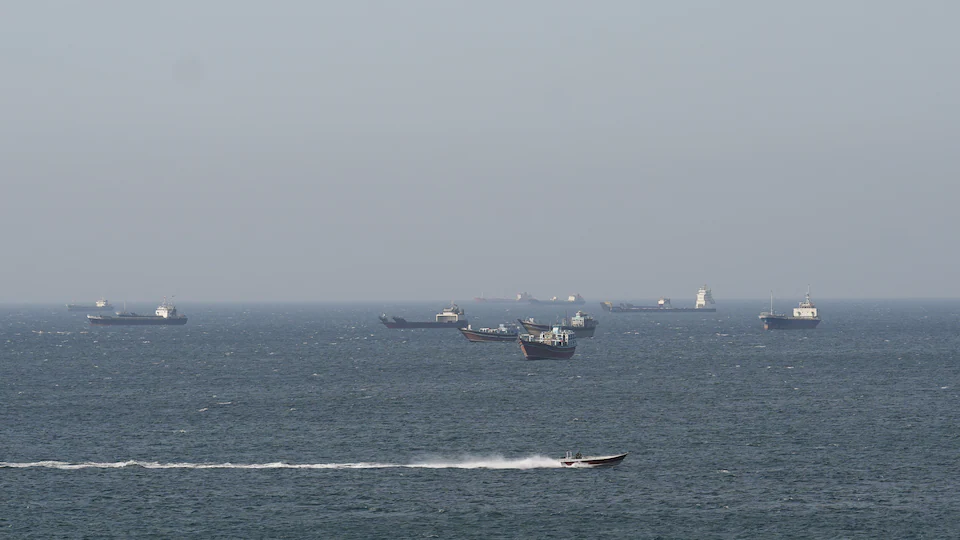
WASHINGTON/ISLAMABAD: Iran’s top negotiator said recent talks with the U.S. had made progress but gaps remained over nuclear issues and the Strait of Hormuz, while President Donald Trump cited “very good conversations” with Tehran despite warning against “blackmail” over the key shipping channel.
Neither side offered any specifics about the state of negotiations on Saturday, days before a fragile ceasefire in the U.S.-Israeli war against Iran is set to expire.
The war, now in its eighth week, has killed thousands, spread to Israeli attacks in Lebanon and sent oil prices surging because of the de facto closure of the strait, which before the war carried one-fifth of the world’s oil shipments.
“We have had progress but there is still a big distance between us,” Iran’s chief negotiator, Mohammad Baqer Qalibaf, told state media, referring to talks last weekend. “There are some issues on which we insist … They also have red lines. But these issues could be just one or two.”
Trump said the U.S. was having “very good conversations” but gave no other details.
Tehran reversed course on Saturday to reassert control over the strait, again closing the energy choke point and adding fresh uncertainty to the war, which the U.S. and Israel launched on February 28.
Iran said it was responding to a continued U.S. blockade of Iranian ports, calling it a violation of the ceasefire, while Supreme Leader Ayatollah Mojtaba Khamenei said Iran’s navy was ready to inflict “new bitter defeats” on its enemies. Trump called the move “blackmail” even as he praised the talks.
The war, now in its eighth week, has killed thousands, spread to Israeli attacks in Lebanon and sent oil prices surging because of the de facto closure of the strait, which before the war carried one-fifth of the world’s oil shipments.
IRAN’S REVERSAL ON VITAL STRAIT
“We have had progress but there is still a big distance between us,” Iran’s chief negotiator, Mohammad Baqer Qalibaf, told state media, referring to talks last weekend. “There are some issues on which we insist … They also have red lines. But these issues could be just one or two.”
Trump said the U.S. was having “very good conversations” but gave no other details.
Tehran reversed course on Saturday to reassert control over the strait, again closing the energy choke point and adding fresh uncertainty to the war, which the U.S. and Israel launched on February 28.
Iran said it was responding to a continued U.S. blockade of Iranian ports, calling it a violation of the ceasefire, while Supreme Leader Ayatollah Mojtaba Khamenei said Iran’s navy was ready to inflict “new bitter defeats” on its enemies. Trump called the move “blackmail” even as he praised the talks.
On Friday, Iran had announced the temporary reopening of the Strait of Hormuz following a separate U.S.-brokered 10-day ceasefire agreement on Thursday between Israel and Lebanon.
Trump defended the U.S. blockade and threatened “to start dropping bombs again” unless the countries reached a long-term deal before the ceasefire expires on Wednesday.
Iran’s Supreme National Security Council said Tehran’s control over the strait included demanding the payment of costs related to security, safety and environmental protection services, state media said.
Concern remained after at least two vessels reported being attacked on Saturday while trying to transit the waterway. India summoned the Iranian ambassador in New Delhi and expressed deep concern that two Indian-flagged ships had come under fire in the strait, the government said.
U.S. Central Command said American forces were enforcing a maritime blockade of Iran but did not comment on the latest Iranian actions.–Reuters