Special Correspondent
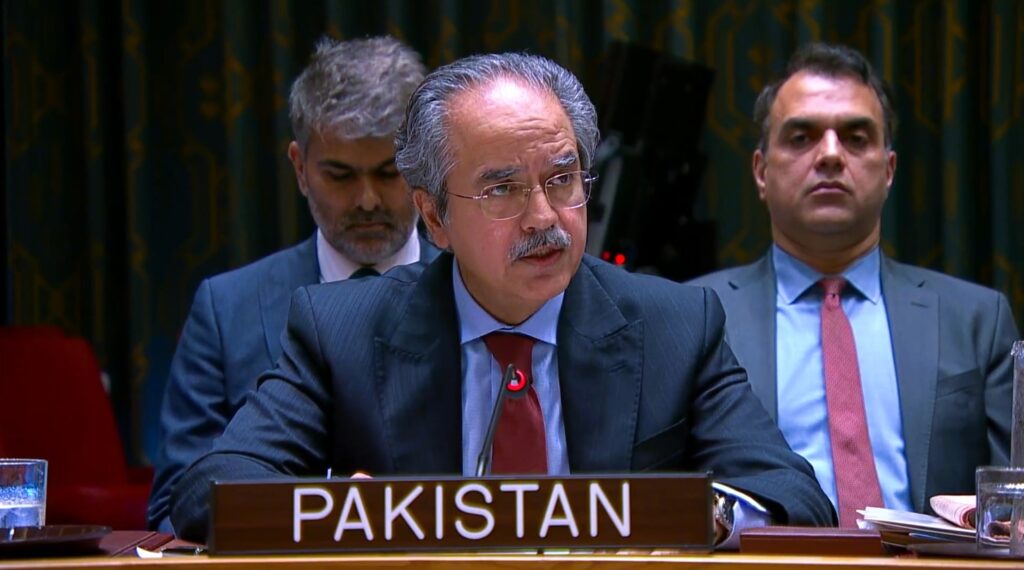
UNITED NATIONS: Pakistan’s Permanent Representative to the United Nations Ambassador Asim Iftikhar Ahmad expressed serious concerns over rising terrorism threats emanating from Afghanistan.
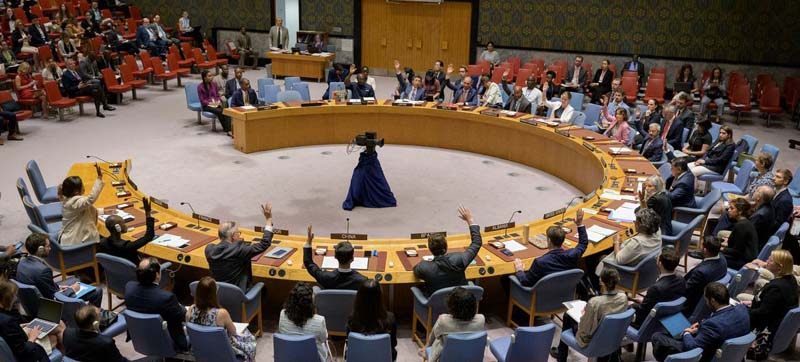
He was speaking during the adoption of a resolution extending the mandate of the United Nations Assistance Mission in Afghanistan.
Speaking after the unanimous renewal of UNAMA’s mandate for another year, Ambassador Ahmad welcomed China’s leadership in achieving consensus but stressed that Afghanistan continues to face “multifaceted challenges,” particularly the growing presence of terrorist groups.
He warned that groups such as Tehrik-i-Taliban Pakistan, Balochistan Liberation Army, Islamic State – Khorasan Province, Al-Qaeda, and East Turkestan Islamic Movement are operating “with impunity” inside Afghanistan. According to Pakistan, these groups are responsible for cross-border attacks targeting civilians, law enforcement personnel, and infrastructure.
The ambassador also alleged that elements within the Taliban are providing safe havens and support to these militant organizations, posing a serious threat to regional and international security.
Pakistan called on UNAMA to play a more effective role in addressing these concerns, emphasizing the need for evidence-based and balanced reporting. Ambassador Ahmad urged the mission to focus on counter-terrorism, human rights, and inclusive governance, while also monitoring risks such as illicit arms trade and diversion of humanitarian aid.
He further highlighted the importance of creating conditions for the safe return and reintegration of refugees and internally displaced persons in Afghanistan.
Expressing concern over delays in leadership appointments, Pakistan urged the UN Secretary-General to expedite the selection of a new Special Representative heading UNAMA, a position that has remained vacant since last year.
Pakistan concluded by reaffirming its support for UNAMA’s mandate and expressed hope that the mission would contribute to long-term peace, stability, and development in Afghanistan and the broader region.