WASHINGTON: U.S. Senate Democrats blocked a $1.15 trillion annual defense policy bill on Tuesday, citing frustration with the Iran war and President Donald Trump’s failure to consult with Congress about his decision to send U.S. forces into the conflict.
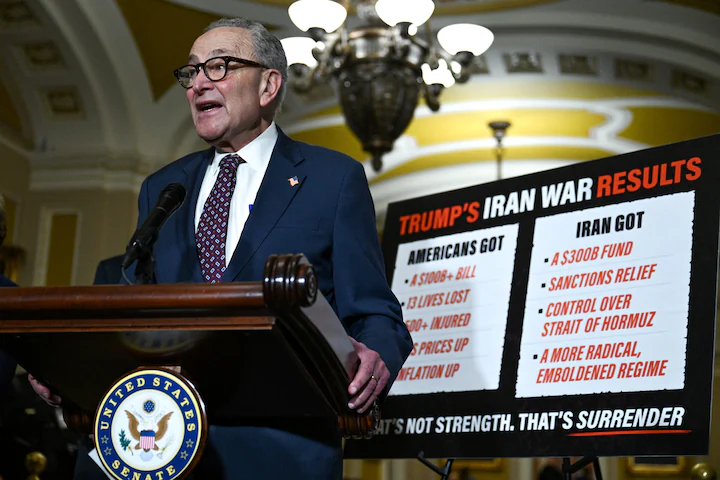
“Trump started this war without authorization, without a strategy, and without an exit,” Senator Chuck Schumer of New York, the Senate’s Democratic leader, said in a Senate speech announcing he would vote no.
procedural vote on the National Defense Authorization Act, or NDAA, failed. Even though the yes votes outnumbered no votes by 50-46, the bill fell short of the 60 votes needed to move ahead in the 100-member Senate.
The vote was along party lines. Every Republican voted in favor of moving ahead except for the chamber’s Republican majority leader, John Thune of South Dakota, who voted no under Senate rules only in order to enter a motion to reconsider.
The bill had been expected to stall, after nine Democratic members of the Armed Services Committee voted against the NDAA when the panel considered it last month. The NDAA typically passes with strong bipartisan support.
Democrats are concerned that authorizing a huge Pentagon budget would be seen as approval of the war on Iran that began with strikes by the U.S. and Israel on February 28.
The vote came just as Trump the administration said it had reimposed a naval blockade of all Iranian ports in the latest escalation of the conflict and began a fresh round of strikes.
Democrats also object to the Trump administration’s push to increase military spending to a total of $1.5 trillion, even as social programs for Americans are being cut. Besides the $1.15 trillion authorized in the NDAA, Trump has asked for another $350 billion from Congress under the budget reconciliation process, which would allow the funding to pass without Democratic support.
In remarks urging support, Thune accused Democrats of putting politics ahead of security.–Reuters