ISLAMABAD Finance Minister Muhammad Aurangzeb has said that the federal budget places special emphasis on boosting exports and improving the tax system, as Pakistan moves from economic stabilisation towards sustainable growth.
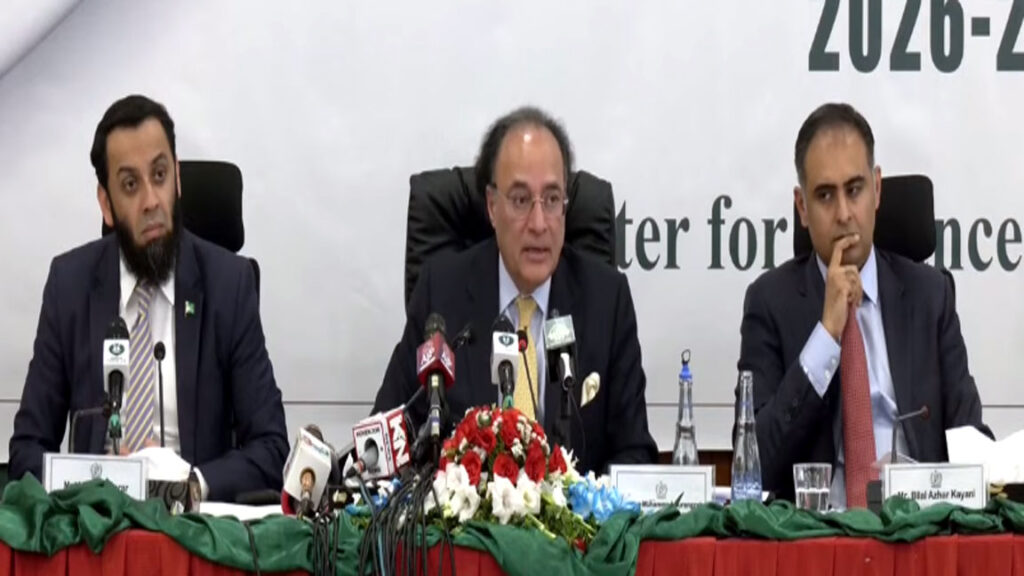
Addressing a post-budget press conference in Islamabad, the finance minister said the government’s focus has been on strengthening key economic sectors while providing relief to the salaried class. He noted that tax rates for lower-income earners have been reduced from 5 percent to 1 percent, while the 15 percent slab has been brought down to 13 percent.
Aurangzeb said the construction sector has also been supported through reduced taxation, while significant attention has been given to agriculture financing and productivity enhancement. He added that agricultural credit has increased by 15 percent, exceeding Rs 2 trillion in volume, and special measures have been introduced to support small farmers.
He further stated that duties on imported agricultural machinery, including customs duty and additional levies, have been reduced to zero in order to lower production costs and improve efficiency in the sector.
The finance minister said the government has allocated Rs 70 billion in additional subsidies and expanded youth loan schemes to support entrepreneurship and agricultural development. He also highlighted that the agriculture-focused loan portfolio now stands at Rs 262 billion, with Rs 125 billion specifically allocated for the agriculture sector.
Aurangzeb said the overall direction of the economy is positive, adding that Pakistan is moving from stabilisation towards growth. “We have made progress this year in economic terms, and the economy is moving in the right direction,” he said.
He also expressed gratitude to provinces for their financial cooperation, saying federal support measures will continue for the next three fiscal years. According to him, efforts in the budget are aimed at improving exports, tax efficiency, and long-term economic stability.