A.M. Khan
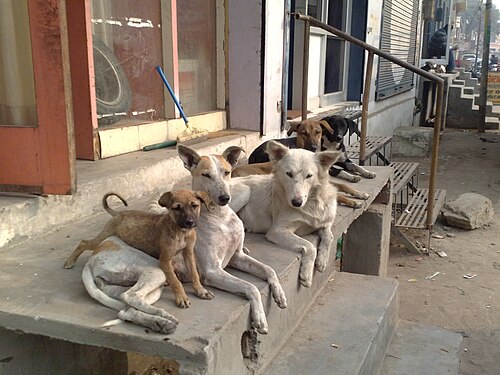
The increasing population of stray dogs has become a problem in both neighborhoods and bazaar area in Chitral. Animal Birth Control is one among the sustainable and long term strategies and a way forward to deal with this matter. In fact, any inhuman action against animals is against their rights and humanity.
The literature shows that stray dog population is but a global problem. Where the population of stray animals is higher there are greater chances of predation, road traffic accidents, transmission of zoonotic diseases and becoming vectors for some diseases.
There are many cases where stray dogs are frequently predating livestock and poultry farms. This problem is compounded by the higher reproductive capacity of stray dogs as they thrive in villages up to peri-urbanites. The district headquarter Booni of Upper Chitral is one of the examples.
As the population of stray dogs grows rapidly, sustainable action needs to be taken by the concerned departments and civil society (NGOs working for welfare and protection of animal rights). It appears to be a menace in making for existing stray animals in both neighborhoods and bazaars, and the society at large.
The traditional method of culling as a quick fix or to limit the stray dogs’ population has been a matter of suffering for a living being, and causes trauma. Here the question arises how this matter to be dealt with? There are humane strategies of limiting and managing the increasing population of stray animals across the world, have proved to be effective, sustainable and long term.
The Animal Birth Control (ABC) is a method of stabilizing the dog population and rabies control. With it the other strategies are to be adopted to produce a healthier, stable and smaller dog population. Dog population control can be achieved for many animal welfare, public health and safety.
The program to Catch, Neuter, Vaccinate, Return (CNVR) is an ethical and most effective way of managing the stray dog population. Sterilization proved to be an effective way to limit the increasing population rate of stray dogs. It also reduces aggression and behavior of dogs, leading to decreasing the risks of conflict with humans and other animals. It can have positive health benefits for individual dogs in reducing the risk of certain diseases.
Besides, adoption is another way to help remove adoptable stray dogs from the streets to the homes. There are breeds which can be adopted by pet lovers.
The education and community engagement about the care, welfare and management of stray animals can help raise awareness about responsible pet ownership, safe interactions, bite prevention and vaccination. There are aged and physically handicapped stray dogs in the bazaar. They need genuine care and protection.