Special Correspondent
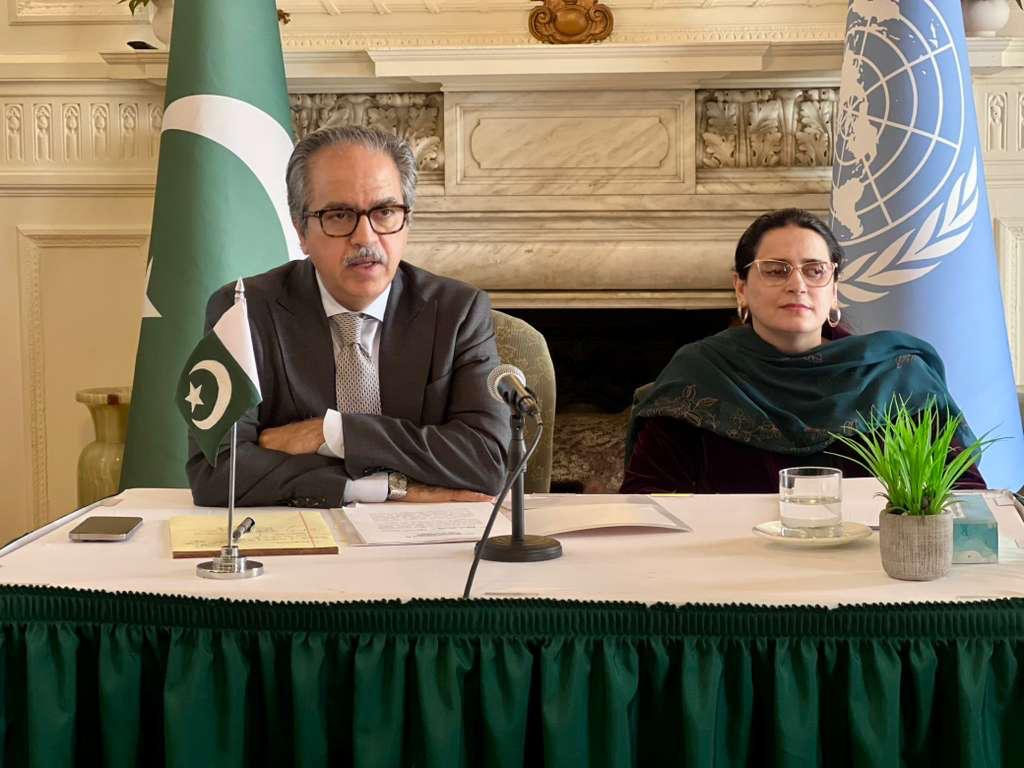
UNITED NATIONS: A group of 20 students from the Manhattan University visited the Pakistan Mission to receive a briefing about Pakistan’s engagement with the UN System.
Ambassador Asim Iftikhar Ahmad, Permanent Representative of Pakistan to the United Nations, highlighted the country’s key positions on the regional and international issues with a focus on the work of Pakistan across the United Nations.
During the interaction, Ambassador Asim highlighted the United Nations’ unique value as the only forum with broad international legitimacy and trust. He said that despite its challenges, “nothing can replace” the UN as a platform where the wider membership can pursue collective action on issues no country can address alone.
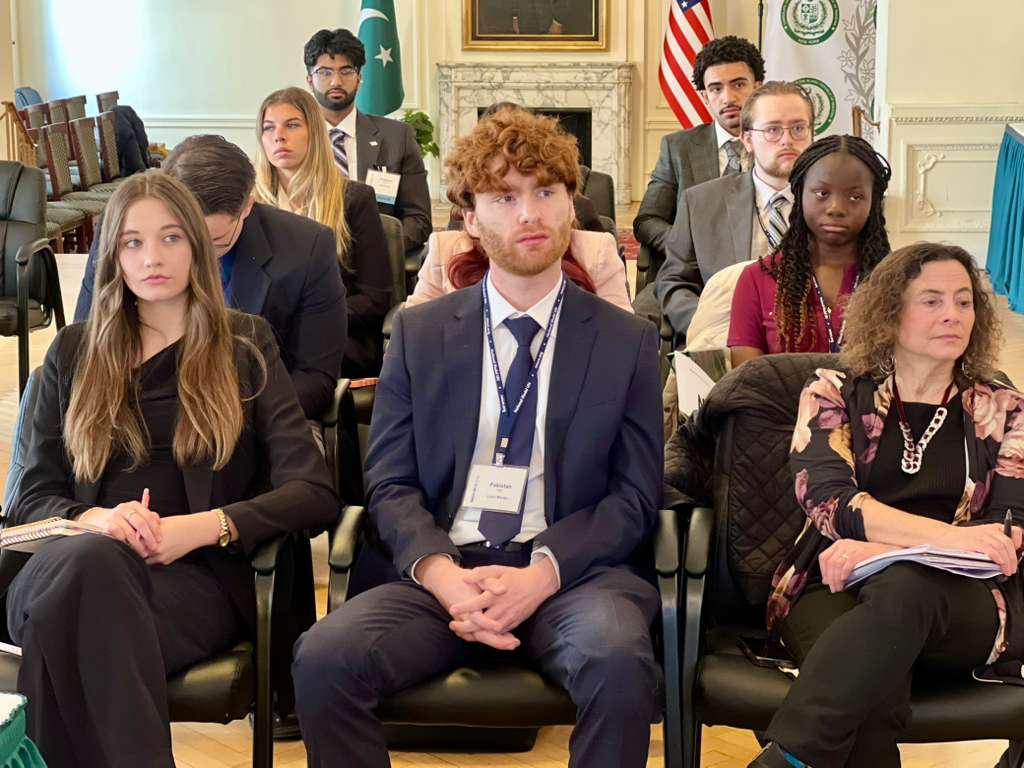 He said that the UN remains essential for coordinating global responses to emerging and long-term challenges, including artificial intelligence, SDGs and climate change, emphasizing that multilateral cooperation is increasingly necessary in a rapidly changing world. He said that a wide membership of the UN considers collective response as an effective way to tackle today’s problems.
Ambassador Asim also shared Pakistan’s perspective on UN reform. He said current reform efforts are guided by the Pact for the Future, adopted in 2024, and pointed to the Secretary-General’s UN80 initiative, aimed at making the Organization fit for purpose and better equipped to meet today’s challenges.
On Security Council reform, the Permanent Representative said that Pakistan does not support adding new permanent members, adding that problem can’t become the solution. He emphasized that expanding permanent seats would not resolve existing imbalances and could further deepen divisions, thus increasing institutional dysfunction.
Pakistan, he said, supports an increase in the category of the non-permanent membership as part of the Uniting for Consensus (UfC) Group to make the Council more democratic, representative, efficient and accountable.
The discussion also covered key global security and development concerns, including maritime security, food security, forced migration, water scarcity, refugee-related challenges, and the importance of cooperation on transboundary water sharing.
Ambassador Asim underscored the value of effective multilateralism in managing cross-border issues and highlighted the importance of local knowledge and sustainable approaches in addressing development needs.
He also noted that the upcoming Secretary-General selection will take place at a pivotal moment for the UN, requiring strong leadership to meet rising geopolitical tensions and complex global risks.
The session also featured a presentation by Ms. Saima Saleem, Counsellor at the Pakistan Mission, who briefed the students on Pakistan’s engagement at the UN and its role in advancing multilateral cooperation across key UN pillars including peacekeeping.
The meeting provided an opportunity for students to engage directly with Pakistan’s Permanent Representative and Mission officials on the UN’s role, reform priorities, and emerging global challenges and Pakistan’s positions on them.