
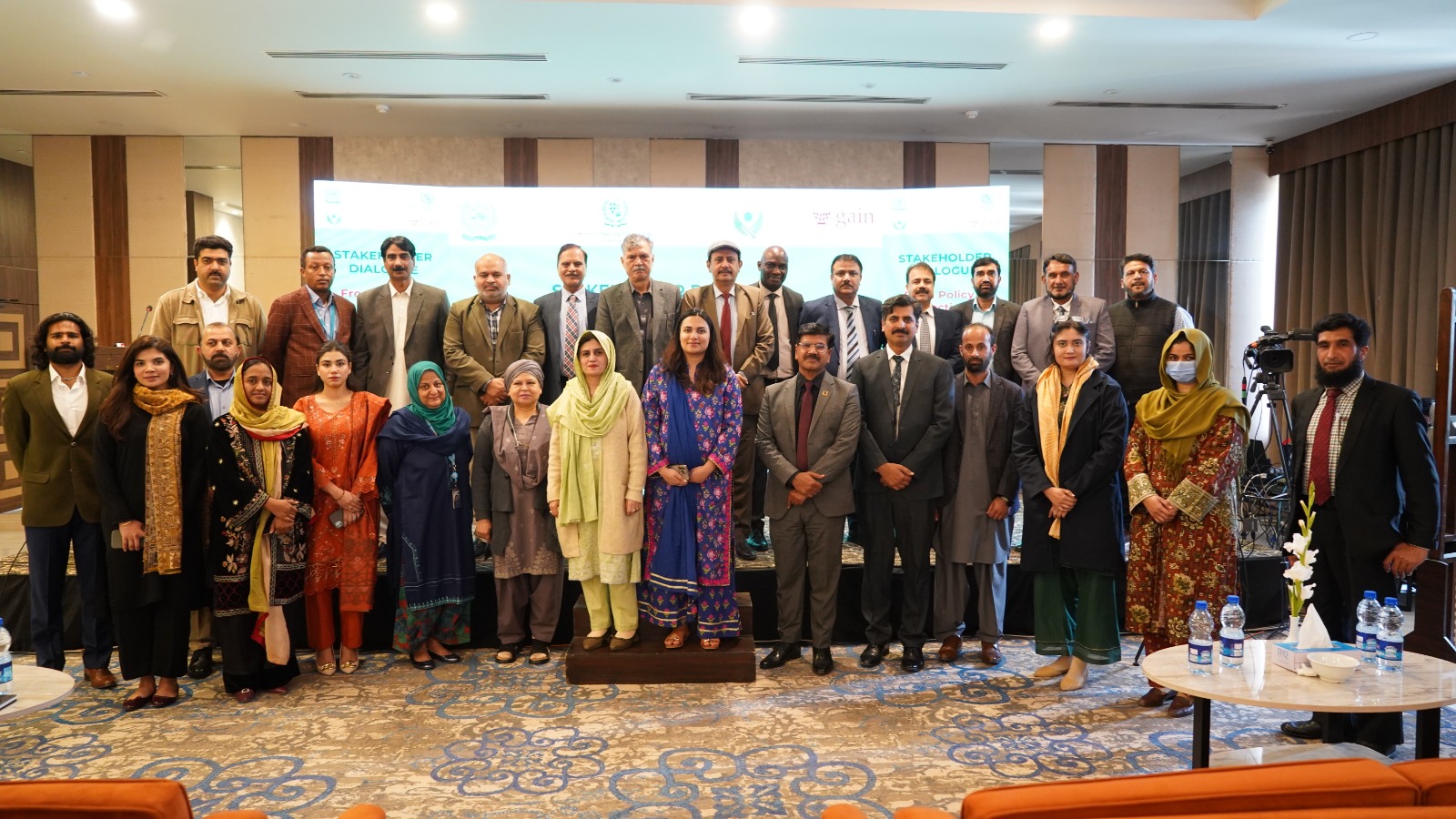

ISLAMABAD: The Pakistan Food System Transformation Secretariat (PFSTS) in collaboration with the Global Alliance for Improved Nutrition (GAIN) convened a stakeholder dialogue titled “From Policy to Practice – Advancing Integrated Climate, Nutrition and Food Security Action in Pakistan” at IFQ, Islamabad.
The dialogue brought together senior representatives from government ministries, development partners, academia, and technical experts to advance coordinated and actionable approaches at the intersection of climate change, nutrition, and food security.
Pakistan remains among the world’s most climate-vulnerable countries, facing recurrent floods, droughts, and extreme weather events that disrupt food systems and exacerbate malnutrition. With average annual disaster-related losses estimated at USD 2 billion — 83% attributed to floods — the need for integrated and resilient solutions has never been more urgent.
Opening the session, Dr. Ghulam Sadiq Afridi, Secretary PFSTS, emphasized the importance of breaking policy silos and moving toward coordinated implementation mechanisms. He highlighted PFSTS’s commitment to aligning national food systems transformation efforts with climate resilience and improved nutrition outcomes.
Farrah Naz, Country Director GAIN Pakistan, in her welcome note, underscored the importance of cross-sectoral collaboration and evidence-based dialogue to ensure that climate action delivers tangible nutrition and food security benefits.
The dialogue was further enriched by opening remarks from Tomoko Koto (Asian Development Bank) and a global overview of the Initiative on Climate Action and Nutrition (I-CAN) by Oliver Camp, who emphasized the importance of aligning climate commitments with nutrition outcomes.
Speaking on I-CAN’s relevance in Pakistan, Faiz Rasool Head of Policy & Advocacy GAIN Pakistan highlighted findings from the I-CAN Baseline Assessment, which revealed limited integration between national climate, nutrition, and food security policies. He noted that while frameworks exist, coordinated implementation, financing mechanisms, and accountability structures require strengthening.
A panel discussion featuring senior officials explored practical pathways to strengthen policy coherence, clarify institutional roles, and mobilize innovative financing for climate-resilient nutrition interventions.
The dialogue concluded with expert reflections from which emphasized the need for institutional alignment across planning, financing, and monitoring systems. Government representatives, including officials from the Green Balochistan Initiative and provincial Environmental Protection Agencies, reiterated their commitment to advancing integrated approaches at both national and sub-national levels.

Comments are closed.