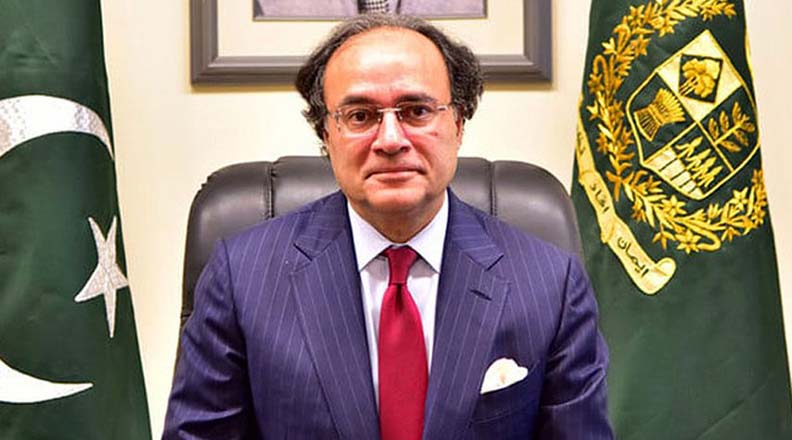
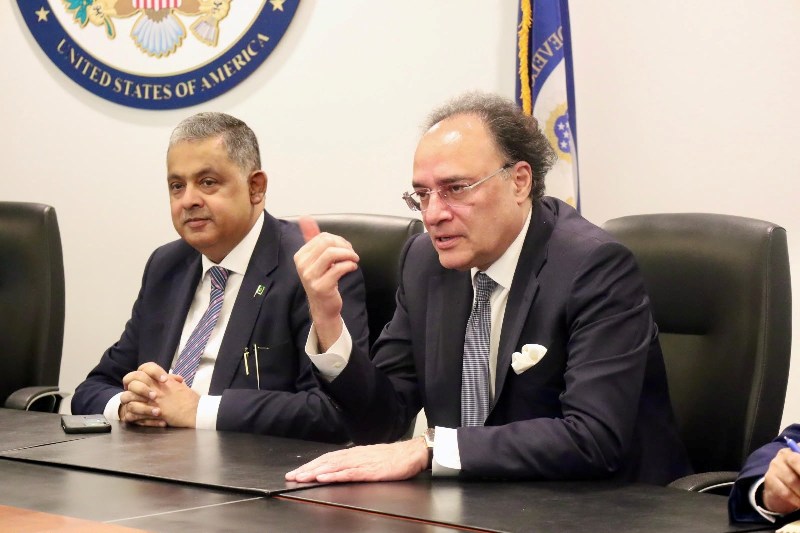
WASHINGTON: Pakistan stepped up efforts to strengthen Pakistan-U.S. economic cooperation as Finance Minister Senator Muhammad Aurangzeb held separate high-level meetings with U.S. Treasury Secretary Scott Bessent and officials from the U.S. International Development Finance Corporation (DFC).
The discussions focused on attracting private investment, expanding economic ties, and supporting Pakistan’s transition toward sustainable, export-led growth.
Aurangzeb highlighted Pakistan’s progress from macroeconomic stabilization to economic reforms. He also noted that regional geopolitical tensions continue to pose risks to the country’s economic outlook.
The finance minister urged the United States to support Pakistan’s access to international capital markets. He also sought stronger foreign exchange reserves and improved sovereign credit ratings to sustain long-term economic growth.
Pakistan Seeks DFC Backing for Priority Investment Projects
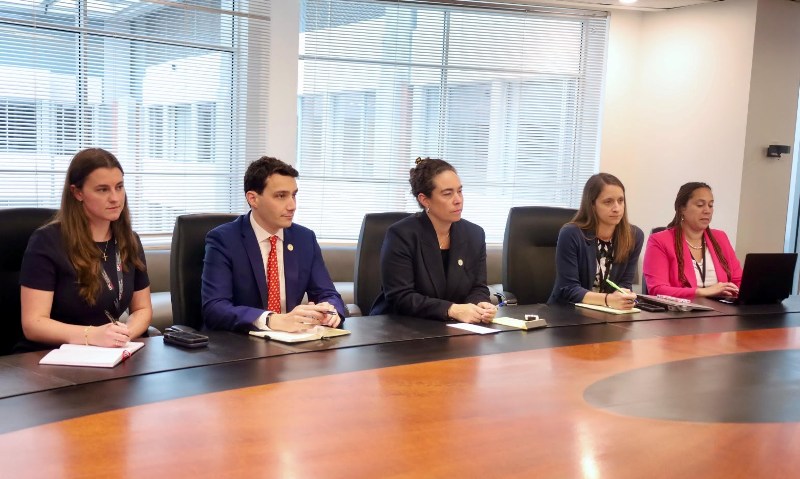
During a separate meeting with DFC representatives, Aurangzeb requested expedited support for private sector-led projects across key sectors.
He identified energy, information technology, infrastructure, minerals, food, and agriculture as priority areas for investment. He noted that these sectors closely match the DFC’s investment focus, including ports, telecommunications, pharmaceuticals, manufacturing, and supply-chain development.
Aurangzeb invited a DFC delegation to visit Pakistan to identify bankable projects. He encouraged the team to work with relevant stakeholders on developing viable business plans.
The discussions also covered the possibility of establishing DFC representation in Pakistan. Both sides explored engagement with future U.S. congressional delegations to strengthen economic cooperation.
Both Sides Reaffirm Commitment to Stronger Economic Partnership
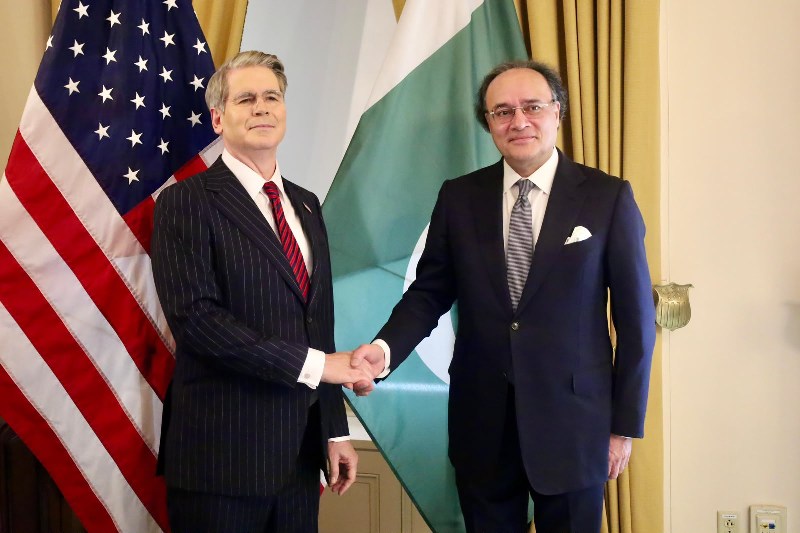
In his meeting with Treasury Secretary Scott Bessent, Aurangzeb outlined Pakistan’s roadmap for sustainable, export-driven growth. He emphasized the need for stronger international partnerships to maintain economic momentum.
Both sides reaffirmed their commitment to expanding bilateral economic cooperation. They also agreed to promote greater U.S. investment and advance strategic development projects that support long-term economic growth.