ISLAMABAD: Four Pakistani hospitals are completing preparations to start receiving free childhood cancer medicines before the end of 2026 as part of an agreement between Pakistan and the World Health Organization (WHO).
The agreement aims to provide quality-assured medicines through the Global Platform for Access to Childhood Cancer Medicines (Global Platform).
The objective is to support access to quality treatment for children affected by cancer in the country, where over 8,000 new cases are diagnosed annually.
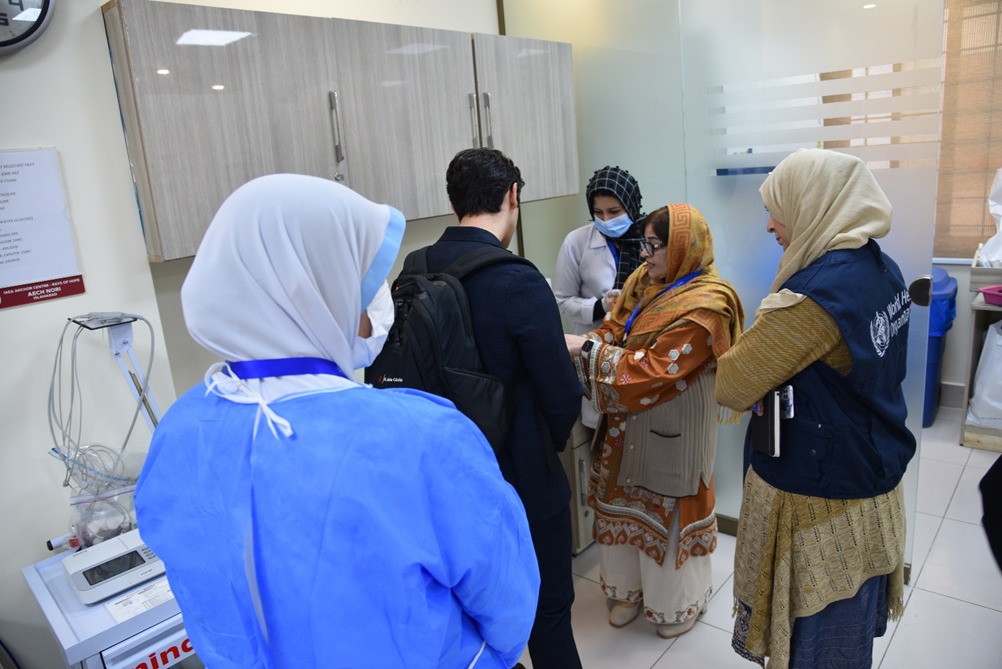
As we approach International Childhood Cancer Day (15 February), the four hospitals are implementing the recommendations of a mission of international experts from the Global Platform who visited Pakistan in August 2025.
Seven additional facilities were visited by a second mission from 30 January to 6 February 2026. These hospitals are expected to implement technical recommendations to be ready to receive the supplies in 2027. The ultimate goal is to provide free-of-cost quality-assured medicines to all hospitals providing childhood cancer treatment in Pakistan.
On 29 July 2025, WHO and the Federal Ministry of Health formalized Pakistan’s participation in the Global Platform. Pakistan became the second country in the Eastern Mediterranean Region to join the Global Platform, co-founded in 2021 by St. Jude Children’s Research Hospital and WHO to provide an uninterrupted supply of certified cancer medicines to low- and middle-income countries.
The initiative works in collaboration with the United Nations Children's Fund (UNICEF), which will be responsible for procuring medicines and delivering them to Pakistan.
The agreement brings new hope to children suffering from the disease in Pakistan – regardless of their economic status – and aims to increase their survival rate from 30% to 60% by 2030. Limited access to treatment is one of the main factors behind the low survival rate in the country, compared to a survival rate of 80% in higher-income countries.
In addition to the provision of an uninterrupted and sustained supply of medicines, the initiative aims to support Pakistan’s Ministry of Health and provincial authorities with technical guidance, resources, and operational support to strengthen the health system and enhance overall childhood cancer services.
“Every child has the right to receive quality cancer treatment, regardless of their economic status, where they live or who they are. No child affected by cancer should die because of a lack of access to treatment. WHO is fully committed to working side by side with Pakistan and partners to save lives and leave no child behind,” said WHO Representative in Pakistan Dr Luo Dapeng.
It is estimated that 400,000 children develop cancer each year globally. Close to 90% of them live in to low- and middle-income countries, where survival rates are less than 30%, meaning that 7 out of 10 children affected by cancer do not survive, in many cases due to a lack of access to quality treatment and medicines.