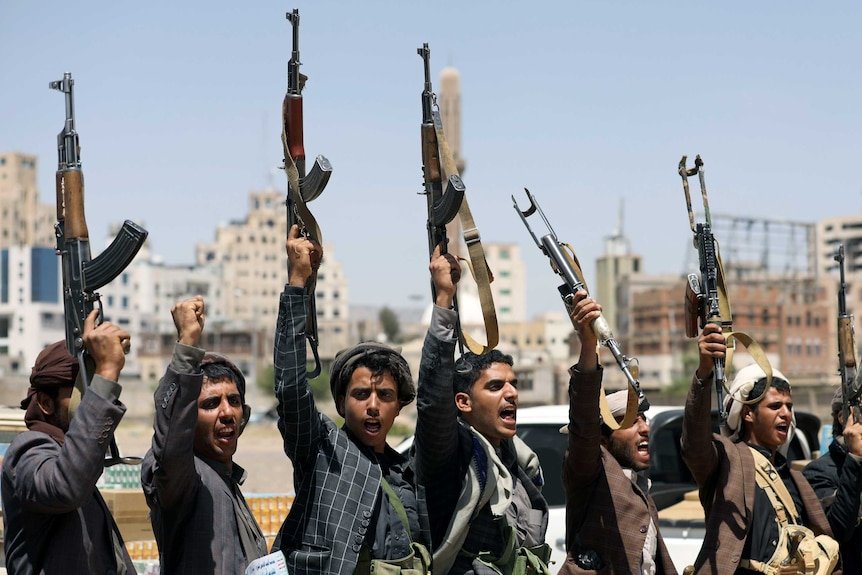
DUBAI: Yemen’s Iran-aligned Houthi movement has entered the ongoing Iran war by launching its first attacks on Israel since the conflict began, marking a significant expansion of the fighting across the Middle East.
The development comes as the United States increases its military presence in the region, with the first contingent of thousands of U.S. Marines arriving aboard an amphibious assault ship and additional forces, including units from the 82nd Airborne Division, expected to follow.
The conflict, which began on February 28 with U.S. and Israeli strikes on Iran, has intensified in recent days. Reports indicate that the Pentagon is considering the possibility of ground operations inside Iran, potentially involving both special forces and conventional troops, although no final decision has been confirmed. U.S. officials say the additional deployments are intended to give Washington flexibility in responding to further escalation.
Iran has continued to retaliate against U.S. and allied targets. An Iranian strike on a U.S. base in Saudi Arabia injured 12 American service personnel, in one of the most serious incidents involving U.S. forces so far. Iran has also launched attacks across several Gulf countries, including Kuwait, the United Arab Emirates and Oman.
Israel has expanded its military operations, carrying out strikes in Tehran targeting what it described as Iranian government infrastructure, while also resuming attacks in Lebanon against Hezbollah. Lebanese media reported that Israeli strikes killed several journalists and a soldier, as well as rescue workers who responded to the scene. Israel said one of the journalists targeted was linked to Hezbollah intelligence.
The Houthis’ involvement adds a new dimension to the conflict, raising concerns about further disruption to global shipping routes. The group has previously demonstrated its ability to strike long-range targets and interfere with maritime traffic in the Red Sea and surrounding areas. Their actions come amid an already severe disruption in the Strait of Hormuz, a key passage for global oil and gas supplies.
The war has already caused significant casualties and economic disruption, particularly in energy markets. Iran has warned it will respond strongly to any further attacks on its infrastructure, while U.S. President Donald Trump has threatened additional strikes on Iranian energy facilities if Tehran does not reopen key shipping routes, although he has extended a deadline for a response.
Efforts to reduce tensions are ongoing, with Pakistan hosting talks involving regional powers including Saudi Arabia and Turkey. However, with multiple actors now involved and attacks spreading across several countries, the risk of a broader regional conflict continues to grow.--Reuters