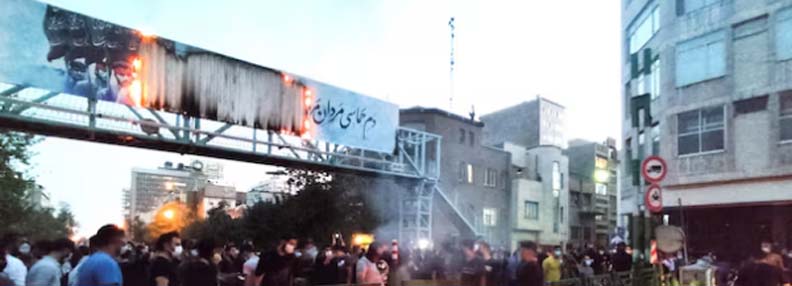
TEHRAN: Iranian authorities have implemented a nationwide internet shutdown as protests continue to spread across the country.
The protests, which began in response to government policies, have intensified with demonstrators setting fires and clashing with security forces in several major cities. The government's move to cut off internet access is seen as an effort to curb the spread of information, limit organizing, and silence dissent amid the growing unrest.
The protests initially sparked by rising fuel prices have quickly escalated into one of the most significant challenges to the Iranian regime in years. Videos circulating on social media before the shutdown depicted fiery scenes in cities like Tehran, Isfahan, and Shiraz, where protesters gathered in the streets, waving banners and chanting slogans calling for the resignation of government officials.
Security forces have deployed tear gas and live ammunition, with reports of casualties emerging from areas with the most intense clashes. Protesters, some seen holding up their smartphones to document the unrest, set fires in strategic locations, signaling their defiance and desire to disrupt government control.
"We have had enough," one protester said in an interview before the internet shutdown. "The government is only interested in staying in power while the people suffer. We are tired of being ignored."
The Iranian government, which has long faced criticism for its treatment of political dissidents, has responded with a heavy hand. Internet blackouts have become a frequent tool used by the regime to prevent news from getting out and to limit protesters’ ability to coordinate.
Human rights organizations have condemned the government’s tactics, with Amnesty International issuing a statement calling the internet blackout a violation of free speech. "The Iranian authorities' efforts to silence dissent through internet shutdowns are an affront to basic human rights," said [name, title] of Amnesty International. "The people of Iran must be allowed to express their grievances freely and without fear of retaliation."
Global reactions to the situation have been swift. The United States and European Union have called for restraint, urging the Iranian government to respect the right to peaceful assembly and freedom of expression. The UN Secretary-General expressed concern over reports of violence and deaths and called for an immediate end to the crackdown.
In neighboring countries, there is growing concern that the unrest could spill over into wider regional instability, particularly with Iran's influence in the Middle East. Some analysts are predicting that the protests could reach a tipping point if the government continues its hardline stance.
As the internet remains largely cut off, it’s difficult to assess the full scale of the protests, but the images that have emerged suggest a country on the brink of further conflict. The Iranian regime has long prided itself on its ability to suppress opposition, but the intensity of this latest wave of protests could challenge its longstanding control.
The coming days will likely determine whether this wave of unrest is another temporary flare-up or the beginning of a larger movement for change in Iran. As one protester put it: "We are fighting for our future. We will not stop until our voices are heard."