
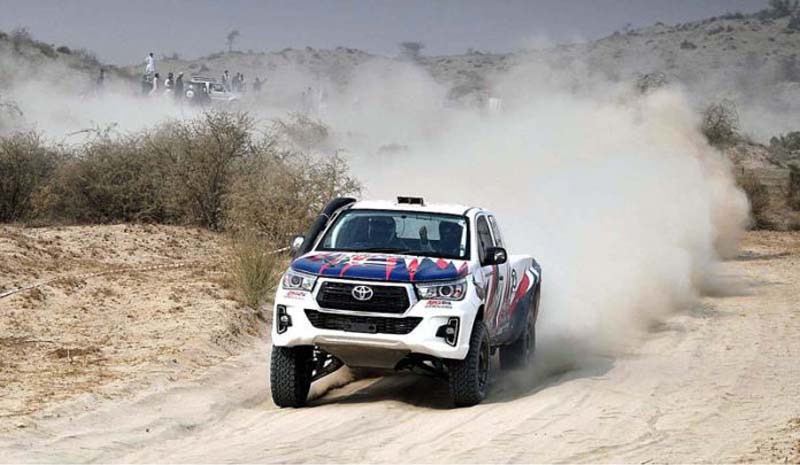

BAHAWALPUR: The 21st Cholistan Desert Jeep Rally, organized by the Punjab Tourism Department, is set to take place from February 11 to 15, attracting thousands of tourists from both within and outside the country.
However, experts have raised concerns over the increasing environmental impact of the event, as many people discard plastic bottles, wrappers, and other waste in the Cholistan Desert. This waste not only causes pollution but is also posing a growing threat to the desert’s wildlife.
Wildlife conservationist, Badar Munir, is currently working with his team to collect plastic waste left behind from last year’s rally in the Cholistan Desert. He explained that during the rally, thousands of people stay in the area, and a large amount of plastic waste, including empty bottles and wrappers, is discarded. This waste not only pollutes the desert but also poses a significant threat to the local wildlife.
Munir further stated that his team is working to block certain pathways near the rally tracks where various species of wildlife reside. The noise and dust caused by the vehicles during the rally disturb wildlife, and sometimes animals, including their young, are killed by fast-moving cars. To prevent this, the team is closing off these routes to protect the wildlife from unnecessary harm.
Cholistan Desert is an important habitat for several species, including the endangered Chinkara (Indian gazelle).
Sheikh Zahid Iqbal, Additional Chief Wildlife Ranger for South Punjab, assured that effective measures are being taken to protect wildlife during the rally. A total of 120 wildlife rangers have been deployed across various areas, including Jamgarh, Mojgarh, Qila Bijnot, and Qila Derawar, as well as at wildlife check posts set up in Cholistan. Additionally, deputy wildlife chiefs are on duty, and awareness boards have been installed at key locations.
A spokesman for the Punjab Tourism Department confirmed that efforts are being made to ensure minimal environmental impact during the rally. Waste will be collected both during and after the event, and careful consideration is given to route selection to avoid harming the local wildlife.
Dr. Azma Khan, a representative of WWF and environmental expert, highlighted that Cholistan is a wildlife game reserve and a major stop for migratory birds. She stressed that organizers should have considered the potential impact on wildlife, particularly migratory birds, as their return process typically concludes in March.
Dr. Khan also raised concerns about the dangers of plastic waste, pointing out that the natural environment in desert areas is fragile, and the decomposition of waste is an extremely slow process. As a result, plastic waste remains in the area for years, altering soil composition and affecting the ecosystem. Grazing animals like Chinkara and livestock often mistake plastic for food, which can damage their digestive systems and, in some cases, lead to death.

Comments are closed.