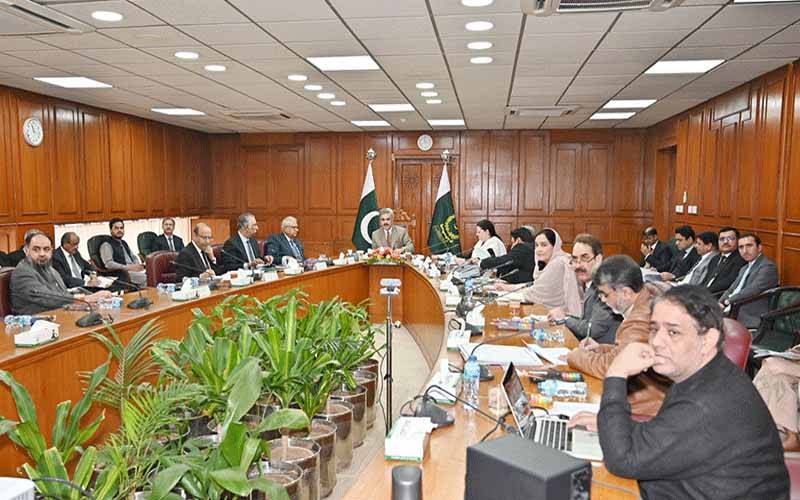
ISLAMABAD: The National Judicial Policy-Making Committee (NJPMC) approved key decisions to strengthen judicial accountability and improve the justice system with particular focus on cases of enforced disappearances.
Chaired by the Chief Justice of Pakistan, the 56th meeting was attended by the Chief Justices of all High Courts, while Chief Justice of the Federal Constitutional Court Justice Ameen-ud-Din Khan also participated.
According to a statement, the committee agreed to develop an effective institutional mechanism to address enforced disappearance cases and decided to introduce a new procedure where arrested individuals are not produced before a magistrate within 24 hours.
The meeting also approved the implementation of a Commercial Litigation Corridor for the speedy disposal of commercial cases and agreed on the formation of a screening committee at the Federal Board of Revenue (FBR) to reduce unnecessary litigation. Strict adherence to case disposal timelines was emphasized.
The committee noted that the Lahore High Court disposed of more than 465,000 cases, while reforms in inheritance cases by the Peshawar High Court, including the Double Docket system, were appreciated. All inheritance cases pending up to 2019 were directed to be resolved within 30 days.
The performance of model trial courts was praised, with the Lahore High Court leading. The committee instructed that recommendations for district judiciary reforms be finalized within 30 days and decided to consult provincial governments on prison reforms.
It was also informed that national guidelines for the use of artificial intelligence in courts have been prepared.
Approval was granted for the immediate launch of e-filing in all district courts, in-principle approval was given for women and family facilitation centers, over Rs 2.58 billion was released under the Access to Justice Fund, and provincial governments were asked to provide additional funds for court solarization.