Mumtaz Hussain
UNITED NATIONS: Pakistan has stated that transitions of UN peace operations must be designed to protect hard-won gains and support sustainable peace, warning that premature drawdowns in fragile settings can create security vacuums and reverse years of collective investment.
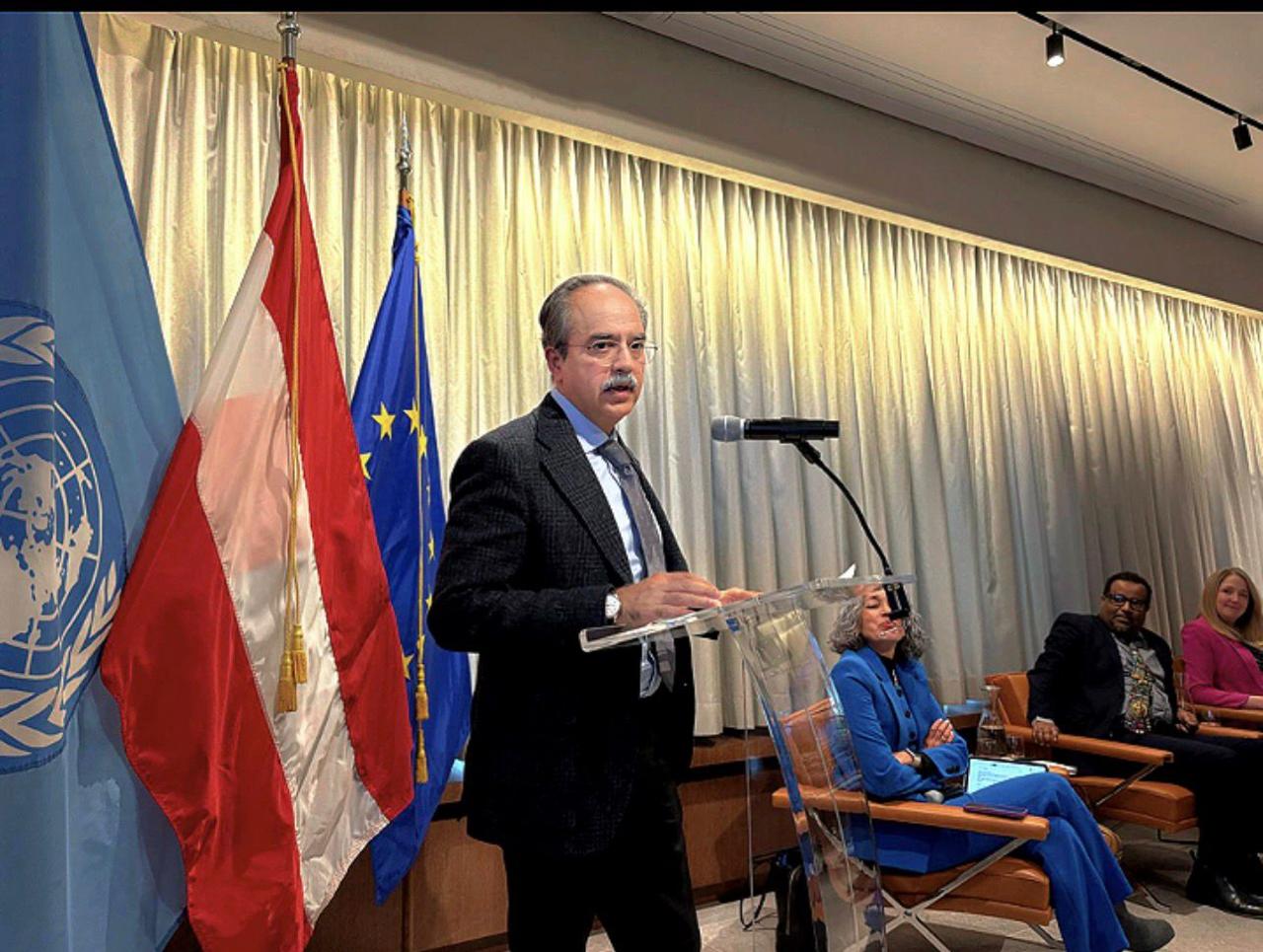
Delivering closing remarks at the high-level event on “Transitions of UN Peace Operations: Pathways toward Sustainable Peace,” hosted by the Permanent Mission of Austria to the UN in collaboration with the UN Missions of Brazil, Denmark, Egypt, Liberia, and Pakistan, Ambassador Asim Iftikhar Ahmad, Permanent Representative of Pakistan to the United Nations, said the exchange reinforced a central message: transitions are not primarily about the departure of a mission, but about ensuring that the progress achieved through years of sacrifice is preserved.
Ambassador Asim noted that nearly five years after the adoption of Security Council resolution 2594 (2021), transitions are unfolding under increasingly complex political and security conditions.
“In several situations, mission drawdowns are taking place while drivers of conflict persist, political processes remain fragile, and national institutions are still developing the capacity to assume responsibilities,” he said. “This requires careful reflection on how transitions are conceived, sequenced, and resourced.”
The Pakistan UN Ambassador underlined that the most meaningful measure of a successful transition is whether it consolidates peace on the ground, emphasizing that transitions should be approached as part of a continuum, from peacekeeping to peacebuilding to longer-term stabilization.
Warning against calendar-driven exits, Ambassador Asim said the absence of rapid political progress should not be used to justify premature mission drawdowns. In fragile contexts, he added, a UN mission’s stabilizing presence can provide the space necessary for political processes to mature.
He also drew attention to increasingly complex dynamics surrounding host-state consent. While national ownership is essential, he said, withdrawals driven by domestic political considerations have in some cases led to deteriorating security conditions and the erosion of hard-won gains. This, he added, underlines the importance of transitions that are conditions-based, grounded in realities on the ground, and supported by sustained partnerships.
Looking ahead to the Secretary-General’s forthcoming review on the future of UN peace operations, Ambassador Asim called for transitions guided by strategic patience, predictable resources, and continued international support so that missions leave behind a durable foundation rather than a vacuum.
He concluded his remarks by reaffirming Pakistan’s commitment to advancing these aims and working with partners to support smoother and more sustainable transitions of UN peace operations.