Mumtaz Hussain
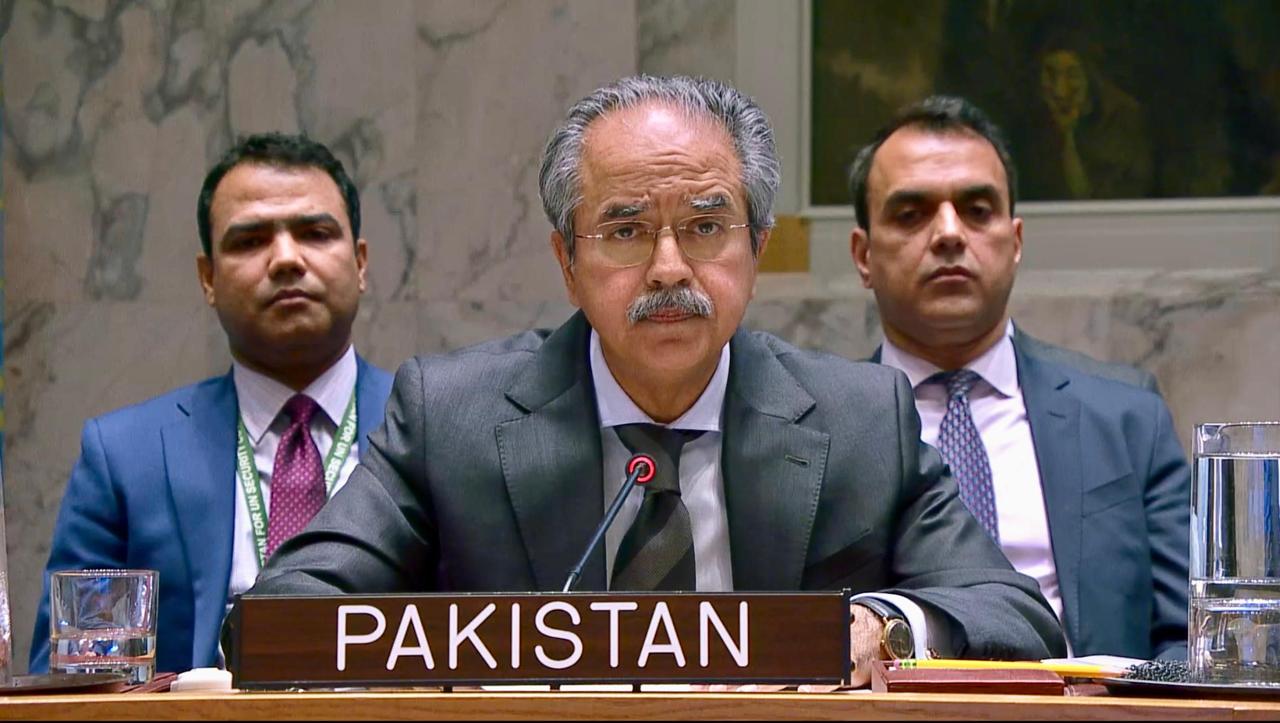
UNITED NATIONS: Pakistan’s Permanent Representative to the United Nations Ambassador Asim Iftikhar Ahmad on Thursday urged the international community to recommit to multilateralism, uphold international law and strengthen the United Nations’ core mandates.
He warned that global peace, development and security are under unprecedented strain.
Speaking during the UN General Assembly debate on the report of the secretary general on the work of the organization, Ambassador Ahmad said the world was facing compounded crises driven by conflict, climate change, inequality and geopolitical fragmentation. Despite these challenges, he underscored the continued relevance of the United Nations as the “cornerstone of multilateral action.”
He attributed many of today’s crises to violations of international law and the UN Charter, particularly the principles of sovereignty, territorial integrity, non-use of force, peaceful settlement of disputes and the right to self-determination.
Welcoming the Pact for the Future and the UN80 Initiative, the envoy stressed that UN reform should not be limited to cost-cutting or dilution of mandates. He emphasized that peace and security, development, and human rights must remain equally prioritized pillars of the Organization.
Ambassador Ahmad expressed deep concern over the Secretary-General’s assessment that the Sustainable Development Goals (SDGs) are off track, highlighting the widening financing gaps and debt distress faced by developing countries. Pakistan called for urgent implementation of the SDG Stimulus, reform of the international financial architecture, fair debt restructuring, expanded concessional finance, and greater access to modern technologies, including artificial intelligence for development. He welcomed progress made under the Compromiso de Seville and the World Summit on the Information Society (WSIS) review.
On climate change, he said vulnerable countries such as Pakistan continue to suffer severe impacts from floods, heatwaves and water scarcity. He called for scaled-up climate finance, especially for adaptation, and additional contributions to the loss-and-damage fund. Emphasizing that water should never be weaponized, he urged strict compliance with treaties and international obligations to preserve a rules-based international order.
Turning to peace and security, Ambassador Ahmad said ongoing wars in the Middle East, Europe and Africa, along with the continued denial of self-determination in Palestine and Indian Illegally Occupied Jammu and Kashmir, were eroding the credibility of the international system. He called for full implementation of UN Security Council resolutions and greater use of Charter-based mechanisms to resolve disputes peacefully.
Pakistan reaffirmed its strong support for diplomacy, mediation and peacebuilding, urging more decisive use of the UN’s good offices, preventive diplomacy and peace operations.
The ambassador also warned against the accelerating global arms race, noting that rising military expenditures divert resources from development and heighten the risk of catastrophic conflict. He called for renewed momentum on global disarmament, including nuclear disarmament and restraints on emerging weapons technologies.
Addressing terrorism, Ambassador Ahmad said global counter-terrorism efforts have fallen short. Drawing on Pakistan’s own experience, he emphasized the need to address all four pillars of the UN Global Counter-Terrorism Strategy, including root causes, far-right extremism, xenophobia and Islamophobia.
He also strongly backed reform of the UN Security Council to make it more representative, democratic, transparent and accountable, insisting that the Intergovernmental Negotiations remain the only legitimate forum for such reforms. “Reform for all, privilege for none,” he said.
Ambassador Ahmad reaffirmed Pakistan’s firm commitment to multilateralism, the UN Charter and constructive engagement with the United Nations to advance sustainable development, promote peace and protect human rights, “leaving no one behind.”