
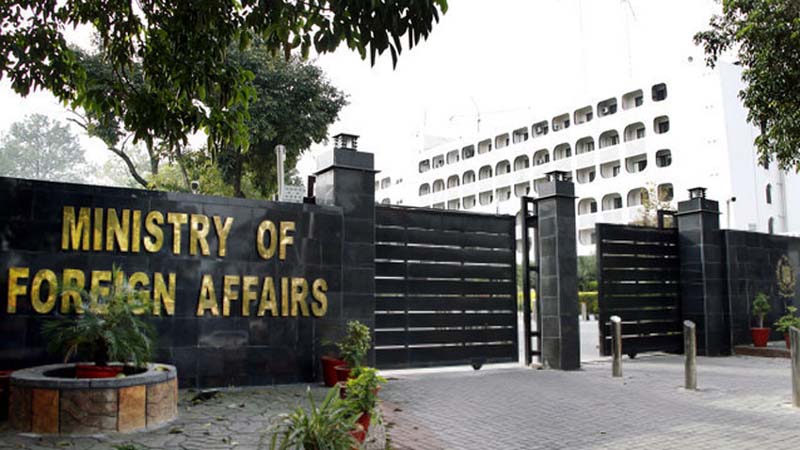

ISLAMABAD: Pakistan strongly condemned the sentencing of prominent Kashmiri political leaders, including Asiya Andrabi, describing it as a politically motivated verdict and a violation of legitimate political rights.
The Ministry of Foreign Affairs emphasized that such actions by India cannot be conflated with terrorism and called for restraint, dialogue, and respect for due process.
Foreign Office Spokesperson Tahir Andrabi, speaking at his weekly media briefing, stressed that Pakistan remains actively engaged with regional and international stakeholders to promote immediate de-escalation, cessation of hostilities, and a sustainable path toward peace.
He highlighted that Prime Minister Shehbaz Sharif is personally leading diplomatic efforts to foster understanding among all concerned parties, a role recognized internationally, including by U.S. leadership. Deputy Prime Minister and Foreign Minister Senator Mohammad Asaq Dar has also maintained continuous engagement with counterparts across the region and beyond.
Andrabi expressed concern over the spread of speculation and unverified reports in some media outlets regarding regional developments, diplomatic exchanges, and purported travel plans. He emphasized that sensitive diplomacy requires discretion, patience, and confidentiality, urging reliance on official channels for accurate information.
Responding to India’s statement on the sentencing, he dismissed it, asserting that India routinely conflates legitimate political dissent with terrorism. He cited concerns about impartiality in India’s judicial process, including the acquittal of the principal accused in the Samjhota Express bombing case, raising questions about accountability and due process.
The spokesperson reiterated Pakistan’s firm rejection of the verdict against Kashmiri leaders, describing it as part of a pattern of political vendetta. He also criticized recent undiplomatic statements from Indian officials as reflecting frustration, emphasizing that Pakistan’s approach remains anchored in restraint, decorum, and constructive diplomacy rather than rhetorical excess.
