

Mumtaz Hussain
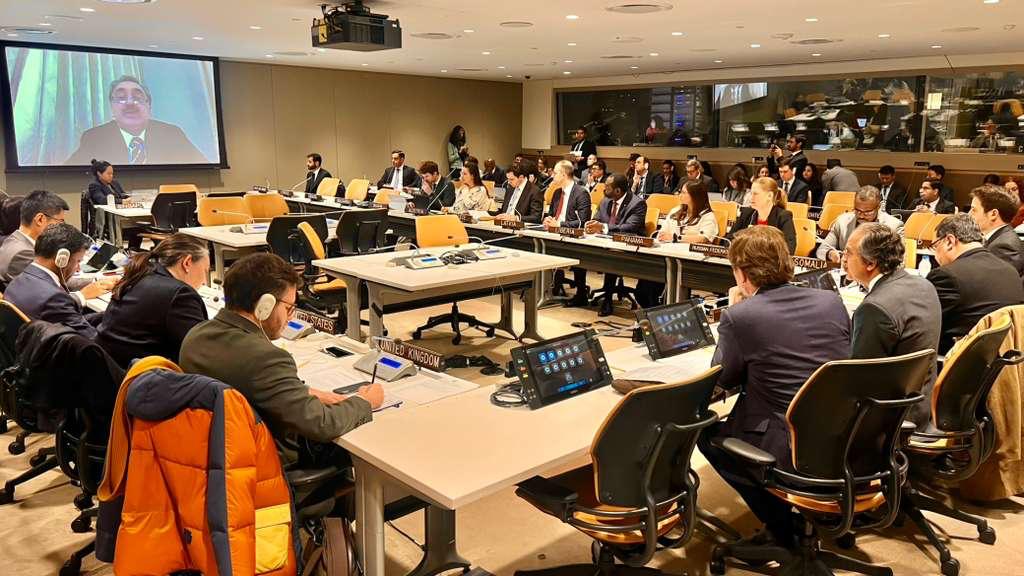
UNITED NATIONS: Pakistan on Friday hosted an Arria-formula meeting of the United Nations Security Council focused on “Upholding the Sanctity of Treaties for the Maintenance of International Peace and Security,” underscoring the central role of international agreements in conflict prevention and global stability.
The meeting was attended by members of the Security Council as well as a large number of UN Member States from all regions, reflecting broad international interest in the issue.
A high-level panel of briefers addressed the meeting, including David Nanopoulos, Chief of the Treaties Section at the UN Office of Legal Affairs; Ahmer Bilal Soofi, President of the Research Society of International Law and former Federal Law Minister of Pakistan; Prince Zeid Ra’ad Al Hussein, President of the International Peace Institute and former UN High Commissioner for Human Rights; and Professor Adil Najam, Dean Emeritus and Professor of International Relations at Boston University’s Pardee School of Global Studies.
The briefers emphasized that treaties are binding legal instruments that provide predictability and stability in international relations, particularly in the management of shared natural resources, borders, and transboundary challenges.
Drawing on historical and contemporary examples, including the holding in abeyance of the Indus Waters Treaty, they warned that the weakening of international legal commitments could undermine collective security and erode trust among states.
Addressing the meeting, Pakistan’s Permanent Representative to the United Nations, Ambassador Asim Iftikhar Ahmad, said that India’s unilateral decision to hold the Indus Waters Treaty in abeyance constituted a serious violation of international legal obligations.
He noted that such actions carry far-reaching humanitarian, environmental, and peace and security implications.
Referring to the August 2025 decision of the Court of Arbitration, the ambassador stressed that the rulings reaffirmed the continued validity of the Indus Waters Treaty and the binding nature of its dispute-settlement mechanisms.
He cautioned that undermining established treaties could set a dangerous precedent for agreements governing shared resources, borders, and confidence-building measures worldwide.
Participating Member States reiterated the importance of treaties as instruments of stability and conflict prevention. Several speakers also highlighted the preventive role of the United Nations system, including the Security Council, the Secretary-General, and the International Court of Justice, in promoting treaty compliance and strengthening the international rule of law.
The meeting was widely welcomed by participants as a timely and substantive contribution to ongoing international efforts to reinforce respect for international law and to prevent the erosion of treaty-based cooperation.

Comments are closed.