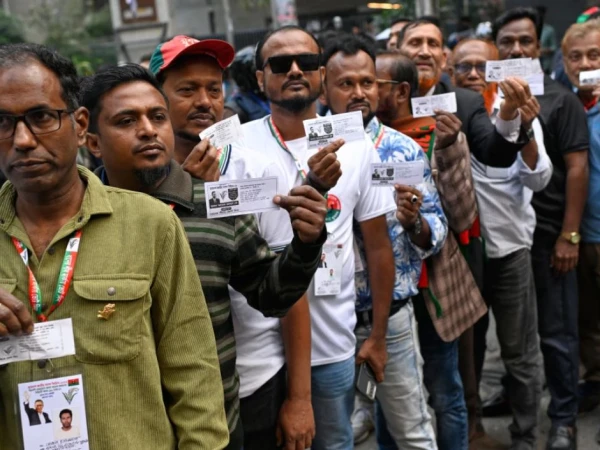
DHAKA: Polling began across Bangladesh on Thursday in the country’s first general elections since the 2024 mass uprising, marking what observers describe as a critical test for the nation’s democracy.
According to the Election Commission, more than 127 million registered voters are eligible to cast their ballots. Voting is taking place at thousands of polling stations nationwide under strict security arrangements. The polling process will continue throughout Thursday, with results expected to be announced on Friday.
These elections are being held following the resignation of former Prime Minister Sheikh Hasina, who stepped down in 2024 after weeks of protests and later left for India. Her party has not been allowed to participate in the current elections.
Bangladesh Nationalist Party (BNP) leader Tarique Rahman is considered a strong contender for the post of prime minister. Rahman, the son of former Prime Minister Khaleda Zia, returned to Bangladesh last December after 17 years of self-imposed exile. He has pledged to restore democratic institutions, uphold the rule of law, and improve the country’s economy.
Meanwhile, an alliance of 11 parties led by Jamaat-e-Islami is also contesting the elections. The party had faced restrictions during Sheikh Hasina’s tenure but has regained influence following recent political changes. Some groups, particularly women and minority communities, have expressed concerns over the alliance’s potential success.
The elections are being conducted under an interim government headed by Nobel laureate Dr. Muhammad Yunus. The government has vowed to ensure free, fair, and transparent elections. Approximately 500 international observers and journalists, including representatives from the European Union and the Commonwealth, are monitoring the electoral process.
Bangladesh’s parliament consists of 350 seats, including 300 directly elected seats and 50 reserved for women. Around 5 million new voters are casting their ballots for the first time in this election.
In addition to the general elections, a referendum on political reforms is also being held. The proposals include setting term limits for the prime minister and improving the balance of powers within the government.