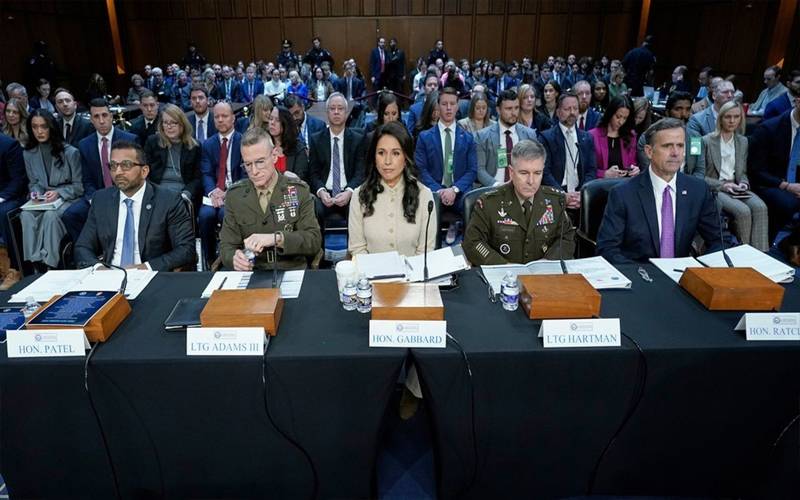
WASHINGTON: The United States’ Director of National Intelligence, Tulsi Gabbard, has released the 2026 Annual Threat Assessment, naming Pakistan as a potential threat to U.S. security due to its missile and nuclear capabilities.
The report places Pakistan alongside Russia, China, North Korea, and Iran in a list of nations whose weapons programs could endanger the United States.
According to the assessment, Pakistan’s development of nuclear weapons, intercontinental ballistic missiles (ICBMs), suicide drones, and proxy warfare strategies could pose future risks to U.S. territory.
The report notes that Pakistan is advancing missile technology capable of striking targets beyond South Asia, raising concerns about long-range delivery systems.
The report also highlights that, as of 2026, the United States faces the potential threat of approximately 3,000 intercontinental missiles worldwide, a number projected to rise to 16,000 by 2035. Pakistan, along with China, Iran, North Korea, and Russia, continues to research and develop both nuclear and conventional missile delivery systems.
Beyond missile capabilities, the assessment cites regional tensions, particularly between Pakistan and India, as a persistent security challenge. U.S. intelligence warns that unresolved disputes in South Asia could increase the risk of nuclear confrontation.
The report further criticizes Pakistan’s involvement in regional conflicts, stating that it is among nations leveraging military assets and proxy forces to influence disputes abroad. The assessment follows previous U.S. actions, such as blacklisting 16 Pakistani companies in 2024 over alleged involvement in ballistic missile programs. Pakistan has repeatedly described such measures as politically motivated.
While the assessment underscores long-term security risks, it also notes that no immediate foreign threat to U.S. elections has been identified, reflecting a nuanced view of global security.
Analysts emphasize that the report signals U.S. concerns about emerging missile technology and strategic capabilities, rather than imminent aggression.