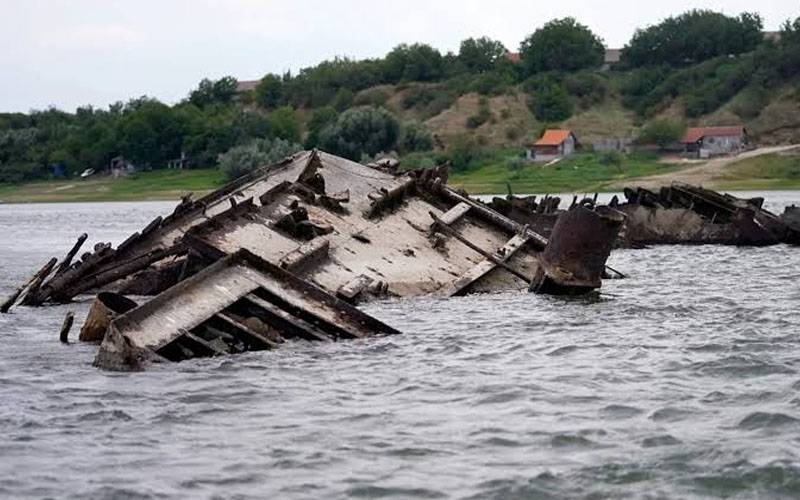
An intense heatwave and severe drought across parts of Europe have caused river levels to fall dramatically, revealing the remains of warships that were deliberately sunk during the Nazi era nearly 80 years ago.
The extreme dry conditions have pushed water levels in the Danube River to historically low levels, exposing the wreckage of German warships that had remained submerged for decades. The discovery has drawn attention to a forgotten chapter of World War II history, while the exceptionally low water levels are also creating serious challenges for energy supplies and river-based transportation.
The vessels were reportedly sunk during the final stages of World War II as Nazi Germany attempted to slow the advance of Soviet forces. Many of the ships were deliberately scuttled in the river, and their remains have remained underwater ever since.
The sudden appearance of the wrecks has been made possible by the sharp decline in the Danube’s water level amid the ongoing heatwave and drought conditions affecting parts of Europe.
However, the exposed vessels are not simply historical relics. Reports indicate that some of the wrecks still contain explosive materials, making their removal extremely difficult and potentially dangerous. Authorities therefore face significant challenges in dealing with the newly exposed remains while ensuring the safety of people living and travelling along the river.
The exceptionally low water levels are also worsening concerns over Europe’s energy situation. Reduced water availability can affect hydropower generation and disrupt the movement of fuel and other essential goods along major waterways, adding further pressure to an already strained energy system.
The discovery has once again highlighted how extreme weather conditions can expose long-hidden historical sites and objects. What was concealed beneath the Danube for almost eight decades has now emerged because of the unusually severe drought, offering a striking reminder of Europe’s wartime past while underscoring the growing impact of extreme heat and water shortages.