Special Correspondent
UNITED NATIONS: Pakistan has highlighted the strategic importance of deeper cooperation between the United Nations and the European Union at a time of heightened global instability, warning that widening geopolitical fault lines are undermining multilateralism and pushing the rules-based international order toward a critical tipping point.
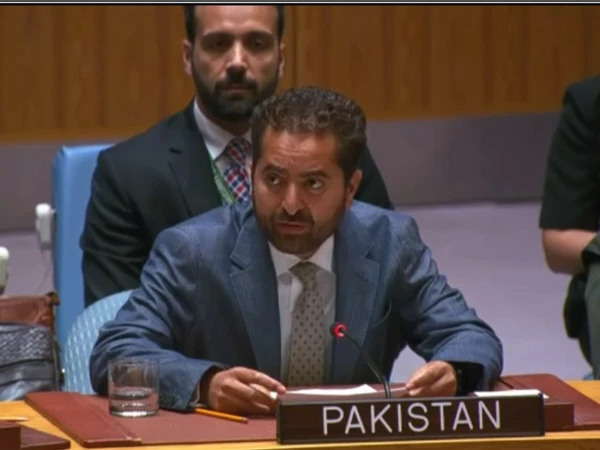
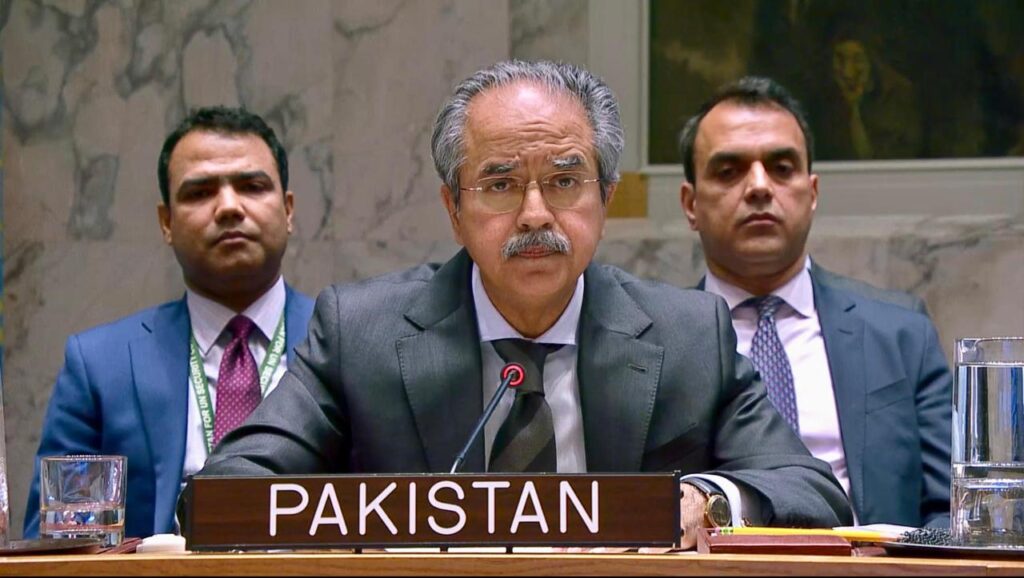
Addressing the UN Security Council meeting on the EU’s partnership with the United Nations, Ambassador Asim Iftikhar Ahmad, Permanent Representative of Pakistan to the United Nations, said Pakistan values the EU’s long-standing commitment to multilateralism, international law and the UN Charter, and welcomed the EU’s continued determination to support multilateral cooperation with the UN as its central pillar.
Ambassador Asim said that the world order is under significant stress, with strategic competition increasingly displacing cooperation, adding to global instability at a moment when international collaboration is most needed to narrow development divides and advance shared prosperity. In this context, he said cooperation between the UN and regional and sub-regional organizations under Chapter VIII of the UN Charter should be seen as a strategic necessity.
He said regional organizations such as the EU are vital partners for advancing peace and security, sustainable development and human rights. He recalled that Security Council resolution 2788, adopted last July during Pakistan’s presidency of the Council, recognizes the role of regional and sub-regional organizations in complementing UN efforts to prevent conflicts and promote peaceful settlement of disputes, and encourages member states to support and strengthen such cooperation.
Ambassador Asim said that recent conflicts demonstrate that crises do not remain confined to their geographic epicentres. Referring to the conflict in West Asia and ongoing conflicts in Europe and the Middle East, he said Pakistan’s approach remains grounded in the UN Charter and consistent advocacy for dialogue, de-escalation and peaceful settlement of disputes.
He expressed appreciation for EU support for Pakistan’s diplomatic efforts toward a peaceful resolution in West Asia, stressing that voices calling for cessation of hostilities and a return to dialogue strengthen collective resolve for peace.
He said the EU remains a significant diplomatic and humanitarian actor in the Middle East and acknowledged its principled position on the Question of Palestine, including support for a just and lasting two-state solution in line with international law and relevant UN resolutions.
He said the EU’s influence could further support international efforts to alleviate Palestinian suffering and advance their legitimate rights, including self-determination and statehood.
The Pakistan UN ambassador also expressed hope that the conflict in Ukraine would be resolved through meaningful dialogue between the parties, corresponding to the interests of all relevant stakeholders.
Highlighting global challenges that disproportionately affect the Global South, he cited food insecurity, freshwater scarcity, energy volatility, supply chain fragmentation, pandemics, climate change and natural disasters.
He welcomed the EU’s commitment to the 2030 Agenda, the Paris Agreement, reform of the international financial architecture and humanitarian assistance, and said sustained EU support, including to UN agencies, funds and programmes, remains timely and critical as development cooperation declines.
Ambassador Asim also commended EU–UN cooperation in peacekeeping and peacebuilding, citing EU contributions through voluntary funding, capacity-building support to troop- and police-contributing countries, and assistance for security sector reform, rule of law institutions and stabilization efforts.
He further highlighted Pakistan’s robust partnership with the EU, noting that the EU is Pakistan’s largest trade and investment partner. He said the GSP Plus framework has supported growth in Pakistan–EU trade and remains a win-win model for economic cooperation.
Concluding, he said Pakistan and the EU share values and interests that can help build a more stable, prosperous and equitable future through continued dialogue and joint initiatives.