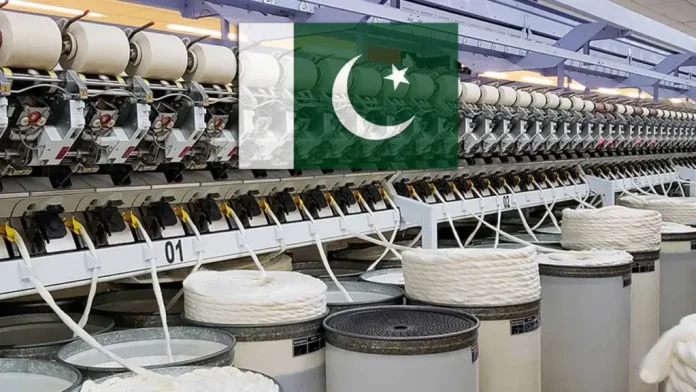
BEIJING: Pakistan’s textile exports to China experienced a significant shift in 2025, moving away from raw materials and toward higher-value products.
According to recent trade data from the General Administration of Customs of the People’s Republic of China (GACC), while traditional exports like cotton yarn remain important, the overall trend highlights Pakistan's growing capacity in producing finished textile goods.
Cotton yarn, which has long been the largest textile export to China, saw a slight decline from $470.6 million in 2024 to $451.4 million in 2025. Industry sources attribute this decrease not to a drop in demand, but to strategic adjustments and a focus on downstream processing.
Meanwhile, several categories of value-added textiles showed remarkable growth. Exports of home textiles grew by more than 30%, rising from $4.34 million to $5.78 million, driven by strong demand from China’s household and hospitality sectors.
Additionally, made-up textile articles, including decorative items, more than doubled from $0.29 million to $0.66 million, signaling an increase in Pakistan's production of finished textile products.
Garment exports presented mixed trends. Women's garments saw growth, with exports climbing from $9.47 million in 2024 to $11.18 million in 2025, while exports of baby garments and accessories also showed positive movement. However, men’s garments recorded a slight dip, falling to $19.90 million, reflecting market rebalancing. T-shirt exports remained steady at $10.75 million, highlighting sustained demand for these items.
This gradual shift toward more value-added textile products is a clear indicator of Pakistan’s evolving role in the textile trade, as it continues to enhance its capacity in producing higher-end goods for international markets.--APP