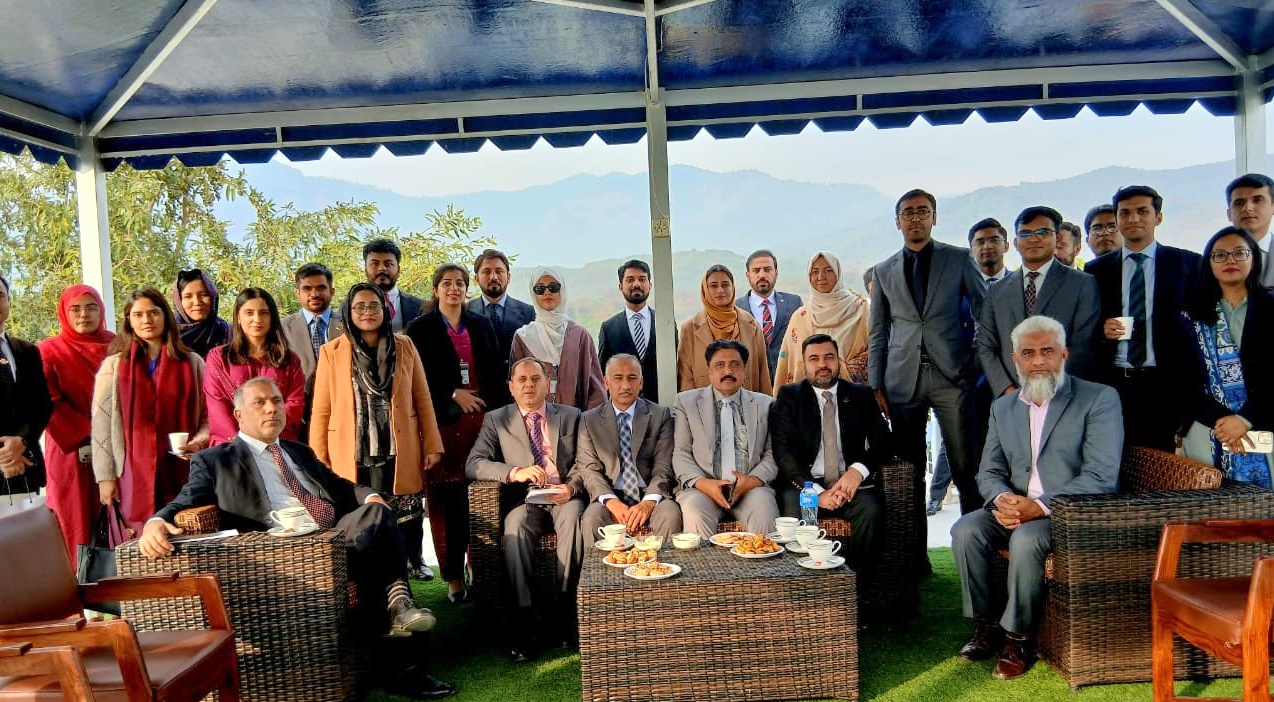
ISLAMABAD: The Pakistan Institute of Development Economics (PIDE) hosted an extensive briefing session for the probationers of the 48th Specialized Training Programme (STP) of the Pakistan Administrative Service (PAS), says a press release.
The session aimed to familiarize young civil servants with PIDE’s evolving role as a national think tank, research hub, and policy-advisory institution.
On behalf of Vice Chancellor Dr. Nadeem Javaid, PIDE management welcomed the probationers and delivered a comprehensive presentation on PIDE’s legacy, achievements, and national contributions.
Since its establishment in 1957, PIDE has emerged as Pakistan’s top-ranked economic research institute and is consistently recognized among the leading think tanks in Asia.
Registrar PIDE, Dr. Nasir Iqbal, in his opening remarks, congratulated the probationers and emphasized the importance of their role in shaping Pakistan’s administrative future.
The probationers were briefed on PIDE’s core services as a policy-oriented research institute working across taxation, public finance, governance, climate resilience, education, and economic reforms. As the advisory arm of the Ministry of Planning, Development and Special Initiatives, PIDE provides technical analysis, policy evaluation, and reform guidance to support national decision-making.
Dr. Nasir Iqbal highlighted the gap between citizens and an outdated administrative system, urging new PAS officers to lead the shift toward modern, technology-enabled governance. He emphasized the need to replace manual, fragmented processes with AI-driven, data-integrated, citizen-centered service delivery.
Under the current leadership, participants were introduced to the Institutional Development Strategy 2025–2030, which envisions PIDE as a more dynamic and integrated institution.
The strategy is built on five pillars—Research, Engagement, Academia, Counsel, and Hub—with a focus on expanding academic programs, strengthening data systems, enhancing policy engagement, and deepening collaboration with government agencies.
Dr. Shujaat Farooq, Dean of Research, presented PIDE’s research outcomes and highlighted the Vice Chancellor’s vision for the next five years.
He explained how PIDE has significantly reformed its research ecosystem over the past year and briefed the probationers on specialized research centers focusing on macroeconomics, governance, digital economy, agriculture, climate change, and regulatory analysis.
He also introduced PIDE’s flagship journal, the Pakistan Development Review (PDR), and highlighted its diverse research outputs, including working papers, policy briefs, books, and data-driven analyses, as well as its growing global footprint through international collaborations.
Dr. Karim Khan, Dean of Academics, elaborated further on the Vice Chancellor’s vision and provided an overview of PIDE’s academic programs and strong placement record, noting that PIDE graduates occupy key positions in policymaking bodies, international organizations, academia, and the financial sector.
Dr. Faheem Jehangir, Dean of Policy, highlighted PIDE’s policy advocacy initiatives, national conferences, policy campaigns, and the role of the Executive Development Centre (EDC) in building capacity across government and private organizations.
He also spoke about PIDE’s key institutions, including the Pakistan Society of Development Economists (PSDE)—the largest professional body of economists in the country—and the Centre of Excellence for CPEC (CoE-CPEC).
The session also showcased two major national initiatives housed at PIDE: RASTA, Pakistan’s largest public policy research network with over 6,700 researchers, and CoE-CPEC, which provides strategic guidance across industrial cooperation, connectivity, climate resilience, and socio-economic development.
The briefing concluded with an engaging Q&A session, during which probationers discussed governance challenges, research needs, and opportunities for collaboration. Participants appreciated PIDE’s contributions and reaffirmed the importance of strengthening research–policy linkages for effective public service delivery.